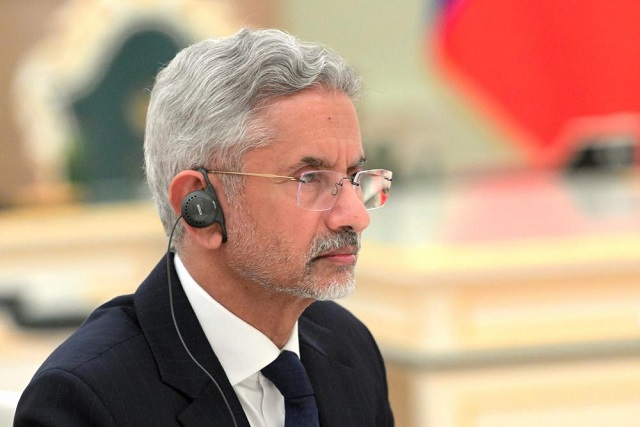
India’s External Affairs Minister, Dr. S. Jaishankar, emphasized on Friday that the Quadrilateral Security Dialogue (Quad) is growing and evolving into one of the most expansive forms of intergovernmental coordination. Speaking at the India-Japan Forum, Jaishankar highlighted the importance of the Quad, a strategic alliance involving Australia, India, Japan, and the United States, noting its rapid expansion and success since its reinvigoration in 2017.
Jaishankar credited the administration of former U.S. President Donald Trump for playing a pivotal role in the restart of the Quad. He explained that the Quad was formally revived at the vice ministerial level in 2017 under Trump’s leadership and gradually advanced to the foreign ministers’ level by 2019. Furthermore, even amidst the global lockdown of 2020, the Quad held one of the few in-person diplomatic meetings in Tokyo, signaling the resilience and commitment of the alliance.
According to Jaishankar, the Trump administration deserves significant credit for the “takeoff” of the Quad’s second iteration, which has gained substantial momentum in recent years. He further underscored that, in the context of the Quad, concerns over burden-sharing and America’s role—issues often raised by Trump regarding traditional alliances—are not relevant. “In the Quad, everybody pays their fair share,” he explained, likening it to a group dinner where all members split the bill equally. Jaishankar pointed out that the cooperative nature of the Quad does not reflect the concerns of burden-sharing that were typical of Trump’s stance on international alliances.
The Quad, which seeks to promote a free and open Indo-Pacific, has gained increasing significance with each summit, as its member nations continue to align on security, economic, and diplomatic initiatives. U.S. President Joe Biden hosted the fourth in-person and sixth overall Quad Leaders’ Summit in Delaware in September 2023, further solidifying the alliance’s role in shaping global geopolitics.
Jaishankar also addressed the internal dynamics of the Quad, acknowledging that, like any multilateral arrangement, the four countries occasionally disagree on certain issues. He noted that over time, there have been debates on the strength of individual members, with India, Japan, and Australia at times being called “weak links.” However, Jaishankar dismissed these concerns, stating that the alliance has matured beyond such discussions. “Today, we are beyond that phase,” he stated, adding that there is no longer any “weak link” within the Quad.
Reflecting on the Quad’s achievements, Jaishankar suggested that the growing partnership has garnered bipartisan support in the United States. He pointed out that former U.S. Secretary of State Mike Pompeo and current Secretary of State Antony Blinken both consider the Quad as one of their major foreign policy successes. This bipartisan recognition reinforces the Quad’s success and continued importance on the global stage.
Looking ahead, Jaishankar confirmed that India has agreed to host the next Quad Summit in 2025, following a request from the United States. The upcoming summit will further cement the Quad’s role in addressing pressing global issues such as regional security, climate change, and economic resilience.
The Quad has held a series of summits since its first virtual meeting in 2021. Notable in-person meetings include the second summit in Washington, DC, in 2021, the third in Japan in 2022, and the fourth in Hiroshima, Japan, in 2023.