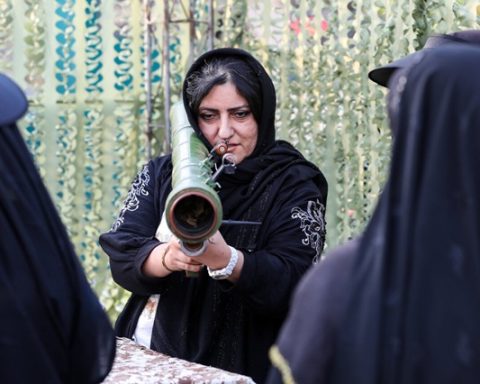

The Islamic Revolutionary Guard Corps (IRGC) was established in 1979 after the Iranian Revolution to safeguard the newly formed Islamic Republic. More than just a military force, it became the guardian of the revolution, ensuring its survival against both internal dissent and external threats. The Iranian Army, having served under the Shah, was deemed unreliable, making the IRGC the regime’s trusted force in countering military threats. Domestically, it was tasked with suppressing opposition groups, including leftists, monarchists, and ethnic separatists. Over time, its role expanded beyond Iran’s borders, evolving into a force dedicated to spreading the Islamic Revolution, particularly across the Middle East.
The Iranian Revolution of 1979 was the result of a complex mix of political, social, and economic grievances. The Shah’s authoritarian rule, enforced by the notorious secret police, SAVAK, fueled widespread resentment. His close alliance with Western powers, particularly the United States and Britain, deepened public frustration, as many believed foreign influence had corrupted Iran’s economy and culture. Rapid modernisation created economic disparity, with inflation and unemployment hitting the lower classes the hardest. However, the most powerful catalyst was the religious opposition led by Ayatollah Khomeini. Shi’a clerics, particularly Khomeini, condemned the Shah’s rule as un-Islamic and oppressive, mobilising mass support for an Islamic government rooted in justice and national identity.
More than four decades later, Iran has achieved some of the revolution’s goals but continues to face significant challenges. It has successfully resisted Western influence, maintaining sovereignty over its policies despite enduring sanctions and diplomatic isolation. The theocratic governance structure remains intact, with the Supreme Leader holding ultimate authority. Iran’s influence in the region has grown considerably through its support for groups such as Hezbollah, the Houthis, and militias in Iraq and Syria. However, the promise of social justice remains contested, with economic struggles, political restrictions, and recurring protests reflecting ongoing dissatisfaction among many Iranians.
For Pakistan, the Iranian Revolution marked a turning point in bilateral relations. Before 1979, Pakistan had close ties with the Shah’s Iran, but the emergence of the Islamic Republic led to a shift in dynamics. Iran’s new leadership sought to export its revolutionary ideology, exacerbating sectarian tensions in Pakistan. The rise of Sunni-Shia conflicts, influenced by Iran’s ideological outreach, created security concerns that persist to this day.
Despite political shifts, economic relations between Pakistan and Iran continued, particularly in the energy sector. However, US sanctions on Iran have frequently hindered broader cooperation. Geopolitically, Pakistan maintained strong ties with Saudi Arabia and the United States, both of whom opposed revolutionary Iran. This alignment occasionally caused friction between Islamabad and Tehran.
The Soviet-Afghan War (1979-1989) further highlighted differences in their regional strategies. Pakistan, backed by the US and Saudi Arabia, supported the Sunni Afghan Mujahideen, while Iran aligned with Shi’a factions, leading to diverging policies on Afghanistan. These contrasting approaches have continued to shape Pakistan-Iran relations over the years.
Despite ideological and geopolitical differences, Pakistan and Iran have maintained diplomatic ties, with both nations recognising the need for cooperation in trade and regional security. However, sectarian divisions, border security issues, and external influences continue to challenge the relationship, reflecting the lasting impact of the Iranian Revolution on South Asia and beyond.