


by Our Correspondent in London
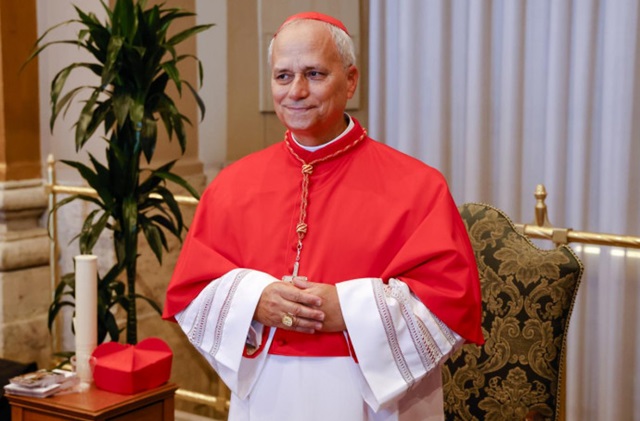
There are moments in history when the shadows cast by a single individual can stretch far beyond their own lifetime, poisoning the legacy of an entire institution. Pope Leo XIV, born Robert Francis Prevost, may very well be one such individual. For all the honour bestowed upon him as the pontiff, the darker facets of his tenure as Bishop of Chiclayo—where he was embroiled in the concealment of abhorrent sexual abuse allegations—have already begun to haunt the future of the Catholic Church. A Church already battered by decades of scandal, now faces an insidious new chapter, written not in ink but in the silence of ignored victims and the strategic inaction of those entrusted with the moral guidance of billions.
The story begins with three sisters—Ana María Quispe Díaz, Aura Teresa, and Juana Mercedes—who, as children, fell prey to the dark machinations of two priests, Fr. Eleuterio Vásquez Gonzáles and Fr. Ricardo Yesquén. For years, they were subjected to unspeakable abuses under the cloak of the very institution that was meant to protect them. These girls were not merely exploited by the clergy; they were betrayed by the very moral order they were supposed to be nurtured within. Fr. Vásquez, “Padre Lute” as he was called, and Fr. Yesquén, a man of considerable influence within the parish, abused their positions of power to inflict physical and psychological violence on these innocent minors. The abuse, reported by Ana María herself, occurred during missionary trips and overnight stays in parishes where the priests—acting under the authority of the Church—arranged for the victims to sleep in single beds, making the exploitation not just inevitable but premeditated.
What should have been the beginning of a justice-driven resolution quickly became an exposé of the Church’s inability to confront its own moral decay. Ana María, now a woman of courage and resolve, took to social media platforms like TikTok and Facebook in 2022 to reveal the truth. Her voice, at once harrowing and defiant, broke through the façade of silence that had shielded the Church for far too long. “I have suffered enough,” Ana María wrote, “but the time has come for the world to know that the Church has failed me, my sisters, and many others.”
Despite the courage of these victims, the response from Bishop Prevost and the Catholic hierarchy was tepid, at best, and criminal, at worst. Rather than addressing the allegations with the gravity they demanded, Prevost, who was at the helm of the diocese, seemingly avoided the full ramifications of the abuse. The diocese, in the aftermath of the accusations, responded with assurances of support but delivered none. Instead, the victims were urged to pursue civil legal action, a move that can only be interpreted as an attempt to deflect attention and to avoid the ecclesiastical scrutiny that should have followed.
This was not merely a failure of leadership—it was a deliberate evasion of the kind of ecclesiastical justice that could have helped these victims find peace. The Church, under Prevost’s stewardship, failed to conduct a robust canonical investigation, and the Vatican’s Dicastery for the Doctrine of the Faith (DDF) eventually declared the case insufficient for action, a damning decision that spoke volumes about the Church’s priorities. What could have been an opportunity for genuine atonement was reduced to a farce. A preliminary investigation was submitted, but it amounted to little more than a ceremonial nod to accountability—an exercise in form rather than substance.
The final insult to these victims came when the case was archived, with no formal recognition of the abuse or the harm done. Even after the victims provided public testimonies, urging the Vatican to act, the Church closed ranks around its clergy and allowed Fr. Vásquez—despite his admission of guilt—to continue participating in ministry, albeit under the radar. His ability to slip through the cracks of ecclesiastical discipline shows the deep flaws within the system: a system not constructed to protect the vulnerable, but to shield its own from scrutiny.
The repercussions of these failures are not just personal—they are systemic. Prevost’s apparent indifference to the suffering of his flock, coupled with his failure to take meaningful action against abusive clergy, paints a grim picture of how the Church continues to value its reputation over the dignity of its members. The victims in this case were not just ignored—they were actively silenced, their testimony undermined by the institution meant to be their sanctuary. And in that silence, the damage to the Church’s credibility deepens.
But what does this mean for the future of the Church? As Pope Leo XIV, Prevost now stands at the apex of an institution struggling with its most profound crises. His papacy, tainted by the unresolved allegations from Chiclayo, raises uncomfortable questions about the Vatican’s ability to break free from its past. The legacy of his episcopacy is one of calculated evasion, where the pursuit of truth was sacrificed on the altar of institutional protectionism. The Church’s failure to address sexual abuse with the seriousness it warrants has led to its moral decay, and Prevost’s tenure as Bishop of Chiclayo only underscores this sad reality.
The question remains: can the Catholic Church ever truly reform itself, or is it doomed to repeat the same mistakes? Can a man who stood by while the most heinous of crimes were swept under the rug ever truly lead the Church toward healing and renewal? These are not just theological questions; they are questions about the very survival of the Church as a moral authority. The future of the Church is now inexorably linked to its ability to confront its darkest corners, and the shadow cast by Pope Leo XIV will not fade quickly. The ghosts of Chiclayo will follow him to the Vatican, and their presence will loom large over every papal decision he makes.
This is not merely a scandal that will be forgotten with time. It is a stain on the Church’s soul, one that will endure, because it is rooted in something far deeper than an isolated incident—it is rooted in the structural failure of an institution that continues to place its power, its reputation, and its own interests above the lives of its most vulnerable members. As the Catholic Church steps into a new era under Pope Leo XIV, it does so burdened with the knowledge that its moral failings will continue to reverberate through the annals of history. The dark side of this papacy is not just a personal failing; it is a reflection of a wider institutional malaise that has now seeped into the very fabric of the Church itself. The Church’s reckoning has not yet arrived, but it is coming, and it will be a reckoning that will define its place in the world for generations to come.




Great article. Pope Leo has the authority to pursue action against these evil men! One can only assume different reasons why the Vicar of Christ chooses not to, or can’t?