The trilateral AUKUS defense pact between the United States, Australia, and the United Kingdom has come under fresh scrutiny after news emerged that the Pentagon is conducting a formal review of the deal — prompting alarm among officials and lawmakers on both sides of the Pacific.
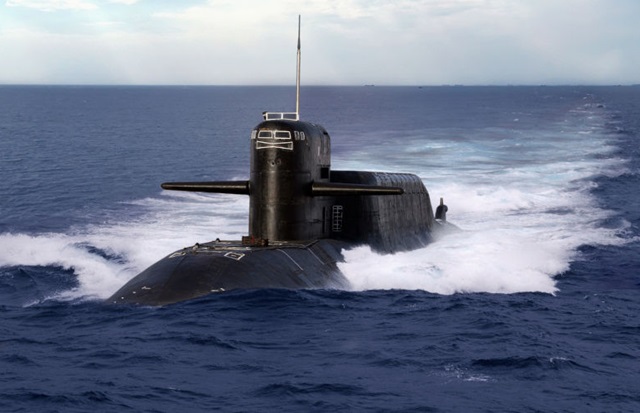
The review focuses on the nuclear-powered submarine component of the pact, a cornerstone of the AUKUS agreement that aims to bolster Western presence and deterrence capabilities in the Indo-Pacific region, particularly in response to growing Chinese assertiveness.
Under the current AUKUS framework, Australia is expected to procure up to five US-built Virginia-class submarines starting in 2032, while collaborating with the US and UK to co-develop a next-generation submarine — known as the SSN-AUKUS — expected to enter service by 2040. This effort involves sharing highly sensitive American nuclear propulsion technology, long seen as a strategic leap forward for Canberra.
Shockwaves Among Allies
The decision to reassess the deal has rattled AUKUS supporters. Congressman Joe Courtney, a leading advocate of the pact in Washington, described the review as a “thunderbolt,” highlighting the potential implications for allied trust and Indo-Pacific defense planning.
In Australia, the development has reignited a national debate. While the government of Prime Minister Anthony Albanese has attempted to downplay the move as a standard procedural review, the timing and leadership of the assessment have raised eyebrows. The review is reportedly being led by Elbridge Colby, the current US under-secretary of defense for policy — a figure known for his skepticism toward AUKUS.
Former Australian Prime Minister Scott Morrison, who co-signed the original deal in 2021 alongside then-President Joe Biden and UK Prime Minister Boris Johnson, cautioned against “over-interpreting” the review, characterizing it as a routine departmental process.
Production Challenges and Strategic Tensions
Critics of the AUKUS submarine plan have pointed to mounting concerns about the US Navy’s ability to meet its own production targets for the Virginia-class submarines. Since 2022, the annual output has averaged just over one boat per year — well below the target of 2–2.3 per year needed to meet both US Navy demands and Australian commitments by 2028.
In March, Colby acknowledged that while providing submarines to Australia would be beneficial, there was a pressing need to retain sufficient assets to deter a potential conflict over Taiwan. “There is a very real threat of conflict in the coming years,” he warned, stressing that US submarines are “absolutely essential” in that scenario.
Supporters argue that production shortfalls are being addressed. The US has committed significant new funding to expand its submarine industrial base, and Australia has pledged $3 billion to support US shipbuilding capacity as part of the AUKUS deal.
“There is no ticking clock that says a decision has to be made in 2025,” Congressman Courtney emphasized, suggesting that the situation would improve by the end of the decade.
Strategic Advantage or Bargaining Tactic?
Military and diplomatic analysts believe the review may also be part of broader US efforts to pressure Canberra into boosting its defense spending. Secretary of Defense Pete Hegseth has called for Australia to raise its military budget from just over 2% of GDP to 3.5%, framing it as necessary for “burden sharing” in collective defense.
Matthew Sussex of the Australian National University said Washington has long perceived Australia as lagging behind on defense investment, and the review may be a tactical move to accelerate spending commitments.
Paul Myler, a former Australian diplomat and current CEO of strategic consultancy StratQ, argued that the infrastructure needed to support the submarines in Western Australia is already in motion. “The largest naval base in the southern hemisphere is being prepared not just for Australia, but for allied operations and submarine sustainment,” he said.
He added that any suggestion of cancelling AUKUS submarines would directly undermine the Trump administration’s shipbuilding revival agenda. “If the review concludes the US can’t deliver the submarines, it would be betting against its own shipbuilding goals,” he noted.
Former PMs and Experts Warn of Strategic Risk
Malcolm Turnbull, another former Australian prime minister, expressed skepticism over the likelihood of the US parting with any Virginia-class submarines, given their own shortages. “If the US Navy is already short and the industry can’t keep up, it’s hard to imagine any president — however friendly to Australia — agreeing to give them away,” Turnbull said. He warned that without a backup plan, Canberra could find itself stranded in 2032 with no viable alternative.
Optimism and Commitment
Despite the uncertainty, top AUKUS supporters remain optimistic. US Admiral Samuel Paparo, head of Indo-Pacific Command, told Congress that AUKUS provides the US with a “generational advantage,” especially with submarine operations planned from Perth starting in 2027. This, he said, would dramatically cut response times in case of conflict in the South China Sea.
Michael McCaul, chair emeritus of the House Foreign Affairs Committee, reiterated the pact’s value as a deterrent. “As tensions in the Indo-Pacific near a breaking point, deterrence is critical. AUKUS provides that deterrence through nuclear submarines — the crown jewel of the sea,” he said.
UK Prime Minister Sir Keir Starmer, set to meet President Trump at the upcoming G7 summit in Canada, echoed this optimism. “I don’t have any doubt that this will progress,” he said.
Prime Minister Albanese is also expected to hold bilateral talks with Trump on the sidelines of the summit in a bid to reinforce Australia’s commitment to the pact and ensure continuity.