After its partial victory against Pakistan in Operation Sindoor 1.0, India’s political and military leadership has been emboldened to the brink of bravado — a stance that is both risky and dangerous. This new normal following Operation Sindoor marks an unprecedented use of threatening war rhetoric. While politicians have made irresponsible and irrational threats against Pakistan since India became a nuclear weapons power — particularly regarding the retaking of PoK — no Service Chief had previously made grandiose claims of political intent to annihilate Pakistan until COAS Gen Upendra Dwivedi’s recent declaration. He warned that if Pakistan continued its state-sponsored terrorism, India would not show the restraint it exhibited during Operation Sindoor, but would make Pakistan reconsider “whether it wanted to be on the map or not.”
On the same day, October 3, Air Chief Marshal A.P. Singh briefed the media on how a defeated PAF had “to sue for peace.” He brushed aside IAF aircraft losses and claimed to have destroyed or damaged 12 to 13 Pakistani planes. On October 2, Defence Minister Rajnath Singh, speaking at Bhuj, warned Pakistan of a resounding response to any misadventure like in 1965, asserting that it could “alter Pakistan’s history and geography.” In August, CNS Adm Dinesh Tripathi said the Navy would be the first to take action against Pakistan in any future conflict — this after Prime Minister Narendra Modi told Tripathi on May 10, following the Operation Sindoor ceasefire, “I have snatched a morsel from your mouth,” referring to the Navy’s preparation to launch a BrahMos missile at Karachi, adding, “but your turn will come.”
The targeting of Pakistan with a chorus of threats by India’s highest political and military leadership is unprecedented. Following the October 2 and 3 warnings to Rawalpindi, Pakistan retaliated with an all-caps statement: “If there was any national erasure, presumably brought about by nuclear weapons, it will be mutual.” Defence Minister Khawaja Asif told Pakistan’s Samaa TV that “chances of war with India are real.” If a war were to occur, India would be fighting a China-reinforced one-front war, as Rawalpindi and Beijing have integrated their operational capabilities and synchronized their use of national assets and force multipliers. Furthermore, Turkey is expected to provide full military backing, with Arab countries supporting Pakistan under the recently signed Pakistan–Saudi Arabia mutual defence pact.
Most previous wars and skirmishes with Pakistan have ended in stalemate (except in 1971 and Kargil), contrary to India’s claims of victory. During Operation Sindoor, the PAF demonstrated its air-to-air engagement prowess by eliminating several IAF aircraft — losses previously acknowledged by the CDS, DGMO, DGAO, and notably the French Air Force Chief, Gen. Jerome Ballinger, who stated there was evidence of three Indian losses: one Rafale, one Sukhoi, and one Mirage 2000. This marked the first-ever loss of a Rafale, an aircraft exported to eight countries.
India, meanwhile, exaggerated its victory claims regarding damage to Pakistani military infrastructure. NSA Ajit Doval declared 90 days after the war that “not a windowpane was damaged,” a statement later endorsed by CDS Gen. Chauhan. However, photos of debris from downed aircraft near Bathinda and Srinagar were published in Indian newspapers.
Corporal Varun Kumar was awarded the Vayu Sena Medal “due to an enemy missile strike at a forward air base.” Both India and Pakistan have produced their own self-serving versions of Beyond Visual Range (BVR) — non-contact skirmishes — each embellishing tales of valor and liberally bestowing gallantry awards, some in India without citations. Pakistan’s narrative, however, proved more cohesive and persuasive. Far from being isolated, Pakistan is being courted by the United States — the world’s only superpower — which has re-hyphenated it with India.
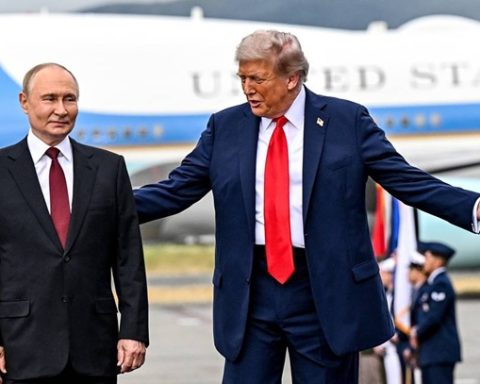
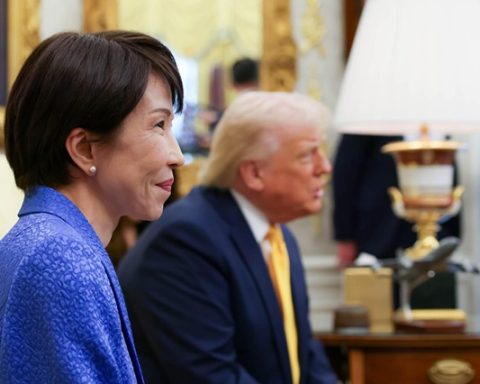
No major country has held Pakistan responsible for the Pahalgam terrorist attack, except Israel and the Taliban — both pariah states, with the latter recognized only by Russia. Delhi drew the ire of President Trump by defending its strategic autonomy and refusing to acknowledge his personal role (as distinct from that of the U.S.) in facilitating the ceasefire. In retaliation, Trump has reportedly told every world leader he meets at the White House that he organized the ceasefire and averted a nuclear war, occasionally adding that seven aircraft were lost in the skirmish.
The cost of enhancing Modi’s muscular image has been steep — 50% tariffs, sanctions on the purchase of Russian oil, withdrawal of the waiver on Chabahar Port in Iran, likely EU sanctions, and more. How Modi can still call Trump “my friend” while congratulating him for the Gaza ceasefire is puzzling. His praise for Netanyahu, who addressed an almost empty hall at the UNGA, is equally baffling.
At times, India’s diplomacy appears to run on autopilot. Any future war with Pakistan will likely be indecisive. The 1971 war fought in East Pakistan was winnable only because of unique circumstances — India had to ally with the Soviet Union for political and military cover, even though the partnership was billed as a ten-year Treaty of Peace and Friendship consistent with India’s non-alignment policy.
Make no mistake — India cannot militarily seize PoK, despite boasts from some Army Commanders that it can be done. India’s outdated defence policy still hinges on “not losing an inch of territory.”
After Operation Sindoor, the IAF has obstructed the push for theatre commands, while the CDS has issued several policy papers on joint doctrines — all without a comprehensive national security policy. The IAF should not presume that air and space power alone will determine outcomes on the ground. Russia’s relentless air campaign in Ukraine has not significantly altered battle lines.
India has failed to deter or halt state-sponsored terrorism. Neither Balakot nor Operation Sindoor has succeeded in doing so, though air power remains a proven non-escalatory tool — which is why Operation Sindoor is currently on pause. India has been “mowing the grass” in Pakistan and PoK, not uprooting the sources of terrorism, because it lacks both the political will and the capability to fight beyond a limited war.
Ultimately, a military solution is not available. India continues to insist that talks with Pakistan will be limited to terrorism, while Pakistan demands comprehensive discussions on all disputes. State-sponsored terrorism cannot be eliminated through military means. Delhi should abandon empty threats and adopt a more realistic approach.