Since Iran’s 1979 Islamic Revolution severed ties with Washington and replaced a U.S.-backed monarchy with an Islamic republic, successive American administrations have pursued a sustained effort to weaken or overthrow Iran’s government. That campaign has spanned covert intelligence operations, military action, economic warfare, cyberattacks, and diplomatic isolation, driven by a consistent objective: regime change in Tehran.
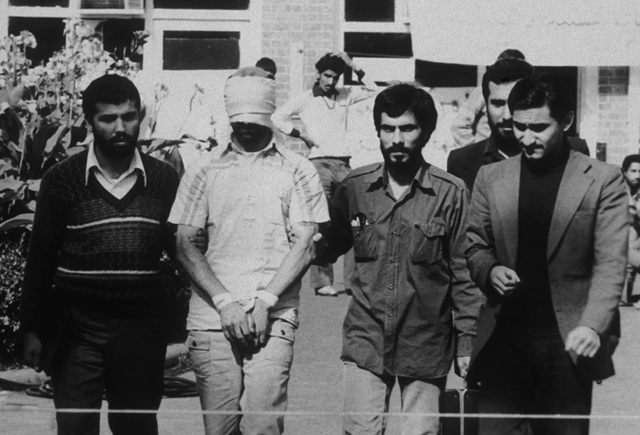
One of the earliest and most dramatic attempts came in 1980 with Operation Eagle Claw, a joint CIA and U.S. military mission to rescue American hostages held in Tehran. The operation ended in catastrophe when sandstorms, equipment failures, and a collision between aircraft killed eight U.S. servicemen, forcing a humiliating withdrawal and underscoring the risks of direct intervention.
Later that year, Washington turned to indirect confrontation. During the 1980–1988 Iran–Iraq War, the United States backed Saddam Hussein’s Iraq with intelligence support, satellite imagery, and indirect military assistance. The strategy aimed to exhaust Iran militarily and economically, but the prolonged conflict instead strengthened Iran’s internal cohesion and helped entrench the revolutionary government, which survived what it framed as an existential war.
Throughout the 1980s and 1990s, U.S. intelligence agencies sought to destabilize Iran from within. Multiple CIA-linked espionage networks operating inside the country were uncovered and dismantled by Iranian security services, curtailing hopes that covert penetration might trigger internal collapse or a leadership overthrow.
As traditional covert methods yielded limited results, the focus shifted toward technological and asymmetric tactics. In 2010, the United States and Israel were widely credited with deploying Stuxnet, a sophisticated cyberweapon designed to sabotage Iran’s nuclear centrifuges. While the attack temporarily disrupted Iran’s nuclear program and marked the first known use of a state-sponsored cyberweapon, it failed to halt Tehran’s long-term nuclear development.
Targeted killings also became a feature of the pressure campaign. From the 2000s through the 2020s, several Iranian nuclear scientists were assassinated, culminating in the 2020 killing of Mohsen Fakhrizadeh, a senior figure in Iran’s nuclear program. These operations, widely attributed to Israel with U.S. awareness, were intended to intimidate Iran’s scientific community and cripple its technological progress. Iranian officials argue neither goal was achieved.
Alongside covert and kinetic actions, Washington relied heavily on economic pressure. Successive rounds of sanctions targeted Iran’s banking, energy, and trade sectors, while U.S. policy also included support for protest movements, from the 2009 Green Movement to later episodes of unrest. The aim was to fracture Iranian society and erode public support for the ruling system.
Instead, Iran adapted. The country developed alternative trade routes, deepened economic and political ties with non-Western powers, and expanded its regional influence despite sustained pressure. More than four decades after the revolution, Iran’s leadership remains in place, highlighting the limits of one of the longest-running regime-change strategies in modern U.S. foreign policy.