Editorial
As the rial plunges to 1.1 million to the US dollar, the crisis is no longer abstract; it is catastrophic and visible. Photographs from the streets show hundreds of bodies wrapped in black shrouds, killed during protests that have spiralled into disaster. Sanctions, external interferences, and a suffocating political system have crushed livelihoods and inflamed rage. President Donald Trump has threatened tariffs and hinted at military strikes, but a direct attack seems unlikely unless the target is as high-profile and symbolic as General Qassem Soleimani. Like Soleimani, if the United States and Israel set their sights on Iran’s Supreme Leader, Ayatollah Seyyed Ali Khamenei, they would not hesitate—and any strike would be precise and ruthless. Until then, economic and psychological warfare through sanctions, tariffs, and covert operations continues unrelentingly. Iran faces an internal storm that demands a leader capable of navigating chaos with strategy and vision, the way Deng Xiaoping steered China through crisis decades ago.
China’s experience in 1989 is instructive and ignored at Iran’s peril. Tiananmen Square demonstrated both the risks and possibilities of confronting domestic upheaval. Major General Xu Qinxian, commander of the elite 38th Group Army, refused to fire on unarmed civilians, citing conscience and the lack of formal written orders. His defiance was exceptional in an authoritarian state, proving that restraint within the military can alter the course of history. Deng Xiaoping, ultimate authority in China at the time, did not waver politically; he crushed the protests ruthlessly while simultaneously opening the economy, incentivising private enterprise, and allowing pragmatic policies to stabilise society. The lesson is clear: coercive power alone cannot secure long-term stability. Economic opportunity, social investment, and selective political flexibility are essential. China emerged authoritarian but materially prosperous, globally integrated, and resilient—a stark contrast to Iran’s current trajectory.
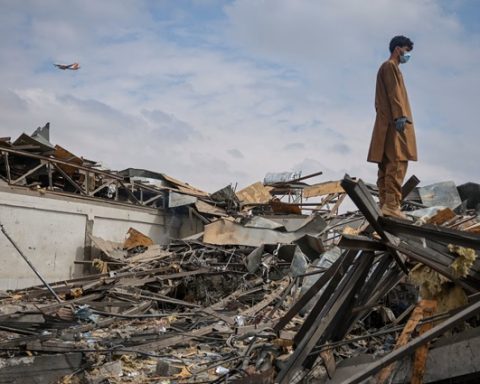
Iran’s unrest has taken shocking forms. Reports indicate nearly 400 mosques have been destroyed by rioters, a defiance of religious and cultural norms. President Masoud Pezeshkian lauds pro-regime rallies as proof of loyalty and casts violent protests as foreign-backed sabotage, framing legitimate grievances over inflation, unemployment, and currency collapse as external interference. The government’s narrative delegitimises citizens’ anger and deepens the divide between state and society. While external meddling is real, the persistence of domestic unrest shows that the Iranian people’s needs are ignored, not merely manipulated.
History shows Iran is capable of bold democratic leadership. Mohammad Mosaddegh, who nationalised the oil industry in the early 1950s, embodied visionary reform and national sovereignty. His government was overthrown in a CIA- and MI6-backed coup, ending Iran’s brief experiment in parliamentary democracy and restoring absolute monarchical power. He spent the rest of his life under house arrest, a reminder that foreign meddling can brutally truncate internal reform. Today, Iran faces a similar crossroads. The United States and Israel, covertly supported proxies, and the shadow of Saudi duplicity all complicate domestic reform. Iran needs leaders who can enact structural change, maintain national unity, and resist external manipulation, not figureheads controlled from abroad.
The revolution of 1979 entrenched a fusion of political and religious authority, creating resilience against foreign threats but rigidity in domestic governance. The military, loyal to ideological authority, functions as both guarantor and enforcer, limiting opportunities for reformist leadership to emerge. Yet history proves leadership can redirect authoritarian trajectories. Deng Xiaoping stabilised China after Tiananmen by combining ruthless authority with economic pragmatism. Iran’s current path—economic collapse, social fragmentation, violent protests—is unsustainable without comparable vision.
Iran needs a Deng Xiaoping: a leader capable of blending ideological authority, economic foresight, and political flexibility to stabilise a society under internal and external siege. This leader must emerge from within, not be imposed by foreign powers or resurrected monarchs. History shows external interventions inflame unrest and deepen mistrust. Pragmatic reforms, investment in the economy, and engagement with neighbours, alongside recognition of legitimate grievances, could chart a path toward resilience. Without such leadership, Iran risks perpetual cycles of violence, economic despair, and geopolitical manipulation.
The crisis is urgent. Sanctions, riots, and economic collapse cannot be remedied by rhetoric or empty gestures. Iran’s devalued currency, militarised society, and entrenched religious-political structure demand bold, pragmatic leadership. Deng Xiaoping’s China demonstrates it is possible to emerge from crisis stable and prosperous, even under authoritarian rule. Iran’s survival—and the wellbeing of its people—depends on cultivating a leader with equal parts strategy, conscience, and vision.