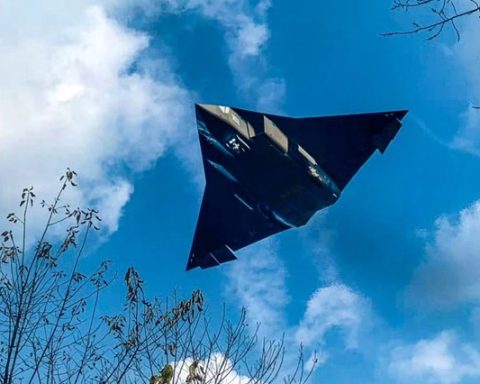
As China accelerates efforts to field a new generation of stealth bombers and long-range strike aircraft, the head of U.S. Air Force Global Strike Command has publicly downplayed the immediacy of the threat, arguing that Beijing’s capabilities remain largely regional despite years of ambitious development. The remarks offer a rare glimpse into how American military leaders are interpreting China’s evolving airpower strategy amid intensifying geopolitical competition across the Indo-Pacific.
Gen. Stephen Davis, who assumed command of Air Force Global Strike Command in November 2025, addressed the issue in a recent interview with The War Zone, his first since taking the helm of the organization responsible for the United States’ bomber fleet and land-based nuclear deterrent. Davis acknowledged that China is aggressively pursuing the ability to conduct long-range strikes comparable to those of the United States, particularly through the much-anticipated H-20 stealth bomber program, but he stressed that such ambitions have yet to translate into operational reality.
“I can certainly understand their desire to have a long-range strike capability like the United States,” Davis said, noting that Chinese planners appear intent on replicating American reach. “But they’re just not there yet.” According to Davis, no other nation can currently match Washington’s ability to deploy long-range strike platforms globally at a time and place of its choosing, a capability that has underpinned U.S. military strategy for decades.
The H-20, widely believed to be a flying-wing stealth bomber roughly analogous in concept to the U.S. B-2 Spirit, has been under development since the early 2000s. U.S. defense assessments have estimated that the aircraft could eventually achieve an unrefueled range of approximately 10,000 kilometers, with aerial refueling extending that distance further. Analysts believe it may be designed to carry up to 10 tons of ordnance, including land-attack and anti-ship cruise missiles, potentially allowing China to project power far beyond its immediate neighborhood.
Yet despite those theoretical specifications, Davis characterized China today as “a regional bomber force at best,” relying primarily on modernized versions of the H-6 aircraft, itself derived from the Soviet-era Tu-16. These aircraft form the backbone of the People’s Liberation Army Air Force bomber fleet and have been steadily upgraded to expand their reach and mission set.
One variant in particular, the H-6N, has drawn attention for its ability to carry a large air-launched ballistic missile beneath its fuselage. Introduced publicly in 2019, the platform enabled Beijing to reconstitute a credible air-based component of its nuclear triad, complementing land-based missiles and submarine-launched weapons. The missile associated with the aircraft, known as the Jinglei-1, is believed to be nuclear-capable and designed for precision theater strikes.
Such developments, however, reinforce rather than contradict Davis’ assessment. The Pentagon has repeatedly described systems like the DF-26 intermediate-range ballistic missile and the H-6N’s air-launched weapons as highly effective regional tools rather than instruments of true global power projection. Even in official reports to Congress, references to the H-20 have been cautious or absent, underscoring the uncertainty surrounding the program’s timeline and maturity.
A U.S. intelligence official reportedly said in 2024 that the H-20 was “not really” a near-term concern, citing engineering challenges in achieving the same level of low-observable performance seen in American bombers. Replicating the stealth, integration, and operational flexibility of aircraft like the B-2, and its successor the B-21 Raider, is widely considered one of the most technically demanding feats in aerospace engineering.
The ambiguity surrounding China’s bomber modernization contrasts sharply with a surge of activity in other areas of Chinese military aviation. In recent years, Beijing has unveiled or tested an array of advanced systems, including large stealthy flying-wing drones, next-generation tactical fighters such as the J-36 and J-XDS, and the GJ-11 uncrewed combat air vehicle. Satellite imagery and official releases have pointed to rapid experimentation, suggesting a strategy that blends incremental upgrades with leaps into new technologies.
Naval aviation has also advanced quickly, with the People’s Liberation Army Navy expanding carrier-based air operations and integrating airpower into broader maritime ambitions. Meanwhile, Chinese bombers have increased their operational tempo in contested zones such as the South China Sea and around Taiwan, often conducting joint patrols with Russian aircraft. In 2024, H-6K bombers flew in international airspace near Alaska for the first time during a combined mission, signaling a willingness to operate farther afield even without a dedicated intercontinental bomber.
For U.S. planners, the distinction between aspiration and capability remains critical. A true stealth bomber like the H-20 could eventually allow China to threaten targets across the Indo-Pacific, including U.S. territories such as Guam and Hawaii, and potentially even parts of the continental United States. It would also complicate defense planning for regional powers like Japan and India by expanding the range and survivability of Chinese strike options.
Davis emphasized that American strategy is focused not only on maintaining existing advantages but on extending them through new platforms. Central to that effort is the B-21 Raider, the next-generation stealth bomber designed to replace aging aircraft and operate in heavily defended environments. The B-21 is expected to feature enhanced sensors, data integration, and survivability, enabling it to penetrate advanced air-defense networks that adversaries are rapidly developing.
“We have a requirement to be able to do that day-to-day, for the President,” Davis said, referring to the need to hold targets at risk anywhere in the world. He described long-range strike as foundational to a wide spectrum of missions, from conventional deterrence to nuclear readiness and maritime targeting. The flexibility of modern bombers, including the range of weapons they can carry and the diversity of targets they can engage, remains a cornerstone of U.S. force projection.
The strategic calculus reflects a broader competition in which technological prestige and operational credibility are as important as raw hardware. China’s pursuit of systems like the H-20 signals its desire to move beyond a historically regional focus and acquire the tools of a global military power. The United States, meanwhile, is investing heavily to ensure that even as rivals modernize, it retains a decisive edge in reach, stealth, and integration.
Whether China can translate years of research and intermittent public hints into a deployable stealth bomber remains uncertain. Official statements that once suggested the H-20 was imminent have grown less frequent, and analysts continue to debate whether technical hurdles or shifting priorities have slowed progress. Even so, Beijing’s sustained investment indicates that the ambition has not faded.
For now, U.S. officials see a gap between rhetoric and reality. But in an era of rapid technological change and intensifying rivalry, that gap is being watched closely. The emergence of a credible Chinese long-range stealth bomber, whenever it arrives, would mark a profound shift in the balance of global airpower. Until then, Washington appears confident that its own bomber fleet remains unmatched in its ability to strike anywhere, at any time.