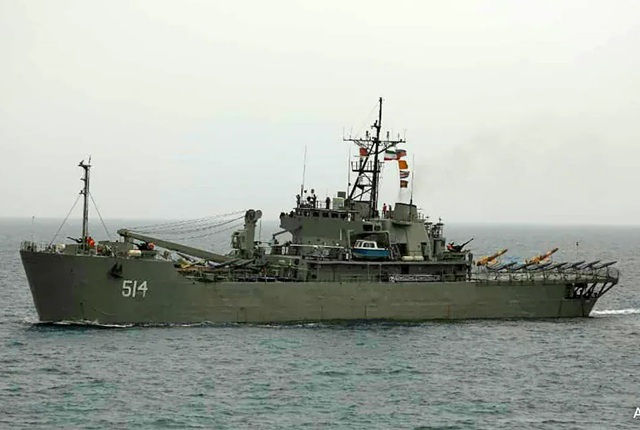
India allowed an Iranian warship to dock at a southern naval port after the vessel reported technical problems, according to government sources, in a development that unfolded just days before another Iranian frigate was sunk in the Indian Ocean during the rapidly escalating confrontation between the United States and Iran.
Officials told the news agency ANI that the Iranian warship IRIS Lavan sought urgent permission to dock in Kochi after experiencing technical difficulties while operating in the region. The vessel had earlier participated in the International Fleet Review 2026 and the multinational naval exercise MILAN 2026 hosted by India between February 15 and February 25.
According to Indian government sources, the request from Iran was received on February 28, the same day that the United States and Israel launched coordinated military strikes against Iran. Those strikes marked a dramatic escalation in regional tensions and reportedly killed Iran’s Supreme Leader, Ayatollah Ali Khamenei.
The Iranian vessel requested permission to dock at Kochi citing urgent technical issues, officials said. India reviewed the request as the security situation in the region deteriorated following the outbreak of hostilities.
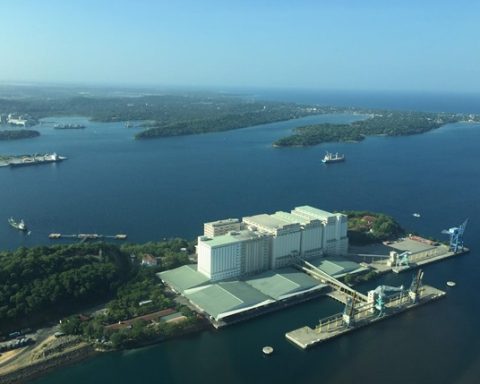
Approval for the docking was granted on March 1, after the conflict had already begun. The warship subsequently reached the southern Indian port city and docked on March 4.
Sources said the crew of the vessel, numbering 183 personnel, are currently being accommodated at Indian naval facilities in Kochi while repairs and assessments continue. Indian authorities have not indicated how long the ship will remain in port.
The decision to allow the Iranian vessel to dock comes amid heightened sensitivity in the Indian Ocean following the sinking of another Iranian naval ship, the frigate IRIS Dena. The warship was returning to Iran after taking part in the same MILAN naval exercise hosted by India when it was attacked south of Sri Lanka.
The strike reportedly killed at least 87 Iranian sailors and marked one of the most significant military confrontations between the United States and Iran outside the Persian Gulf. Iranian officials said the vessel had around 130 crew members, which is typical for ships of its class.
Iran’s foreign minister Abbas Araghchi condemned the attack, accusing the United States of committing what he described as an atrocity at sea. He warned that Washington would “bitterly regret” the sinking of the vessel.
The incident occurred against the backdrop of a rapidly expanding conflict that began when US forces launched strikes on Iranian targets on February 28. The attack reportedly killed Ayatollah Khamenei and triggered a wave of retaliatory actions across the region.
Iran subsequently launched a series of strikes targeting Israeli positions as well as American military installations across the Gulf region. Military facilities in countries including the United Arab Emirates, Bahrain, Kuwait, Jordan and Saudi Arabia were among the reported targets of Iranian retaliation.
The widening conflict has turned the Indian Ocean and surrounding waters into a zone of heightened military tension, drawing regional powers into difficult diplomatic positions. India, which maintains relations with both Western powers and Iran, has sought to balance humanitarian obligations and international maritime conventions with the strategic risks posed by the unfolding conflict.
Under international maritime law, ships experiencing distress or serious technical problems can request access to foreign ports for safety and repairs. Indian authorities indicated that the decision to allow the Iranian vessel to dock was made in accordance with those principles.
At the same time, the presence of an Iranian warship on Indian soil during an active military confrontation involving the United States places New Delhi in a delicate geopolitical position.
Developments in nearby Sri Lanka have further underscored the complexity of the situation. Sri Lankan authorities recently intervened in another incident involving an Iranian vessel in regional waters after the ship experienced mechanical failure.
Sri Lankan President Anura Kumara Dissanayake said officials decided to take control of the Iranian ship IRIS Bushehr following discussions with Iranian authorities and the vessel’s captain after one of its engines malfunctioned.
Speaking to journalists, the president said the decision had been guided by international maritime conventions and the extraordinary circumstances created by the ongoing conflict.
He stressed that such requests could not be viewed as routine port entries. Instead, authorities were required to carefully consider the legal and humanitarian implications under international treaties.
In a message posted later on social media, the Sri Lankan leader emphasized the human cost of the conflict, stating that no civilian should lose their life in war and that every life must be valued equally.
The docking of IRIS Lavan in Kochi and the destruction of IRIS Dena near Sri Lanka illustrate how the conflict between Washington and Tehran is spreading far beyond its traditional theaters in the Middle East. Strategic sea lanes across the Indian Ocean, through which much of the world’s energy supplies and trade pass, are now increasingly entangled in the geopolitical fallout.