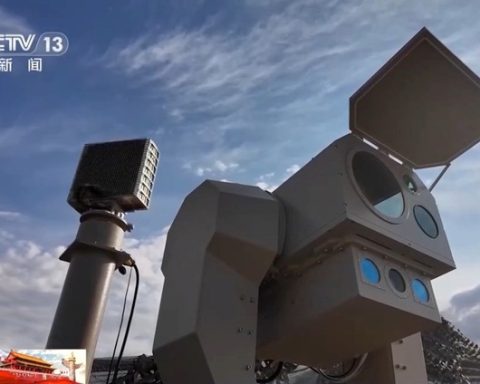
President Lee Jae Myung has publicly acknowledged for the first time that elements of the Terminal High Altitude Area Defense system, widely known as Terminal High Altitude Area Defense (THAAD), deployed in South Korea have been relocated to the Middle East, amid the escalating conflict involving the United States, Israel, and Iran. Speaking during a Cabinet meeting at Cheong Wa Dae on the 10th, Lee reassured the public that the move would not undermine South Korea’s deterrence against North Korea, while emphasizing the need for stronger self-reliant defense capabilities.
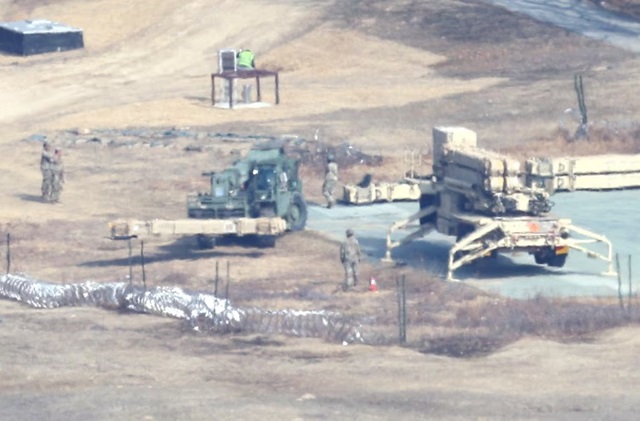
The relocation follows earlier reports that a Patriot surface-to-air missile defense system operated by United States Forces Korea had also been moved from the Korean Peninsula. A THAAD battery typically consists of an X-band radar, a tactical control center, six launchers, and up to 48 interceptor missiles. Officials have not confirmed how much of the single THAAD battery stationed in South Korea has been redeployed, though the system had been part of a layered missile defense network protecting key strategic areas.
During the meeting, Lee said the South Korean government had expressed opposition to the relocation of U.S. air defense weapons but acknowledged that the decision ultimately reflected American military priorities. He noted that external military support could change depending on shifts in the international order, warning that relying heavily on allies carried inherent risks. Lee stressed that the country must continue building an independent defense capability capable of responding to security threats.
The government has not issued a formal statement confirming the relocation, but a senior official acknowledged that Seoul cannot simply reject requests from its key ally. The movement of missile defense assets comes after several THAAD systems operated by the U.S. military in the Middle East were reportedly damaged in Iranian attacks during the widening regional conflict.
THAAD intercepts incoming ballistic missiles at altitudes between 40 and 150 kilometers and is considered a critical high-altitude defense layer. Since its deployment in South Korea in 2016, the system has been a source of significant geopolitical tension, triggering economic retaliation from China and sparking domestic protests and political opposition within South Korea. Analysts warn that if major components such as the radar or launchers are removed, reintroducing them could reignite similar controversies.
South Korean authorities had largely avoided discussing potential redeployments since the outbreak of hostilities between the United States, Israel, and Iran late last month. Reports indicate that U.S. Forces Korea had raised security concerns about local media coverage of troop and equipment movements, while Seoul also considered the diplomatic sensitivities among Middle Eastern countries involved in the conflict.
Lee’s remarks are widely interpreted as an attempt to calm domestic anxiety about weakening defenses against North Korea while reinforcing his long-standing policy of strengthening national military autonomy. He pointed to statistics suggesting South Korea’s annual defense spending is roughly 1.4 times North Korea’s entire gross national product and said international assessments rank the country’s military capability among the top five globally. According to Lee, despite North Korea’s nuclear arsenal, South Korea maintains overwhelming superiority in conventional forces and combat readiness.
The redeployment has nonetheless raised concerns among military analysts. A source within the armed forces noted that missile defense systems such as THAAD and Patriot follow the principle that greater numbers provide stronger protection. Any overseas redeployment, the source warned, could reduce response capacity if North Korea were to stage a provocation.
Reports citing U.S. government officials indicate that the Pentagon has been moving parts of the THAAD battery from South Korea to the Middle East while also gathering additional Patriot interceptors from the Indo-Pacific and other regions. Experts say the redistribution highlights the strain placed on global missile defense resources as conflicts expand across multiple theaters.
Currently, one THAAD battery remains stationed in Seongju, North Gyeongsang Province, supported by eight Patriot batteries positioned in Osan, Pyeongtaek, and Waegwan. These systems defend key installations including Camp Humphreys, the largest overseas U.S. military base, Osan Air Base, and critical logistics hubs near Busan Port. Together they form a multi-layered missile defense shield.
South Korea is developing its own high-altitude missile defense system known as L-SAM, sometimes described as a Korean equivalent to THAAD, which is expected to enter deployment starting next year. However, analysts say it will take time before the domestic system can fully compensate for any reduction in U.S. missile defense coverage on the peninsula.