March 2026 has seen an unprecedented surge in attacks across the Eastern Mediterranean and the South Caucasus, with Iran and its proxies reportedly striking key military and energy targets in Azerbaijan, Türkiye, and Cyprus. Analysts say these incidents reflect Tehran’s expanding strategy to exert influence far beyond the Persian Gulf, signaling risks to its neighbors and Israel-linked partners while exploiting regional vulnerabilities.
On March 5, Azerbaijani authorities reported that Iranian drones crossed into the Nakhchivan Autonomous Republic, an Azerbaijani exclave sandwiched between Armenia and Iran. The strikes injured civilians and caused significant infrastructure damage. Days later, Baku announced it had foiled an Iranian plot against the Baku–Tbilisi–Ceyhan (BTC) oil pipeline, a crucial route connecting Azerbaijani crude to Türkiye’s Mediterranean coast. A day before the Nakhchivan attack, a missile launched from Iran was intercepted over Türkiye by NATO air and missile-defense systems. Had the missile struck, it could have triggered a full Article V response from the alliance. Meanwhile, on March 2, a drone believed to have been launched by Lebanese Hezbollah targeted a British Royal Air Force base in Cyprus. Just days later, another Iranian missile headed toward Türkiye before being intercepted, reportedly aiming at the strategic Incirlik Air Base, widely believed to store U.S. B61 nuclear weapons.
While these incidents may appear dispersed, experts emphasize that they are interconnected through a series of complex regional and ethnic dynamics shaping Iran’s broader strategy. Azerbaijan and Iran, despite both being majority Shi’a nations, have a historically uneasy relationship. Tehran has long viewed Baku’s partnership with Israel warily and remains sensitive to the potential resonance of Azerbaijani nationalism among Iran’s Azeri population. Conversely, Azerbaijan enjoys a close alliance with Türkiye, often framed by leaders as “one nation, two states,” anchored in shared Turkic identity and a growing strategic partnership that recently facilitated Baku’s military gains in Nagorno-Karabakh.
Postwar settlement efforts between Azerbaijan and Armenia have attempted to stabilize the region, notably through the 2025 U.S.-backed declaration establishing the Trump Route for International Peace and Prosperity (TRIPP), linking Azerbaijan proper to Nakhchivan. Iran has opposed this corridor, which strengthens the Türkiye-Azerbaijan axis and reinforces infrastructure connecting the South Caucasus to broader energy and transport networks. The corridor also intersects with Israeli interests, as nearly half of Israel’s oil imports in 2025 came through the BTC pipeline. According to The Soufan Center, Iran’s actions in Azerbaijan appear aimed at disrupting these energy and strategic ties while warning regional actors against close cooperation with Israel.
Cyprus adds another layer to the geopolitical calculus. The island, divided between the internationally recognized Republic of Cyprus (ROC) in the south and the Turkish Republic of Northern Cyprus (TRNC) in the north, remains a point of tension between Türkiye and Greece. The United Kingdom retains two sovereign military bases from its colonial period. In recent years, Cyprus has grown closer to Israel, formalizing a trilateral security and cooperation plan with Greece set to begin in 2026, including joint military exercises and broader strategic coordination. These developments have been perceived as challenges by Türkiye, whose leaders have expressed strong objections to this emerging Mediterranean alliance.
Türkiye’s regional ambitions have further complicated its relationship with Iran. While Ankara and Tehran share concerns over Kurdish separatist activity along their borders, the fall of the Assad regime in Syria reshaped regional power dynamics, leaving Türkiye as a dominant external actor and further straining relations with Tehran. Iranian officials, for their part, have claimed that recent attacks on Azerbaijan, Türkiye, and Cyprus were false flag operations orchestrated by Israel to implicate Tehran and disrupt regional partnerships. Analysts caution, however, that evidence — including eyewitness accounts, debris analysis, and intelligence reports — strongly supports Iranian or Iranian-proxy involvement in the incidents.
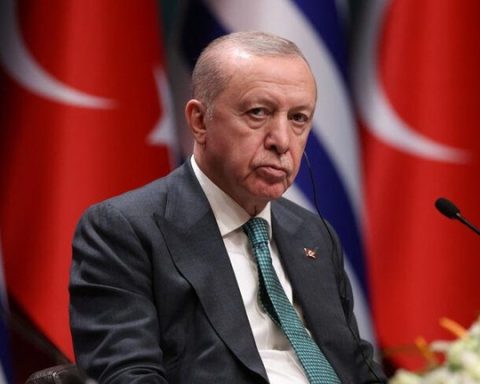
Following the March 9 missile launch toward Türkiye, President Recep Tayyip Erdogan warned Iran against actions that could harm Turkish-Iranian relations, emphasizing the historical ties between the nations. Simultaneously, Ankara deployed F-16 fighter jets and air defense systems to Northern Cyprus, reinforcing its strategic posture on the island. While not coordinated with Iran, these moves have indirectly complicated Israel’s position in Cyprus, creating a tangled web of regional pressures.
Relations between Azerbaijan and Iran have shown tentative stabilization. Baku delivered humanitarian aid to Tehran even after the Nakhchivan attacks and the BTC pipeline plot, following initial strong responses including embassy evacuations and mobilization of armed forces. Observers suggest that while Azerbaijan did not accept Tehran’s false flag claims, it may have opted for cautious de-escalation, relying on Türkiye’s pragmatic approach to prevent a broader conflict.
Strategically, analysts from The Soufan Center note that Iran’s broader calculus seems aimed at leveraging peripheral conflicts to pressure U.S. and NATO-aligned states, disrupt regional energy flows, and signal risks to Israel-linked partners. By targeting energy-rich corridors like the BTC pipeline and projecting force toward NATO assets such as Incirlik Air Base, Tehran creates multiple fronts of tension, diverting attention from the Persian Gulf and complicating regional diplomacy.
The recent incidents underline a sobering reality: Iran is likely to continue exploiting complex ethnic, strategic, and geopolitical dynamics across the Eastern Mediterranean and South Caucasus. By opening multiple fronts, creating distractions, and applying pressure on energy-dependent nations, Tehran is reinforcing its influence while avoiding direct, large-scale confrontation with regional powers like Türkiye. Experts warn that unless de-escalation mechanisms are strengthened, the region could see persistent instability, with cascading consequences for energy security, NATO posture, and broader Middle Eastern diplomacy.