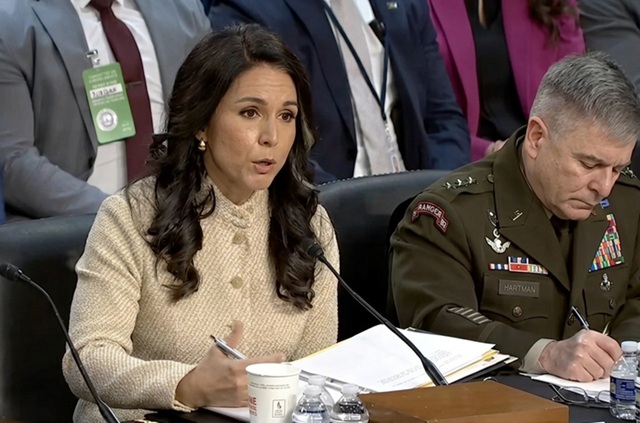
Top U.S. intelligence officials are warning of an increasingly dangerous global security environment, with Director of National Intelligence Tulsi Gabbard stating that countries including Pakistan, China, Russia, North Korea, and Iran are actively developing advanced missile systems capable of carrying nuclear and conventional payloads. According to U.S. assessments, these evolving technologies could potentially place the American homeland within striking range, raising serious concerns among policymakers and defense experts.
The warning comes as senior national security officials prepare to testify before Congress in a series of high-profile hearings focused on global threats, the ongoing war in Iran, and the state of domestic security. Lawmakers are expected to press intelligence leaders on the accuracy of recent military actions, particularly a controversial U.S. strike in Iran that reportedly hit an elementary school, killing more than 165 people. The incident, believed to have been caused by outdated intelligence, has intensified scrutiny of the intelligence community and its operational decisions. The White House has said the strike remains under investigation.
The hearings are also unfolding amid internal divisions within the administration following the resignation of counterterrorism official Joe Kent, who publicly opposed the justification for the Iran conflict. He stated that he could not support the war and did not believe Iran posed an imminent threat to the United States. His departure has added to growing debate over how intelligence is interpreted and used in shaping national security policy.
At the same time, intelligence assessments suggest that while Iran has expanded its missile capabilities, U.S. strikes are unlikely to lead to regime change in Tehran, and there are doubts about claims that Iran was preparing to launch an immediate attack. These findings are expected to be central to questioning during the hearings, particularly as officials seek to reconcile public messaging with classified intelligence.
Beyond international concerns, lawmakers are also expected to examine domestic security challenges, including a series of recent attacks and disrupted plots across the United States. The leadership of the FBI under Kash Patel is likely to come under scrutiny, especially after the dismissal of dozens of agents raised concerns about the loss of experienced personnel at a time of heightened threat levels. Federal authorities maintain that they are working continuously to protect the country, but the convergence of global tensions and internal security risks has amplified concerns over national preparedness.