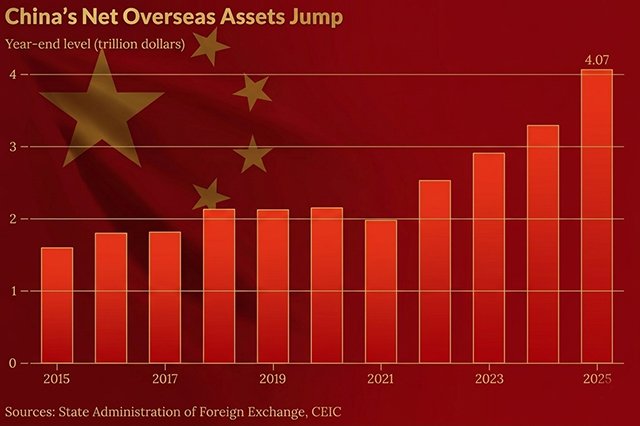
China’s net overseas assets climbed 28 percent year-on-year to reach $4.07 trillion by the end of last year, marking a significant shift in its global financial standing. The surge was driven in part by a substantial current account surplus, which has increasingly been redirected into outbound investments as Chinese firms seek to expand their presence beyond domestic markets and diversify their financial portfolios.
The latest data highlights a broader trend of capital outflows from China, as businesses and investors look for opportunities abroad amid evolving economic conditions at home. This strategic movement of capital has not only strengthened China’s external balance sheet but also elevated its position in the global financial hierarchy, making it the world’s second-largest net creditor.
According to figures released Friday by the State Administration of Foreign Exchange, China’s current account surplus reached $735 billion last year, equivalent to 3.7 percent of its gross domestic product. This represents the highest level recorded in more than a decade, underscoring the country’s robust trade performance and sustained inflows from goods and services.
The combination of strong external surpluses and increased overseas investment reflects China’s ongoing economic transformation, as it balances domestic growth challenges with an expanding international footprint. Analysts suggest this trend could have far-reaching implications for global capital flows, investment patterns, and China’s influence in international financial markets.