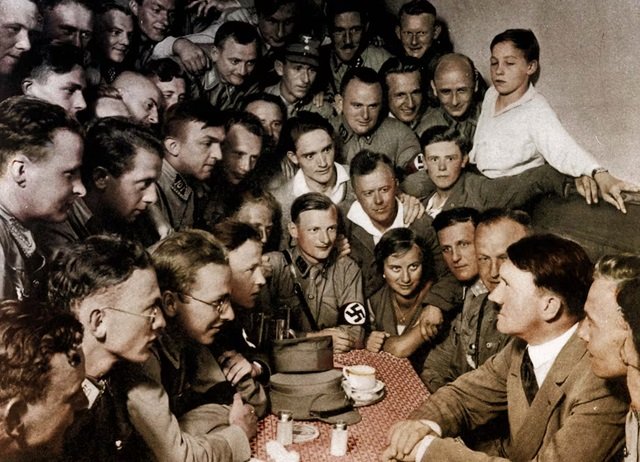
The appointment of Adolf Hitler as chancellor of Germany in January 1933 remains one of the most scrutinized events of the twentieth century. In his latest book, Irresponsables, historian Johann Chapoutot delves into the complex social, political, and economic conditions that allowed a violent, antidemocratic movement to seize power in one of Europe’s most advanced democracies. As reported by El País, Chapoutot also highlights striking parallels with the contemporary world, including the rise of ultraright parties in multiple countries and the authoritarian tendencies witnessed in the United States under Donald Trump.
Chapoutot, a professor at the Sorbonne and a leading expert on Nazism, recounts the final years of the Weimar Republic with meticulous detail, showing how systemic instability, widespread poverty, and fear of revolution created fertile ground for extremism. The aftermath of World War I, coupled with punitive conditions imposed on Germany, fueled radical nationalism and antisemitism. Political violence from both Nazis and communists compounded the crisis, leaving few parties willing or able to defend democratic governance. In Chapoutot’s narrative, the decisions of a small but powerful elite proved decisive in bringing Hitler to power, rather than popular votes alone.
The book portrays a cast of characters whose ambition and miscalculations shaped history. Figures such as Alfred Hugenberg, a major media mogul who leveraged his press empire to amplify extremist voices, exemplify how economic and political elites mistakenly believed they could control radical forces once they entered government. These actors underestimated the destructive potential of their choices, failing to consider the long-term consequences for citizens and the nation. Chapoutot underscores that Hitler’s rise was not inevitable; alternative political paths could have preserved democratic stability and averted the catastrophic outcomes of the Holocaust and World War II.
Chapoutot also situates the historical account within contemporary concerns. While acknowledging that direct comparisons are difficult, he notes “reminiscences” between Germany in 1932 and today’s political environment, emphasizing the recurring dangers posed by concentrated power, elite irresponsibility, and societal complacency. The book, according to El País, is particularly valuable because it blends a rigorous historical method with reflections on present-day democratic vulnerabilities, without succumbing to anachronistic interpretations.
One of the central arguments in Irresponsables is that the Weimar Republic’s collapse was driven by elite decisions rather than mass electoral choice. Hitler’s Nazi Party never achieved an absolute majority and was in decline in public polls, yet the chancellorship was granted by political and economic elites who feared communism and distrusted democratic processes. Chapoutot describes their actions as a combination of “whispered intrigues, personal vendettas, and backstage maneuvering” motivated by self-interest and a belief in their own capacity to manage radical forces. Their decisions highlight the precariousness of democracy when those entrusted with power prioritize personal or economic gain over the collective good.
The narrative also sheds light on what remains hidden in historical archives. Chapoutot points out that the full extent of business participation in supporting the Nazi rise is difficult to reconstruct because key documents were destroyed. Nevertheless, he illustrates how wealth, media influence, and political connections converged to facilitate one of the twentieth century’s most catastrophic democratic failures. The book reminds readers that the fall of a democracy can be as much a result of human error and hubris as of ideological extremism.
Irresponsables complements recent historical works, such as Volker Ullrich’s El fracaso de la República de Weimar and Benjamin Carter Hett’s The Death of Democracy. However, Chapoutot’s work is distinguished by its focus on the ethical and political responsibility of elites and its reflection on contemporary threats to democracy. He warns that the patterns of irresponsibility, elitism, and disregard for civic accountability that destroyed Weimar could reemerge in today’s societies if citizens and leaders fail to recognize and counteract them.
Chapoutot stresses that democracies are fragile and historically mortal. While the Great War demonstrated the vulnerability of civilizations, the demise of the Weimar Republic underscores the susceptibility of democratic institutions to collapse when political, economic, and social forces converge destructively. As El País highlights, the book serves as a stark warning that the “new irresponsibles” in contemporary democracies—those wielding power without accountability—may yet jeopardize freedoms if society remains complacent.