Benjamin Netanyahu has spent years at the centre of Israel’s most bitter political divisions. Now, weeks before the country’s parliamentary election on 27 October, the Israeli prime minister faces a renewed challenge that is less about his policies than about whether voters believe him.
The allegations are serious. Did Netanyahu receive a specific warning shortly before the Hamas attack of 7 October 2023 and fail to pass it to Israel’s security establishment? Netanyahu denies the claim, calling it an “absolute lie”. But the allegation has reopened the unresolved question of his responsibility for the worst security failure in the history of the Jewish state.
The account comes from an investigation published by the Israeli newspaper Haaretz. According to the Haaretz report, Sheikh Mohamed bin Zayed, president of the United Arab Emirates, spoke to Netanyahu by telephone for 45 minutes approximately a week and a half before the massacre. During that conversation, the report claims, Mohamed bin Zayed warned that Yahya Sinwar, the Hamas leader in Gaza, was preparing a major operation against Israel.
Netanyahu’s assessment, according to the report, was that the more serious danger lay in the West Bank. The prime minister allegedly did not inform either the army chief of staff or the heads of Israel’s intelligence services about the warning.
On Tuesday, the leaders of all the country’s major opposition parties issued a joint statement asking a pointed question: “Why did he not inform the security forces, and why did he not act to protect the Israeli population?”
Netanyahu’s office has rejected the Haaretz account outright. It said that he had not spoken to Mohamed bin Zayed during the period in question and had received no such warning. The sources cited by Haaretz for the alleged telephone conversation, including an alleged witness to the exchange, remain anonymous.
That makes the central allegation impossible to establish conclusively from the available material. As Die Zeit notes, without access to the underlying sources, the truth of the account cannot presently be assessed with certainty.
Yet the controversy extends beyond the disputed telephone call. Haaretz’s investigation placed the alleged warning within a broader reconstruction of contacts that Israel had maintained through intermediaries with Hamas since early 2023.
Those contacts reportedly concerned Gaza’s economic situation as well as negotiations over the release of Israelis being held captive by Hamas and the return of the bodies of Israelis who had been killed. In exchange, the release of Hamas members held in Israeli prisons was discussed.
According to the reconstruction, an agreement had been largely reached but was repeatedly delayed by Netanyahu. A frustrated Sinwar subsequently began threatening a spectacular terrorist operation in conversations with people close to him. The United Arab Emirates was allegedly involved in transmitting those threats to Israel—once through contact with Israel’s domestic intelligence service and once at the highest political level, in the reported conversation between Mohamed bin Zayed and Netanyahu.
The significance of the latest allegations therefore rests not only on whether one telephone call occurred. They have revived a much larger question: what did Israel’s political leadership know before 7 October, what did it do with that information, and who ultimately bears responsibility for the catastrophic failure?
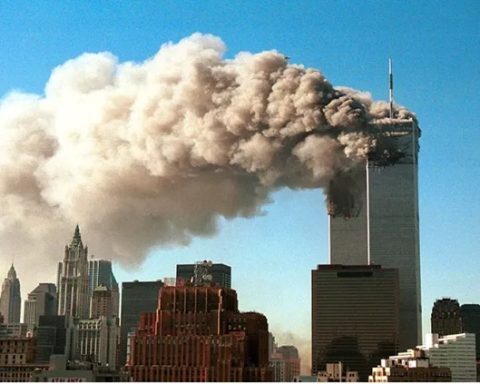
The Hamas attack itself remains one of the defining events of the modern Middle East. On 7 October 2023, Hamas and allied militant Islamist organisations launched a large-scale and surprise attack on Israel. Fighters entered Israeli territory from the Gaza Strip, massacred civilians, attacked military positions and abducted people. Witnesses subsequently reported torture and sexual violence, while thousands of rockets were fired at Israeli cities.
According to Israeli figures, about 1,200 people were killed and approximately 240 people were taken hostage to the Gaza Strip. The attack is regarded as the largest massacre of Jews since the Holocaust. It triggered the Gaza war and became one of the most severe escalations in the history of the Israeli-Palestinian conflict.
Despite the magnitude of the disaster, Netanyahu has continued to resist an independent expert commission examining the events preceding 7 October. Other senior figures from the time, including the defence minister, the army chief of staff and intelligence chiefs, have accepted responsibility and left their positions. Netanyahu, by contrast, has shown neither comparable remorse nor self-doubt.
His political camp has repeatedly suggested that the prime minister was badly informed by the security establishment and perhaps even deliberately misled. But, according to Die Zeit’s account, there are no convincing indications supporting such suspicions.
That history gives the latest allegations their political force. Even if the reported telephone conversation cannot be independently established from the information currently available, the controversy feeds directly into an existing dispute over Netanyahu’s credibility.
The political consequences, however, are far from certain.
Netanyahu is already one of the most polarising figures in Israeli politics. His opponents require little additional evidence to distrust him, while his supporters are likely to regard reports in Haaretz as another attempt by what they consider a hostile left-wing media outlet to discredit the prime minister.
On questions of policy, Netanyahu may also be less vulnerable than his European critics might assume. Many Israelis support his hard-line approach to the war and reject the prospect of accommodation with the Palestinians.
The more exposed issue may therefore be personal trust.
Netanyahu is widely regarded by his critics as untrustworthy and manipulative, as a politician who blurs the distinction between his own interests and those of the state. The latest allegations could reinforce precisely that perception by directing attention away from individual policy decisions and towards the opacity surrounding his conduct.
For the opposition, that makes an attack on Netanyahu’s credibility potentially more effective than another argument over policy.
The rise of Gadi Eisenkot, a retired general and now the leading opposition candidate, offers an indication of why. His political appeal is associated with qualities that contrast sharply with Netanyahu’s public image: simplicity, directness and an avoidance of polished political marketing.
The new allegations therefore return the focus to two questions that have never been fully separated in Israel: Netanyahu’s possible responsibility for the disaster of 7 October and the trustworthiness of the man who has led the country through its aftermath.
Whether the controversy changes the outcome of the 27 October parliamentary election remains uncertain. Israelis have lived with Netanyahu’s polarising presence for years, and many have already formed deeply entrenched views of him.
But political reputations can become liabilities when a national catastrophe is followed by persistent questions about what the leadership knew and when it knew it.
For Netanyahu, the most dangerous part of the latest controversy may ultimately be less the unresolved allegation itself than what it reminds voters of: that, even after the worst security failure in Israel’s history, questions about what happened before 7 October remain unanswered—and questions about whether they can trust their prime minister remain very much alive.