by Our Correspondent in Colombo
A prominent Chinese economist has called for a substantially expanded economic and commercial relationship between China and Sri Lanka, proposing the revival of a bilateral free-trade agreement, increased Chinese investment and imports from Sri Lanka, stronger support for Chinese enterprises operating in the country, the development of Sri Lanka as an Indian Ocean maritime capital, greater Chinese tourism, and deeper cooperation in the digital economy and artificial intelligence.
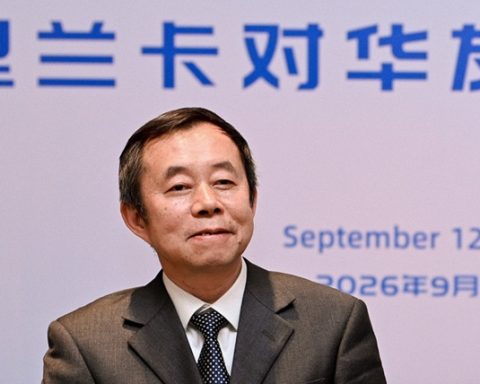
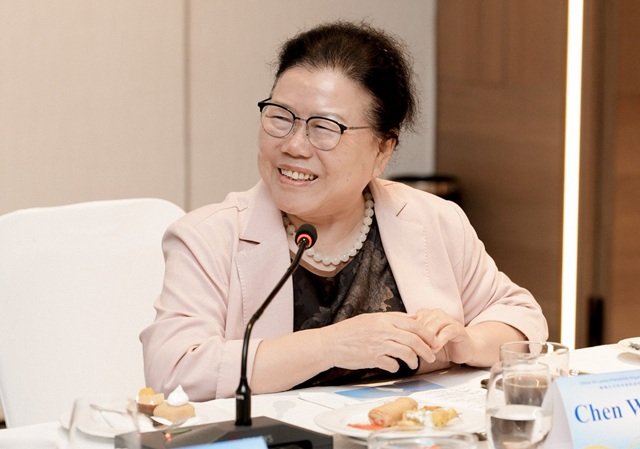
Dr Chen Wenling, currently a Senior Research Fellow at the Academy of Contemporary China and World Studies and an Expert Advisor to the Center for China and Globalization (CCG), made the proposals at the China–Sri Lanka Friendship Organizations Symposium in Colombo on Saturday, September 12, 2026. Speaking on “Analyzing the Current Situation and Prospects of China–Sri Lanka Economic, Trade and Infrastructure Cooperation”, Chen presented a five-point set of proposals that extended from trade and investment to maritime infrastructure, tourism and future industries, while also calling for stronger media and people-to-people exchanges between the two countries.
Chen has held senior positions in government, academia and economic research. She previously served as Director General of the Comprehensive Research Department of the State Council Research Office. Her academic positions have included Research Fellow and doctoral supervisor at Nankai University and Beijing Normal University, as well as Professor at Peking University and the University of International Business and Economics. She is also Vice Chairman of the China Marketing Association, China Business & Economic Association and China Logistics Association. Her areas of research have included modern circulation, modern logistics, modern business, modern social credit theory, foreign capital and macro-economics, as well as international, macro-economic and regional economic issues. In recent years, she has focused particularly on the Belt and Road, China–US relations, BRICS and China–India relations.
Chen opened her address by referring to the contributions made by representatives of five associations at the symposium. “Just now I have had the representative of five associations to speak about their thoughts, their perspectives and their proposals, and that was quite inspiring to me,” she said. “And I believe that will lay a solid foundation for the friendship between China and Sri Lanka.” She then placed the current relationship within a much longer historical framework, saying the two countries had maintained contact for more than 2,000 years. “Although we are far apart, we are still very close friends,” she said. “China and Sri Lanka share the friendship lasting for more than 2000 years.”
Much of Chen’s opening remarks centred on the historical and cultural relationship between the two countries, particularly the transmission of Buddhism and the journeys of Chinese monks to Sri Lanka. She referred to Faxian, whom she described as an early Chinese traveller who spent two years in Sri Lanka after travelling for 14 years through Southeast Asia. Chen said he brought knowledge of Southeast Asian culture back to China and translated Buddhist sutras into Chinese. She referred to his book, The Record of the Buddhism Country, as an important account of Sri Lankan culture and Buddhism. She contrasted Faxian with Xuanzang, another prominent Chinese Buddhist traveller, saying Xuanzang travelled to India and other parts of the region roughly 200 years later. “China and Sri Lanka, the two countries are not simply acquaintances. We are old friends,” Chen said.
She also described Buddhism as a significant element of the historical relationship between the two societies. Chen said China had a “continuous civilization of 5,000 years” and argued that Chinese culture had incorporated different intellectual and religious traditions. Referring to Confucianism, Taoism and Buddhism, she said Chinese culture had integrated influences from different traditions and that Buddhism had become part of Chinese culture. “We actually share the same cultural source from historical speaking and cultural aspect,” she said. “Because we share the same inheritance from Buddhism since the start of our friendship.”
Chen linked that historical relationship to the visit by symposium participants to the Sri Lanka National Museum earlier in the day. She referred to Zheng He, the Ming Dynasty envoy, saying he had been dispatched to the Western Seas seven times and had visited Sri Lanka five times. The museum visit, she said, provided an opportunity to see the historical evidence of those connections. She also referred to the coastal train journey taken by the visiting Chinese delegation, saying participants had seen “the Indian Ocean embracing us” and had also encountered evidence of Sri Lanka’s ancient cultural heritage.
From that historical account, Chen turned to the present economic relationship and argued that the two countries should convert their longstanding friendship into practical cooperation. “Therefore, we need to make some practical progress,” she said. “So I would like to provide some suggestions and proposals.” She said China valued “friendship and partnership” and advocated equal development in the United Nations and other international organisations. “We need to transform our friendship into concrete actions,” she said.
Her first proposal was to revive the China–Sri Lanka free-trade agreement. “First of all, we need to restart the free trade agreement between China and Sri Lanka,” Chen said. She referred to an earlier comprehensive framework for an FTA between the two countries and said she hoped negotiations could be restarted and placed on the bilateral agenda.
Her second proposal was to expand trade and investment, with particular emphasis on increasing Sri Lankan exports to China. Chen repeatedly described the existing bilateral trade relationship as too limited and said China should make greater efforts to increase imports. She referred to the China International Import Expo in Shanghai, which she said had been held for 10 consecutive years, and argued that many Sri Lankan products remained insufficiently known in the Chinese market. “We want to introduce a lot of goods and materials from Sri Lanka,” she said. “Especially during my two days staying in Sri Lanka, I have known and understand a lot of good products manufactured in Sri Lanka.”
Chen said she had personally purchased Sri Lankan products during her visit but found that such products were “seldomly known in Chinese market”. She therefore called for a larger trade relationship in which China would become the largest trading partner for Sri Lanka while Sri Lanka would become “a very important trade partner in China”.
Her third proposal was the most expansive in geographical and infrastructure terms. “Thirdly, we want to promote two governments to build Sri Lanka as a maritime capital on the Indian Ocean,” Chen said. She referred to the longstanding activities of Chinese companies in Sri Lanka and argued that their presence had created a foundation for greater cooperation. She called for stronger political support from the Sri Lankan government, a sounder business environment and greater external cooperation.
Chen specifically referred to Chinese state-owned enterprises, saying companies such as China Communications Group and China Railway Group had conducted business in Sri Lanka for many years. She said the Sri Lankan government should provide Chinese state-owned enterprises with “more political incentives” and a “more sound business environment”. She also called for the media sector to play a role in promoting the image of the Chinese government and said that, when appropriate, it could “talk back or fight back” against criticism of China’s development. She linked this approach to her wider proposal to develop Sri Lanka as an international hub for trade in the Indian Ocean.
Tourism formed the fourth element of Chen’s proposals. She described Sri Lanka as a “world-famous tourist destination” and said greater international tourism could provide substantial support to the country’s economy. She placed particular emphasis on the Chinese market, arguing that China’s large population offered a significant opportunity for Sri Lankan tourism. “If we as Sri Lanka government or Sri Lanka relevant bureaus could attract more Chinese people, it will definitely contribute to the economic development of Sri Lanka,” she said.
The fifth proposal focused on the digital economy and future industries. Chen said China had developed large-scale digital and artificial-intelligence capabilities and argued that China and Sri Lanka could establish deeper cooperation in these areas. “I believe in digital economy, China and Sri Lanka could have in-depth cooperation so that we could help Sri Lanka to develop their digital tools as well as artificial intelligence that will definitely bring prosperity to Sri Lanka’s future,” she said.
Chen concluded by returning to the need for closer people-to-people relations and stronger international communication. She called for the two countries to share their “common ground, common voice and common concept with different discourses, with different narratives”. At the same time, she said cooperation should be based on respect for national sovereignty, culture and development rights. “We have this one principle that is to respect the sovereignty of each country, respect the culture, respect the development rights of our two countries,” she said. “And I believe that should serve as the mainstream of development direction.”
Her proposals therefore ranged from reviving a free-trade agreement and increasing imports to strengthening Chinese enterprise activity, developing Sri Lanka as an Indian Ocean maritime capital, attracting Chinese tourists and building cooperation in artificial intelligence and the digital economy. Chen presented those proposals within a relationship she described repeatedly as being rooted in more than 2,000 years of historical, cultural and religious exchange, but also argued that the existing economic relationship remained too small and required concrete expansion.