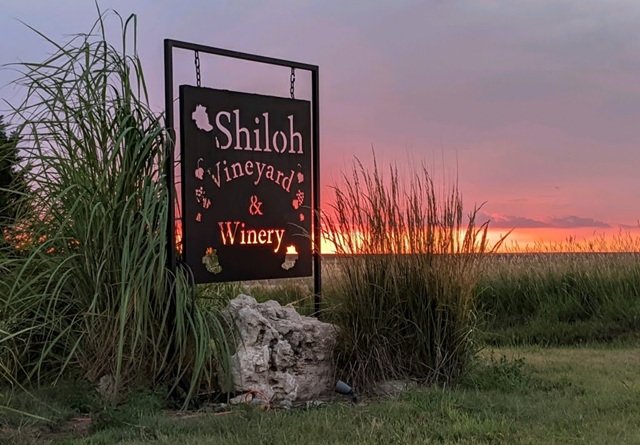
The Jewish New Year being marked this weekend, followed by the approaching Sukkot holiday, would normally be a buoyant period for kosher wine producers in the occupied West Bank. At the Shiloh winery, however, the celebrations have been tempered by Britain’s newly announced ban on imports from Israeli settlements, which are illegal under international law.
“This will have an effect. It is hard to say [how much] at the moment. Britain is an important market for us, though it’s not very big,” said Amichai Luria, chief wine-maker at the Shiloh winery, which produces wines bearing names that evoke Jewish history.
Luria, however, was not presenting the British decision as an existential threat. “When the going gets tough, the tough get going,” he declared, expressing confidence that the winery would find ways to adapt. Shiloh produces roughly half a million bottles a year, half of them for export.
The winery itself appears peaceful, with a porch overlooking what settlers describe as the heart of biblical Samaria. Yet its existence sits at the centre of one of the most contentious issues surrounding Israel and the occupied West Bank: the expansion of settlements and the ownership of land on which they and their agricultural enterprises have been established.
According to Dror Etkes, head of the settlement watchdog group Kerem Navot, settlers have planted large expanses of vineyards over the years, mostly on Palestinian land “looted with the support of the authorities”.
“Shiloh and its outposts are the most violent settlements in the West Bank. They are the ones who terrorise Turmusaya, Al-Mughayyir, Abu Falah, Jalud, Qaryut, Qusra, Duma and more,” said Etkes.
Luria rejected the allegation that his winery had engaged in theft. His position went further: he said there was no such thing as Palestinian property because all of the Land of Israel belongs to Jews.
The confrontation over the winery reflects a much wider political dispute. Foreign Secretary Ed Miliband announced the import ban in parliament last Tuesday, saying Israel’s government was speeding towards annexation and threatening to extinguish any chances of a two-state solution.
The Israeli government responded by closing the British consulate in occupied East Jerusalem.
In Turmusaya, a relatively prosperous Palestinian village with a large Palestinian-American population near Shiloh, the British decision was welcomed. Yaser Alkam, the municipality’s foreign relations director, described the move as significant and long overdue.
“It is very significant. It’s about time nations acted and put some pressure on products from settlers,” he said, expressing particular satisfaction that the measure would affect the Shiloh winery.
“Financially it might not have much influence, but it has a huge impact in symbolic meaning.”
In Shiloh itself, however, the British decision was viewed through an entirely different lens. Miliband’s statement that he was acting as a “proud British Jew” appeared to impress few residents and visitors. Instead, several cited antisemitism as the principal motivation behind Britain’s position and argued that the scale of settler violence was being exaggerated.
“The British are fed lies and don’t know what is going on here,” said Shlomo Eliyahu, 40, who was visiting from another settlement. “We are talking about a small speck of people whom most of our society rejects. Every society has marginalised youths. The issue is Arab terrorism.”
He described Britain’s position as part of a wider rise in antisemitism in Europe.
“We are going back to the time of the Holocaust, we’re in the late 1930s. We can’t travel to Europe any more because of the antisemitism. At the same time, we are treated like kings in Dubai.”
Eliyahu also argued that outsiders did not understand the “complex nature” of relations between settlers and Palestinians, pointing to a Palestinian business contact with whom he said he spoke every day.
Yet relations between the communities have deteriorated sharply since the Hamas attacks of October 7, 2023, which killed more than 1,200 Israelis. Far-right settlers have referred to Palestinian communities as “Nazi villages” in WhatsApp groups used to coordinate their actions, while settler attacks have been described as being carried out by “Happy Jews”.
Settler groups present themselves as Zionist pioneers and say they are responding to Arab stone-throwing attacks along route 60, the main highway that skirts Shiloh. Critics, however, argue that the government-supported outposts are engaged in ethnic cleansing in the West Bank.
Benjamin Netanyahu’s coalition partner, the far-right finance minister Bezalel Smotrich, has announced plans to concentrate Palestinians into disjointed enclaves covering only 18% of the territory. According to Hagit Ofran, co-director of the settlement watch unit at Peace Now, significant progress has already been made towards that objective, with Palestinians being driven out of 18% of the West Bank since October 7, 2023.
Settlers interviewed in Shiloh rejected the characterisation of the violence.
“Israeli terrorism against Palestinians? Are you serious? It’s a tiny minority. It’s being blown out of proportion,” said Lurie.
One of the communities affected is Al-Mughayyir, the Palestinian village named by Miliband in his parliamentary statement, where two local teenagers were killed in a recent settler raid.
Ofran said that at least 3,000 people across the West Bank were involved in “daily harassment or violence of different magnitudes”. Hundreds more, she said, joined large-scale “pogroms” against Palestinian communities, involving torchings and described as acts of revenge.
“This minority of [violent] settlers is not so small any more.”
The contrast between the competing realities was particularly stark as Shiloh prepared for the Jewish holidays. The settlement appeared tranquil. Residents hurried through their shopping, some carrying bouquets of flowers for the first holiday meal. At the main synagogue, tables were prepared with snacks and the atmosphere was upbeat.
Britain’s decision appeared to have little effect on the mood.
For residents whose understanding of Shiloh is rooted in the biblical establishment of the tabernacle there by Joshua, the authority of Jewish history and religious conviction carries greater weight than any commercial measure imposed by Britain.
“The one who influences the economy is the Holy One, blessed be he,” said Rabbi Nachshon Shacham, 41. “The holy one, blessed be he, restores the people of Israel to the land of milk and honey. If the British don’t want our goods, it’s their loss. If they don’t buy, others will buy and the Land of Israel will flourish.”
The rabbi rejected allegations of settler violence as “fake news”.
“They are taking an ant and turning it into something astronomical,” he said.
Another teacher, originally from London, similarly dismissed the focus on violent settlers.
“There’s always a bad apple on a tree. Always. The whole tree is never pure,” said the teacher, who did not want to be named.
“The fact that they want to make a big thing about a minority is their problem, not mine.”
But in Turmusaya, the effects of the conflict are described in starkly different terms. For Alkam, settler violence is not an abstract political dispute or an exaggerated foreign narrative. It is a continuing presence in everyday life.
“They’re pushing people out,” he said. “The continuous fear the settlers are spreading – the intimidation, the beatings, the destruction of cars, of homes… With all of these factors together, people are going to start thinking twice before they return to live in Turmusaya from the US and some people may decide to leave for ever.”
The divide between Shiloh and its neighbouring Palestinian communities therefore extends well beyond the question of whether Britain can influence the fortunes of a winery. It reflects two fundamentally different interpretations of land, history, security and belonging – and a widening international dispute over whether economic pressure can alter the course of settlement expansion in the occupied West Bank.
For Shiloh’s residents, the holiday season offers a reminder of an ancient religious claim that they believe transcends political pressure. For Palestinians in nearby communities, the same landscape is increasingly associated with intimidation, displacement and the fear of permanent loss.
Britain’s ban may have limited immediate financial consequences for the winery. Its symbolic significance, however, is already being felt on both sides of the divide.