After months of near-zero political contact, Japanese lawmakers have returned to Beijing in an effort to restore steady relations with China, even as neither government shows signs of yielding over Taiwan.
An eight-member delegation from the Japan-China Friendship Parliamentarians’ Union arrived in the Chinese capital Sunday, three weeks after a smaller cross-party group made the first such visit since Prime Minister Sanae Takaichi’s remarks about a possible Taiwan contingency plunged bilateral relations into their deepest crisis in years. Led by former State Minister of Justice Masahiro Komura, the latest delegation includes lawmakers from five ruling and opposition parties and is expected to meet officials from the Chinese People’s Association for Friendship with Foreign Countries, a state-backed body that cultivates ties overseas.
The renewed parliamentary contact follows an earlier attempt to reopen political communication. Shinichi Isa, a five-term lawmaker who led the August delegation, said that “various things have begun to move in a positive direction since my visit”, describing the Chinese side’s willingness to receive Japanese politicians as a message in itself. Isa, an opposition Centrist Reform Alliance member, argued that Chinese officials’ decision to engage Japanese politicians despite domestic opposition indicated an openness to dialogue during a particularly difficult period.
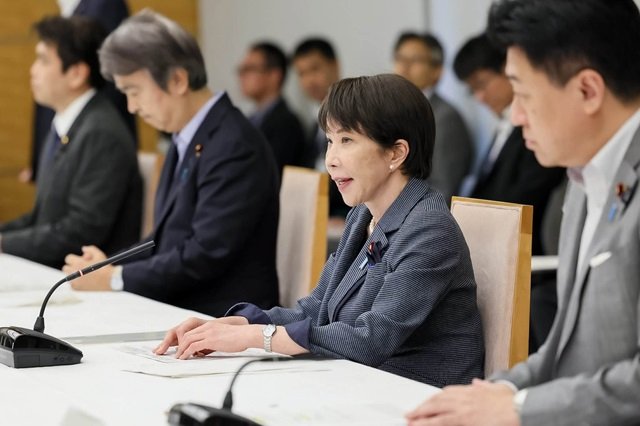
His delegation’s Aug. 27 meeting with Lu Kang, a vice minister of the Chinese Communist Party’s International Department, was the first meeting between Japanese lawmakers and a senior party official since Takaichi’s remarks last November. During a budgetary committee meeting, the prime minister said Chinese military action around Taiwan could create a “survival-threatening situation” for Japan, allowing Tokyo to exercise collective self-defense.
Beijing responded by intensifying diplomatic and economic pressure. Among the measures were tighter restrictions on dual-use exports to Japan and Japan’s sidelining from major economic and political forums. The dispute consequently moved beyond rhetoric, affecting the broader political and economic relationship between the two countries.
During the August meeting, Isa’s delegation requested that the restrictions be lifted and raised other concerns, including the detention of Japanese nationals. But Lu indicated that Beijing would not alter its position unless Takaichi withdrew or revised her position on Taiwan.
“It is a very high hurdle,” Isa acknowledged. For a Japanese prime minister, retracting a statement made in parliament at another government’s demand would be politically difficult. Yet Isa argued that disengagement would carry its own costs, particularly given the economic weight of the relationship. China accounted for roughly one-fifth of Japan’s merchandise trade last year, while Japan represented only about 5% of China’s.
“If this becomes a contest of endurance, Japan will lose,” Isa said. For him, the importance of maintaining engagement lies precisely in the differences between the two countries: continued communication matters “precisely because our values and opinions differ”.
That approach has now produced a limited reopening of parliamentary channels, but it has not resolved the fundamental disagreement. Former Foreign Minister Takeshi Iwaya is also expected to lead a business delegation to Beijing later this month as chairman of the Japan Association for the Promotion of International Trade. Taken together, the visits suggest that political and economic actors in Japan are seeking to keep communication functioning despite the deterioration in official relations.
Yet maintaining dialogue is not necessarily the same as rebuilding the relationship. Hideo Tarumi, Japan’s ambassador to China from 2020 to 2023 and now a professor at Ritsumeikan University, argues that the central problem is not simply a shortage of communication. “The real problem is not the absence of dialogue, but dialogue without a strategy,” he said.
For Tarumi, the recent parliamentary visits cannot compensate for what he regards as a more fundamental weakness: the Takaichi government has yet to develop a coherent China strategy. Dialogue, in his assessment, can become counterproductive if Japanese lawmakers travel to Beijing without clear coordination with the Prime Minister’s Office about what they are seeking to achieve.
China’s official account of Isa’s August meeting demonstrated the difficulty. Lu called on Japan’s “people of insight” to help bring relations back on the right track and urged ruling and opposition parties to press the government to handle the Taiwan issue in accordance with China’s one-China principle. Tarumi described the language as a classic divide-and-conquer tactic, presenting Takaichi as an obstacle to improved relations while casting those willing to engage Beijing as the more reasonable alternative.
The disagreement also reflects different assumptions about how the bilateral relationship should be managed. According to Tarumi, the Japanese government generally seeks progress on individual disputes, while Beijing begins with what it regards as the political foundations of the relationship, demanding agreement on its basic framework before considering movement on particular issues.
That difference leaves Tokyo attempting to obtain relief from Chinese pressure while facing the larger question of what kind of relationship it ultimately wants to construct with Beijing. The challenge is therefore not simply whether Japan and China can resume conversations, but whether those conversations are taking place within a clearly defined strategic framework.
Beijing officials have largely succeeded in setting the bilateral agenda since diplomatic ties were normalised in 1972. Tarumi points to a brief departure from that pattern in 2006, when former Prime Minister Shinzo Abe made a surprise visit to Beijing and proposed a mutually beneficial relationship based on common strategic interests. Abe’s approach was aimed not simply at warmer ties but at establishing a framework for managing rivalry.
Even after Abe’s visit to Yasukuni Shrine deepened an existing rift in 2013, his government sent national security adviser Shotaro Yachi for behind-the-scenes talks with Beijing. Tarumi had expected Takaichi to demonstrate a similar combination of ideological conviction and strategic pragmatism. Instead, he argues, her approach has lacked consistency.
“If the intention from the beginning was to confront China, that would have been one approach,” the former ambassador said. “But there has been no strategic continuity.”
The next major test could come at the Asia-Pacific Economic Cooperation summit in Shenzhen in November, which the leaders of both countries are expected to attend. Until then, parliamentary and business delegations may continue to keep channels open, but the deeper dispute over Taiwan remains unresolved.
For Tarumi, the prospect of a fundamental improvement under the current administration is limited. “The Japan-China relationship probably will not move under the Takaichi administration,” he said. “It should instead pursue de-risking thoroughly and build a China strategy of its own.”