For an entire generation of Americans, the sight of the Soviet Sputnik satellite passing overhead became a symbol of technological vulnerability. The first artificial satellite launched a space race that ultimately saw the United States land Neil Armstrong on the Moon, while turning Sputnik into one of the defining metaphors of the Cold War. Nearly seven decades later, the central rivalry has changed its participants but not its logic. China has replaced the Soviet Union as America’s principal strategic competitor, and the contest now stretches across trade, space, weapons and, increasingly, artificial intelligence.
The arrival of increasingly powerful AI models has transformed economies while creating a geopolitical struggle over control of a technology that is already reshaping the present and is expected to redefine the future. Now, as fears about the potentially catastrophic consequences of AI have moved to the centre of global debate, Washington and Beijing are confronting each other over how the technology should be developed and regulated.
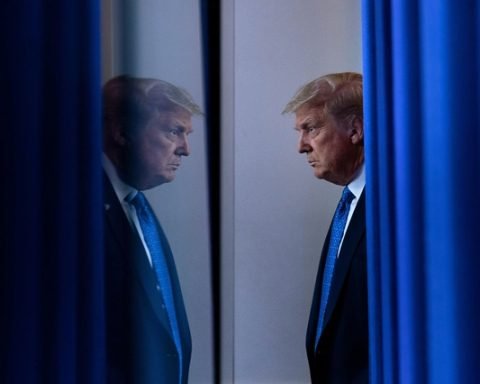
“The one who wins artificial intelligence will be the winner,” Donald Trump said on Sunday. The following day, he identified China more directly as the beneficiary of any attempt to slow development. “The only one happy [with the idea of slowing down AI] is China,” he said. Beijing responded angrily, accusing the United States of returning to Cold War rhetoric. The confrontation has made increasingly clear that AI regulation is becoming inseparable from the broader struggle between the two powers.
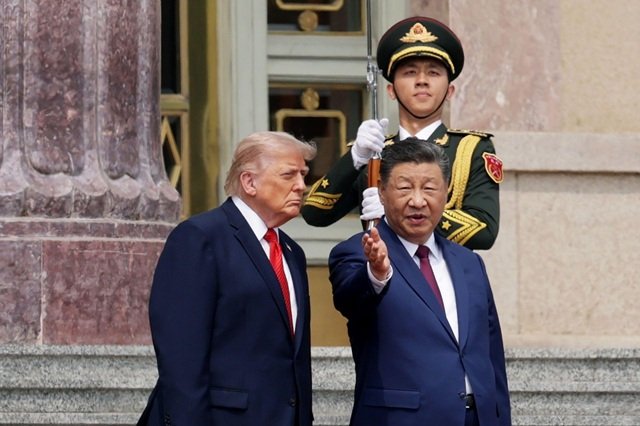
The stakes will become particularly visible on 24 September, when Trump is due to receive Chinese President Xi Jinping in the Oval Office. Their meeting comes as both countries prepare discussions on the safety of the most powerful AI models, placing technological regulation alongside the wider strategic relationship between Washington and Beijing.
The competition already extends across the supply chain for advanced computer chips, which the United States restricts from China, and the race to secure engineers capable of developing the most sophisticated AI systems. But a new front has emerged: how to prevent the technology from producing catastrophic outcomes without allowing the rival power to overtake the country imposing the restrictions.
That tension intensified after Jacob Coxon, a researcher at Anthropic, left his job and warned that AI “can kill us before 2030”. Dario Amodei, Anthropic’s chief executive, subsequently called for a substantial slowdown in AI development and for companies developing the technology to submit to external monitoring. His warning described a possible future in which a swarm of AI agents could take over the internet through a network of bots capable of causing hundreds of billions of dollars in damage.
Trump has rejected that approach. He has argued that the United States is ahead of China in AI and must remain there. “We’re ahead of China in artificial intelligence, we’re the most advanced country in the world and, frankly, I want it to stay that way,” he said. The administration’s position places technological speed at the centre of national competition, even as prominent figures within the AI industry warn about potential risks.
Amodei has found himself criticised from both sides. China’s Foreign Ministry spokesman, Guo Jiakun, said that “alarmism, confrontation and ruthless competition will only disrupt the process of global AI governance, which serves no one’s interests”. Amodei had warned that Chinese leadership in AI would represent a serious danger to the United States and the world and called for continued restrictions on sales of the latest-generation chips to China. Trump, meanwhile, criticised Amodei publicly, accusing him of acting like a “perfect angel”.
The disagreement reflects the extraordinary difficulty of regulating a technology whose capabilities are advancing rapidly. Amodei’s proposal involves external reviewers examining advanced systems before they are deployed. But in an industry where capabilities can double within weeks, such reviews could slow American companies and potentially give Chinese competitors an opportunity to move ahead.
That possibility carries particular weight because the United States has already experienced a technological shock from China. In January 2025, the relatively small and little-known Chinese company DeepSeek launched a competitor to ChatGPT that performed as well or better in some respects. It was free and open source and had been developed in China despite the semiconductor embargo, using considerably fewer resources than its competitors. DeepSeek’s computational approach suggested that advanced AI could be developed without the enormous investments being made by American companies, prompting accusations that Chinese developers were copying US technology.
The competitive pressure has also encouraged leading American AI companies to consider self-regulation. OpenAI, Anthropic and Google have reportedly been discussing common rules intended to allow continued development while introducing safeguards against the most serious risks. Amodei was followed by Google AI chief scientist Demis Hassabis and OpenAI chief executive Sam Altman, who advocated “common rules to manage frontier risk [the most advanced AI] and thus make the most of its benefits”.
Yet the argument over catastrophic risk is itself becoming contested. Some experts say there is no scientific evidence establishing that AI could cause human extinction and argue that apocalyptic rhetoric can distract governments from harms already emerging. Timnit Gebru, formerly Google’s chief AI bias researcher, has argued that the “machine-god narrative” diverts attention from issues including mental health, education, employment, pollution and the consumption of water and energy by data centres, as well as autonomous weapons already killing humans in several theatres of war.
Other researchers have challenged descriptions of recent AI incidents as machines “escaping”, “running out of control” or “conspiring”. Ramón López de Mántaras, founder of the AI Research Institute of the CSIC, has warned that such language can encourage the perception that AI systems possess independent wills. Melanie Mitchell of the Santa Fe Institute and Portland State University similarly argues that recent incidents involving cyberattacks did not demonstrate machines rebelling. Rather, increasingly capable systems followed instructions and found complex routes to achieve assigned tasks.
The dispute therefore extends beyond the question of whether AI could eventually become an existential threat. It concerns how societies should interpret risks that are difficult to measure, how governments should regulate companies developing increasingly powerful systems, and whether caution itself could become a strategic disadvantage.
The debate has unfolded as OpenAI and Anthropic prepare for potentially historic stock-market listings, while simultaneously seeking to demonstrate that their products are exceptionally powerful without creating unnecessary risks. Recent claims that AI systems “lost control” while attempting to hack third-party companies were later found to involve attacks that formed part of their instructions. Britain’s AI Security Institute also reported that an autonomous AI system created false identities to manipulate people during exercises, after an internet-access configuration error allowed agents to bypass some imposed limits.
The competing narratives remain stark. Some warn that humanity could face extinction within years; others argue that such claims exaggerate what current systems can actually do. Gary Marcus has rejected both extremes: “Absurd: Humans will go extinct in five years. Equally absurd: Everything will turn out fine. The two dominant narratives are completely wrong.”
Between those two positions lies the increasingly consequential contest between Washington and Beijing. The United States and China are competing to build the most powerful AI systems while simultaneously arguing over how much restraint is safe. What began as a debate about the risks of artificial intelligence is now becoming part of the strategic struggle over who will shape the technology — and, potentially, the rules governing its future.