Editorial
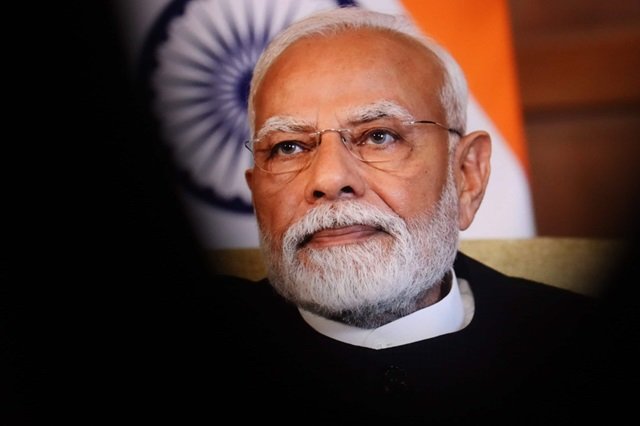
Today is Narendra Modi’s birthday, and we believe it is important to write a few words about a political figure whose influence now extends far beyond the borders of India. Modi is 76 today, and his career has already altered the political vocabulary of the world’s most populous democracy. Since becoming Prime Minister in 2014, he has done more than win elections. He has altered the relationship between political power, national identity, economic ambition and the Indian state. The transformation is visible in roads, digital payments, welfare delivery, manufacturing policy and foreign relations, but its deeper significance lies in the political vocabulary through which India now understands itself. Modi did not invent Hindu nationalism, centralised leadership or the aspiration for a stronger India. He brought these forces together inside an unusually disciplined electoral machine and gave them a national scale. India remains a competitive electoral democracy, as the 2024 general election demonstrated when the BJP lost its single-party majority and Modi returned for a third term through the NDA coalition. Yet the institutions surrounding that democracy have been placed under considerably greater political pressure, with civil-society organisations, journalists and opposition parties raising concerns about institutional independence and the changing balance between executive power and democratic checks.
The economic transformation is less ideological and more measurable. India has become a substantially larger economy during Modi’s tenure, while the state has pursued infrastructure construction on a scale designed to change the country’s productive geography. National highways expanded from roughly 91,000 kilometres in 2014 to more than 146,000 kilometres by March 2026. High-speed corridors, airports, freight infrastructure and urban transport have similarly expanded. Digitalisation has been even more disruptive. UPI has converted everyday payments into a national digital infrastructure and by August 2026 was processing more than 24 billion transactions in a single month. These developments matter because they have changed how the Indian state interacts with ordinary citizens. Welfare transfers, bank accounts, identification and mobile connectivity increasingly operate through interconnected systems rather than through the older bureaucracy alone. The achievement is substantial, but it does not eliminate India’s harder economic problems, including employment, inequality, human-capital deficits and the enormous gap between aggregate economic growth and household prosperity.
The more profound change concerns the definition of Indian nationhood. Modi’s political project has given Hindu civilisational identity a much more prominent place in the language and symbolism of the Indian state. The construction of the Ram temple at Ayodhya and the removal of Jammu and Kashmir’s special constitutional status under Article 370 were not isolated administrative measures. They represented the implementation of longstanding BJP ideological objectives. Supporters regard these measures as the removal of inherited asymmetries and the restoration of a more integrated national order. Critics see them as evidence of a movement away from the pluralist conception of Indian secularism towards a political order in which Hindu identity carries greater public significance. That disagreement is not peripheral to Modi’s legacy. It is at its centre.
Modi’s influence also extends well beyond India’s borders. His government has pursued a form of strategic autonomy that refuses to place India permanently inside any single geopolitical camp. New Delhi works with Washington, participates in the Quad, maintains major defence and energy relations with Moscow, engages China despite profound strategic tensions and seeks influence through BRICS and the wider Global South. Modi’s diplomacy has therefore coincided with India’s emergence as a more consequential strategic actor. His government has increasingly presented India not merely as a large developing country but as a power entitled to shape the institutions governing the international system. That ambition has particular consequences for South Asia. Sri Lanka, the Maldives, Nepal, Bangladesh and Bhutan increasingly have to conduct their foreign policies in relation to an India possessing greater economic and strategic weight, while China remains a competing source of capital, infrastructure and influence. India’s ability to provide financial and material assistance during regional crises has also demonstrated the practical consequences of its growing capacity.
There is another side to Modi’s transformation that cannot be reduced to economics or foreign policy. His political career demonstrates how an individual shaped by the RSS organisational system could move from the relatively obscure politics of Gujarat to the centre of global affairs. His former teachers remember a young Modi as an energetic student, public speaker and participant in school activities, while also recalling his regular attendance at the local RSS shakha. One former teacher has also recalled that Modi sometimes brought a Muslim classmate home to eat. These recollections do not explain the political leader he became, but they complicate the simplistic biography in which his childhood is treated merely as a predetermined route to power. The more consequential part of his formation occurred over subsequent decades of organisational work, political apprenticeship and administrative experience.
The most important question about Modi is therefore not whether he has changed India. The evidence makes that difficult to dispute. The harder question concerns what kind of India is emerging from that transformation. A more digital, connected, infrastructure-intensive and internationally assertive India is clearly taking shape. At the same time, political power has become more concentrated around a leader and a political movement whose conception of national identity differs significantly from the more explicitly pluralist language of earlier Indian governments. The 2024 election demonstrated that Indian voters can still impose electoral limits on that concentration of power, while institutional challenges to government policy demonstrate that constitutional checks have not disappeared.
Modi’s historical significance will ultimately depend on whether these two developments can coexist. India can become more powerful without becoming less pluralistic, and it can build a more capable state without weakening the institutions that constrain political authority. That balance is the real test of the Modi era. His greatest legacy may not be any single road, temple, payment system or election victory, but the fact that he has forced India to renegotiate the meaning of power, nationalism and democracy at the same time. That renegotiation is now influencing not only India but the political and strategic future of South Asia and India’s increasingly consequential position in the wider international order.