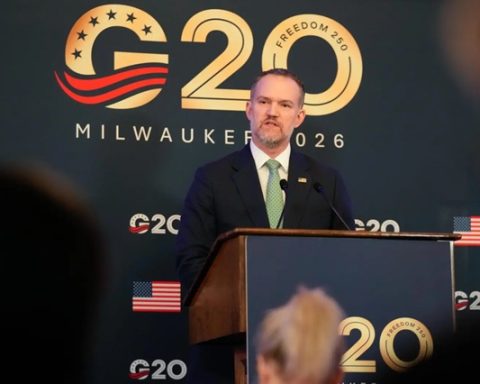
The Alternative for Germany (AfD) has claimed the language of East Germany’s peaceful revolution as its own after its record result in Saxony-Anhalt, reopening an old dispute among former civil-rights activists over what the events of 1989 were meant to achieve. At the party’s election-night gathering, AfD politicians Ulrich Siegmund, Alice Weidel and Tino Chrupalla celebrated a result of 43.8 per cent, the party’s strongest showing in a state election. Siegmund declared that they had “written history in this country” and promised a “fundamental political change”. Chrupalla later told the television programme “Caren Miosga”: “We will accomplish the second Wende.”
The term Wende, or “turning point”, carries particular historical weight. It was used in 1989 by Egon Krenz, the final leader of the Socialist Unity Party (SED) and East Germany. Thirty-seven years after the peaceful revolution that brought down the communist regime, the AfD is using the language of political transformation to present itself as an agent of another systemic change. The development has divided veterans of the original movement, according to an extensive report by Der Spiegel, which spoke to six former East German dissidents and opposition figures about their hopes, disappointments and views of contemporary German democracy.
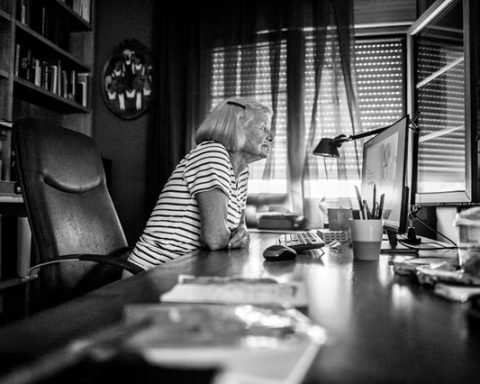
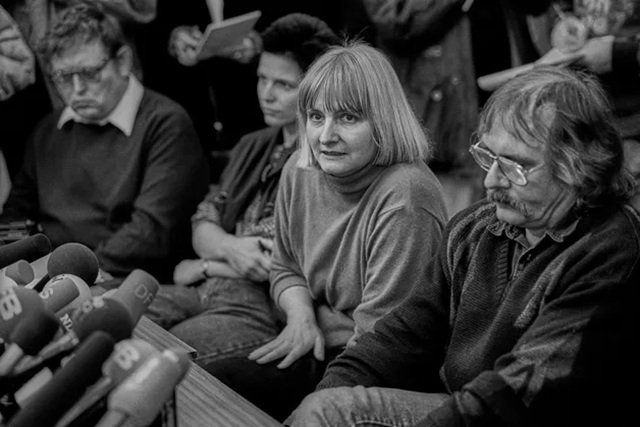
Annette Simon, a psychoanalyst and author who was active in several opposition groups, rejects the AfD’s appropriation of the slogans of 1989. “They have hijacked our slogans, simply stolen them,” she says. At her Berlin home, she recalls hiding lists of signatures supporting the registration of the opposition New Forum above a ceiling cavity so that the Stasi would not discover them. The SED state banned the protest movement until the day before the Berlin Wall fell. Simon, the daughter of writer Christa Wolf, argues that people who now present themselves as revolutionaries on the political right are claiming a history for which they did not pay the same price.
Vera Lengsfeld, another prominent dissident, takes the opposite view. “We did not register a patent for them,” she says of the slogans of 1989. She argues that people have the right to take to the streets to demand political change and to seek what she describes as the restoration of the rule of law. Lengsfeld was expelled from the SED in 1983, lost her professional position, was arrested and later deported to England. Her position illustrates how far former allies in the East German opposition have diverged politically since reunification.
Their disagreements are rooted partly in different interpretations of what the revolution was supposed to produce. Freedom, democracy and the rule of law were shared objectives, but there was little agreement over what should replace the socialist state. Gunter Weißgerber wanted rapid reunification and Nato membership, while historian Rainer Eckert initially hoped for what he called a “somewhat vague” form of democratic socialism. Lengsfeld believed East Germany should first put its own political system on a democratic footing. Ulrike Poppe similarly argued that the country should establish democracy before negotiating with West Germany over the form of a united state.
Those hopes were overtaken by events. In the first free Volkskammer election on 18 March 1990, 48 per cent voted for the Alliance for Germany, which supported rapid reunification, while only 2.9 per cent backed Alliance 90, the coalition of civil-rights groups whose activism had helped make free elections possible. Alliance 90 had favoured a new common constitution rather than East Germany simply joining the Federal Republic under Article 23 of the Basic Law. Poppe regards the failure to hold a referendum on a new constitution as a “missed opportunity” because it could have given East Germans a greater sense that they had been consulted and had helped determine the future of the country.
The economic and political integration that followed also generated lasting resentment. The economic, monetary and social union took effect on 1 July 1990, while the Volkskammer voted 294 to 62 on the night of 22-23 August for accession to the Federal Republic. Lengsfeld now describes the process as “reunification at a gallop”. Former opposition figures also found themselves largely excluded from the senior positions emerging in eastern Germany. A 1995 Potsdam elites study found that the former opposition played only a minor role in supplying the new East German elite. According to figures cited by Der Spiegel, East Germans today occupy 12.1 per cent of Germany’s top positions despite representing about 15 per cent of the population outside Berlin. In 2024, no East German held any of the 191 top positions in the 100 largest companies.
That experience has produced sharply different conclusions. Lengsfeld, Weißgerber and Arnold Vaatz argue that established parties have moved away from the democratic principles for which they once fought. Vaatz describes the energy transition as a “de facto return of the planned economy”, while Weißgerber calls hate-speech reporting centres an “openly practised return to Stasi surveillance”. Lengsfeld criticises the political direction of the country and says critics of coronavirus measures and migration policy have been excluded and silenced. Yet the three say they have not voted for the AfD. Weißgerber cites what he regards as the party’s unacceptable proximity to Russia and its anti-Israel position, while Vaatz says the AfD is strong because established parties are refusing to recognise why voters are turning away from them.
Simon, Poppe and Eckert reach the opposite conclusion. They argue that the AfD is appropriating the language and symbols of the revolution while offering, in their view, proposals that could threaten democracy. “They have stolen the goals of the revolution,” Eckert says. More than 100 former East German civil-rights activists and opposition figures signed a 2019 declaration opposing the use of the peaceful revolution in right-wing election campaigning.
Despite their profound disagreements, the six former dissidents share one conclusion: none believes Germany needs a second revolution. Instead, they call for greater participation, dialogue and compromise. Lengsfeld says democracy depends on different opinions, free elections, acceptance of results, changes of government and balancing interests. Poppe urges citizens to become involved; Weißgerber calls for greater openness; Simon advocates citizens’ councils and a revival of the Central Round Table, where dissidents, SED politicians, environmentalists, feminists, peace activists, churches and trade unions once argued across political divides. “It must once again be possible to bring people around a table where they have to find a solution,” Simon says, “regardless of their opinion.”