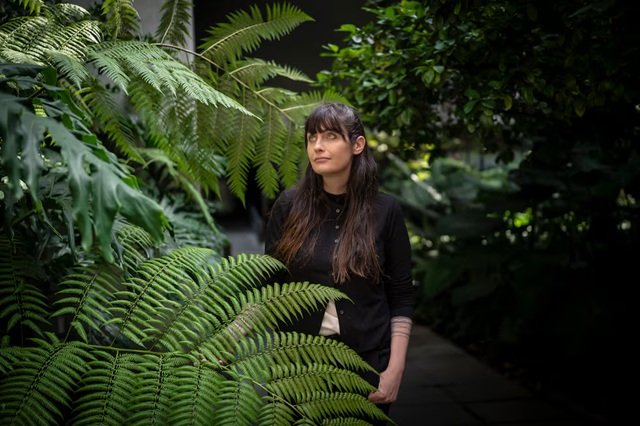
For 38 years, Mexican writer Ximena Santaolalla says she waited for the moment when she could publicly identify the man who sexually abused her throughout much of her childhood. Now, at 43, she has named him as Francisco Aguirre Gómez, an influential businessman who headed the media conglomerate Grupo Radio Centro for 27 years. In an extensive interview published by EL PAÍS, Santaolalla alleges that her stepfather raped her almost every day between the ages of five and 14, estimating that the abuse occurred approximately 2,500 times. Her account has since prompted a public response from Mexican President Claudia Sheinbaum, who has offered government assistance should the writer decide to pursue a criminal complaint.
The allegations concern a businessman whose position in Mexico’s media industry gave him considerable influence. Aguirre, now 85, served as chairman of Grupo Radio Centro until 19 November, when the company announced that his son would replace him. The leadership change came just as Santaolalla was preparing to identify him publicly. Aguirre has not responded to repeated requests for comment from EL PAÍS.
Santaolalla says she decided to disclose his identity after becoming a mother and concluding that remaining silent could leave other children exposed to potential abuse. She maintains that Aguirre continues to have contact with minors despite warnings she says she has repeatedly communicated to people around him. She has identified four other women whom she believes were also victims, some before and others during the period in which she says she was abused.
Her decision to speak publicly is also an attempt to challenge what she describes as a culture of silence that protects perpetrators. According to Santaolalla, she informed approximately 20 people within her family and Aguirre’s social circle while the abuse was taking place. She subsequently discussed the allegations with dozens more. Her mother, brother, cousin, childhood friend and husband have confirmed to EL PAÍS that they knew about the abuse years ago. Santaolalla estimates that she has told at least 50 people during her lifetime.
The abuse began shortly after her mother, Adriana Abdó, married Aguirre in 1988. Abdó was a 25-year-old single mother experiencing financial difficulties when she met the businessman, who was approximately 20 years older. The family moved into a luxury apartment in Mexico City’s Polanco district. Santaolalla initially welcomed the prospect of having a father figure in her life. Within months, however, she says, Aguirre began entering her bedroom at night.
What followed, according to her account, became an almost daily routine. She describes attempting to stay awake because she feared being assaulted while sleeping. When she eventually fell asleep, she says, Aguirre would wake her and abuse her. Afterwards, she would go to the bathroom to clean herself without understanding what had happened to her. As a young child, she initially believed this was simply what happened to girls who lived with fathers.
She first told her mother about the abuse when she was eight. Abdó acknowledges that her daughter warned her on three occasions. The first disclosure involved Santaolalla telling her that Francisco was touching her intimate areas. Abdó says she confronted her husband, who allegedly dismissed the accusation as a misunderstanding, claiming he had merely been cleaning the child because she had soiled herself. Abdó admits that she did not fully believe her daughter and subsequently felt guilty about her response.
A second warning came in late 1993, when Santaolalla was ten. She contacted her mother by mobile telephone and told her that Aguirre continued doing things to her. Abdó says she now recognises that she failed to respond adequately, describing her reaction at the time as a psychological blockage and profound confusion.
The third incident, in 1997, finally brought the abuse to an end. During a family holiday in New York, Santaolalla asked to sleep in the same bed as her mother because she feared Aguirre would enter her room. She says she nevertheless woke to find him sexually assaulting her. She screamed, pushed him away and locked herself in the bathroom. When she told her mother what had happened, she asked that they report him to the authorities in New York. Abdó declined, saying she was concerned about the consequences for her young son if his father went to prison. According to Abdó, Aguirre eventually acknowledged what he had done when confronted.
The family subsequently left the apartment. However, Abdó maintained a relationship with Aguirre for another three years, during which he continued visiting their new home. Santaolalla says the failure to protect her compounded the trauma of the abuse itself. Her mother now acknowledges that she would respond differently and accepts responsibility for not acting decisively.
The allegations have also raised questions about whether Aguirre’s influence contributed to the failure to pursue legal action earlier. In April 2019, Santaolalla filed a complaint against him in France, with the assistance of the lawyer currently representing Gisèle Pelicot. She says she chose France because several alleged assaults occurred during family holidays in Paris between 1989 and 1997. French authorities dismissed the complaint because both the alleged victim and the accused were Mexican nationals residing in Mexico. At the time, the offences were considered time-barred under Mexican law. Mexico’s Supreme Court subsequently changed limitation rules for sexual offences against minors in 2025 and extended the changes to all crimes against children in 2026.
A separate development emerged on 30 May this year, when Aguirre signed a confidentiality agreement reviewed by EL PAÍS. According to the document, he undertook to make substantial donations to three children’s organisations, continue monthly financial support for Abdó and promote awareness of preventing sexual abuse within Grupo Radio Centro’s premises. In exchange, Santaolalla would refrain from filing a criminal complaint and disclose the allegations exclusively in an interview with his radio group. The writer says the promised donations were never made and considers the agreement invalidated.
Santaolalla’s account also documents the long-term consequences of the alleged abuse. She says she developed bulimia at 12, began drinking alcohol at 13 and subsequently spent eight months in a treatment clinic for eating disorders. She also experienced self-harm from adolescence into her twenties, later struggled with alcoholism and spent seven years attending Alcoholics Anonymous. An addiction to amphetamines also contributed to hypothyroidism.
Her experience has become part of a wider debate about child sexual abuse in Mexico. Santaolalla cites figures suggesting that one in five children will experience sexual abuse before turning 18, that 90 per cent of perpetrators are men and that 70 per cent come from the victim’s family environment. She also cites an estimate that only one per cent of complaints involving child sexual abuse result in convictions. She argues that prevention is possible and that responsibility for protecting children belongs to society as a whole.
Her literary work provided the initial means of confronting the experience. Santaolalla explored the abuse through her novel Un jardín al fondo de la noche, published in September 2025 by Penguin Random House. She had previously written A veces despierto temblando, a novel addressing the genocide under Guatemala’s Efraín Ríos Montt, published in 2021. The first book helped her develop the confidence to return to her own history, initially through fiction before deciding to identify the alleged perpetrator publicly.
The publication of her testimony by EL PAÍS on 25 November triggered widespread indignation in Mexico, drawing support from cultural and journalistic organisations, activists and public figures. On Thursday, Sheinbaum explicitly offered the writer the backing of her administration, including assistance from the Ministry of Women. The president said that the decision to file a complaint rested with Santaolalla but stressed that the government stood behind her.
The significance of the case extends beyond the allegations against one businessman. It exposes the difficulties children face when the alleged perpetrator is a powerful member of their own household, when adults around them fail to intervene and when legal barriers prevent survivors from pursuing accountability. Santaolalla’s central demand is that the shame and consequences traditionally borne by victims should instead fall upon those accused of abusing them. After nearly four decades of silence, she has decided that identifying the alleged perpetrator publicly is part of that process.