The people of Gopalganj are citizens of Bangladesh, entitled to the same rights and dignity as every other citizen. Regardless of their political beliefs, ideology or party affiliation, they deserve equal treatment under the law. That equality is not a political favour; it is a constitutional guarantee and an obligation under international human rights law.
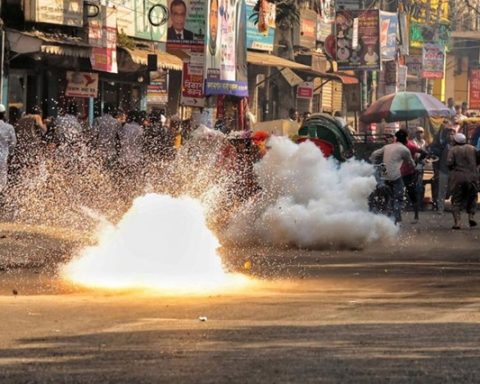
Following allegations of violence and sabotage in Gopalganj, reports have described serious disruptions to daily life, communications, financial transactions and local administration. Concerns have mounted over reported suspensions of railway services, restrictions on mobile financial services such as bKash, and the withholding of development funds allocated to local government institutions. Media coverage published on 27 November highlighted disruptions to railway services and mobile financial transactions. Questions have also arisen over reports that large numbers of people have been named in criminal cases.
The Bangladesh government must clearly explain the legal basis for these decisions, why they were considered necessary, how long the restrictions are expected to remain in place, and what steps have been taken to minimise their impact on ordinary people. Restricting fundamental rights without a sound legal basis or demonstrable necessity constitutes an abuse of state power and may amount to a violation of human rights.
The government has alleged that violence, arson, damage to public property and attacks on law enforcement personnel took place in Gopalganj. These allegations must be established through fair and impartial investigations. No one should be found guilty without credible evidence, and the alleged criminal conduct of individuals must never be used to hold their families, neighbours, local business owners, students or the wider community responsible. Collective punishment has no place in a just society.
When the daily lives of an entire district’s population are disrupted in response to alleged offences that have yet to be transparently investigated, and when financial transactions are restricted or transport networks remain paralysed for extended periods, the consequences fall disproportionately on ordinary people. Farmers, wage earners, small business owners, students and the relatives of patients should not be forced to bear the costs of political conflict while the facts surrounding the allegations are being established.
Mobile financial services have become essential infrastructure in the daily lives of millions. People rely on them to send money to family members, pay medical expenses, conduct business and meet urgent financial needs. Railway disruptions similarly affect workers, students, patients and businesses. Suspending development allocations to local government institutions also has a direct impact on local communities. When restrictions on these essential services and facilities damage the lives and livelihoods of innocent citizens, the state must be held accountable for the consequences.
Human rights violations can arise not only from violence committed by individuals or groups but also from the actions or omissions of state agencies. The exercise of state power is constrained by the Constitution, domestic legislation and international human rights treaties.
In Gopalganj, reports of restrictions affecting financial transactions, freedom of movement and access to public services, rather than measures specifically targeting individuals suspected of committing offences, raise serious human rights concerns. Any restrictions that discriminate against citizens on the basis of their political identity or place of residence would also violate the principle of equal protection under the law.
The Constitution of Bangladesh firmly protects the rights and freedoms of its citizens. Article 27 guarantees equality before the law, while Article 31 guarantees the right to legal protection and treatment in accordance with the law. Article 32 safeguards life and personal liberty, while Articles 33 and 35 provide important protections concerning arrest, detention and criminal proceedings. Article 36 guarantees freedom of movement throughout the country, subject to reasonable restrictions imposed by law in the public interest. These constitutional protections cannot simply be set aside through administrative directives or general appeals to national security.
Bangladesh is also a party to the International Covenant on Civil and Political Rights (ICCPR). Article 26 guarantees equality before the law and equal protection without discrimination. Article 9 protects individuals against arbitrary arrest and detention, while Article 14 guarantees the right to a fair trial and the presumption of innocence. Article 12 protects freedom of movement within the country, subject to specific conditions under which lawful restrictions may be imposed.
Under the United Nations Human Rights Committee’s General Comment No. 27, restrictions on freedom of movement must be provided for by law, necessary to achieve a legitimate purpose and proportionate to that purpose. Security concerns may justify temporary restrictions in specific circumstances and locations, but they do not automatically justify disrupting the everyday civic and economic life of an entire district for an extended period.
The inclusion of thousands of people in criminal cases also demands careful scrutiny of each individual’s alleged involvement and the evidence supporting the accusations. Being named in a criminal case does not automatically make someone a criminal. The purpose of an investigation is to identify those responsible for offences, not to harass people indiscriminately. Treating someone as a suspect or criminal merely because of their political affiliation, residence in a particular area or presence at a location where an incident occurred is fundamentally inconsistent with the principles of justice.
Articles 11 and 12 of the International Covenant on Economic, Social and Cultural Rights (ICESCR) recognise the rights to an adequate standard of living and to the highest attainable standard of physical and mental health, respectively. When restrictions on financial services or local public services undermine access to food, healthcare, livelihoods or other essentials, they may also raise serious human rights concerns.
The situation in Gopalganj is about more than domestic political debate in Bangladesh. It raises fundamental questions about citizens’ rights and the state’s accountability. When government decisions are alleged to have restricted people’s freedom of movement, threatened their livelihoods, limited access to financial services and legal protection, or disrupted their ability to lead normal lives, independent human rights scrutiny becomes particularly important.
The Office of the United Nations High Commissioner for Human Rights (OHCHR) and international human rights organisations should closely monitor the situation, independently examine allegations of rights violations, seek explanations from the authorities where necessary, and work to ensure that fundamental rights are protected without discrimination. This is not about taking sides in a political dispute. It is about ensuring that the state fulfils its obligation to protect everyone equally.
The people of Gopalganj are citizens of Bangladesh, and their political identity does not diminish their entitlement to equal protection under the Constitution and international human rights law. Whenever state action restricts fundamental rights on the basis of political affiliation or place of residence, its legal validity and compliance with the state’s human rights obligations must be carefully examined.
Human rights belong to everyone. They are not the property of any political party, ideology or region. They are universal rights, shared equally by all people.