Nearly three years after ethnic violence tore through Manipur, the death of a young Kuki-Zo woman named Grace has come to symbolise a conflict that never truly ended. Her passing on January 10, 2026, from cardiac failure was not sudden in the way official records might suggest. It was the culmination of prolonged trauma, displacement, poverty, and institutional abandonment. Reported originally by Frontline India, Grace’s story lays bare how survival itself became an unbearable burden for many in Manipur’s relief camps.
At the Leikop relief camp in Kangpokpi district, where thousands of internally displaced persons have lived since May 2023, news of Grace’s death reopened wounds that had never healed. Families there still remember fleeing burning homes, hiding in forests, and arriving at camps with nothing but shock and fear. For Neilemchong Suantak, a teacher and youth leader at the camp, Grace’s death felt like a return to the darkest days of displacement. The camp’s makeshift school, set up by displaced teachers in 2023, has since shut down due to lack of funds, mirroring the slow erosion of hope among residents.
Grace’s family embodied the vulnerability of Manipur’s working poor. Her parents were daily wage sanitation workers in Imphal, landless and dependent on precarious employment. When violence erupted, they fled the capital along with thousands of other Kuki-Zo families, finding temporary shelter in Leikop. Grace herself remained in Imphal for a short time, hoping the unrest would subside. It did not. What followed would define the rest of her life.
In June 2023, Frontline reporters encountered Grace bedridden at the camp, her eyes injured, her body weakened. Speaking through an interpreter, she described escaping captivity in Imphal. At the time, she did not openly disclose sexual violence, but medical records from a government hospital in Kohima later indicated probable sexual assault. With Manipur cut off digitally and physically, confirming these details took weeks. Meanwhile, violence raged on, villages burned, and survivors’ accounts were erased from official narratives.
Grace’s complaint, formally recorded only after a viral video of two Kuki-Zo women being paraded naked shocked the nation in July 2023, described a harrowing ordeal. She said she was abducted from New Checkon in Imphal, beaten by women vigilantes known as Meira Paibis, and handed over to members of Arambai Tenggol, an armed Meitei group accused by civil society organisations of orchestrating violence against Kuki-Zo tribes. She alleged that she was taken to a hilltop, sexually assaulted, and left for dead before escaping by chance.
By then, Manipur had briefly entered national consciousness. Television crews descended on relief camps, demanding access to survivors. Grace was repeatedly asked to recount her assault on camera, despite warnings from women leaders that such exposure would retraumatise her. Her case, along with others, was transferred to the Central Bureau of Investigation, but progress stalled. Survivors could not return to Imphal to identify perpetrators or crime scenes, and families were left without answers.
Displacement had already stripped Grace of stability before the assault. Like most Kuki-Zo residents of Imphal Valley, her family had been forced out within days of the violence. Access to healthcare in Kangpokpi was minimal, often requiring travel to Nagaland for even basic diagnostics. For families living hand to mouth, such journeys were unaffordable. Grace largely recuperated without consistent medical care, as did many others.
Those who knew her recall a steady withdrawal from life. She stopped eating, suffered nightmares and breathlessness, and remained confined to her bed. According to psychiatrists who spoke to Frontline India, these symptoms were consistent with severe post-traumatic stress disorder. Dr Jessie Joseph, a senior psychiatrist, explained that survivors of targeted sexual violence require immediate and sustained support, alongside a belief that justice is possible. Without it, hopelessness can become fatal.
Grace did receive intermittent psychiatric support and treatment from Mission Hospital, but her condition did not improve. Her family’s situation worsened as her father and brother both required surgeries, plunging them deeper into debt. By the time she was offered advanced treatment in Guwahati in mid-2025, it was too late. Her final words to her mother were that she could not breathe.
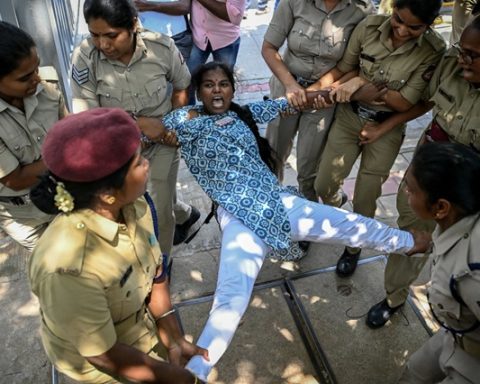
Grace’s death has resonated deeply among young people in Manipur, many of whom fear that attention has shifted away from the most vulnerable. Activists question why no government representative acknowledged her passing, or the many similar deaths that have gone unnoticed. For them, Grace was not only a victim but a capable young woman whose future was stolen.
The broader pattern of violence has not spared others. Just 11 days after Grace’s death, a Meitei man visiting his Kuki partner in Churachandpur was kidnapped and killed, underscoring how inter-community relationships remain perilous. Such incidents reinforce fears that peace remains fragile and manipulated by armed groups on all sides.
Critics argue that the State’s overriding response has been denial or cosmetic gestures. Despite visits by senior national leaders and ongoing political negotiations, daily insecurity persists. President’s Rule has not translated into protection or rehabilitation for displaced families. As Frontline India’s reporting makes clear, accountability has been consistently evaded, leaving trauma to fester untreated.
Grace’s life and death expose the human cost of this neglect. Her story is not an isolated tragedy but a measure of how far Manipur remains from justice or healing. Until the State confronts the reality of what survivors endure, the conflict will continue to claim lives long after the guns fall silent.