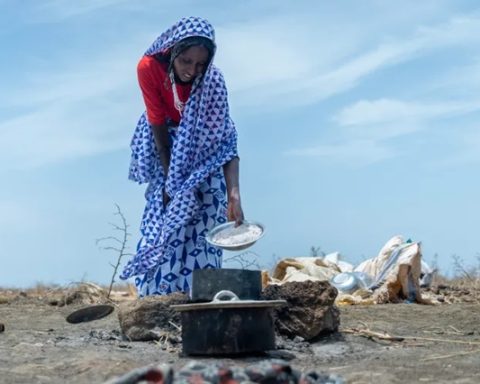
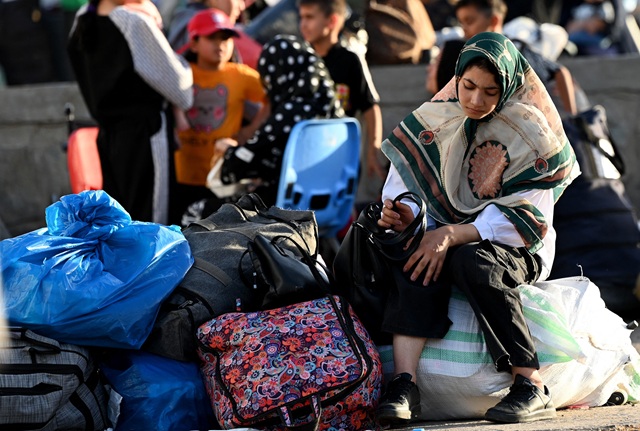
Afghanistan remains on a knife-edge. Looming famine, widespread malnutrition, and the forced repatriation of refugees are signs not of a nation in crisis — but one already collapsed, hollowed out to its core. What we witness now is the brutal depth to which a country can fall when gutted by decades of foreign intervention and abandoned in its ruins. In the arid camps near the Iran–Afghanistan border, thousands of Afghans — mostly women and children — queue not just for bread, but for the return bus to a country ravaged by the West and its yesteryear darling boys — extremist factions it nurtured during the Soviet invasion of the 1980s. Since early June, almost 450,000 Afghans have been repatriated from Iran.
Iran has discovered, with alarming clarity, that some among the flood of Afghan refugees were not innocent victims of Taliban rule, but clandestine agents — spies, informants, operatives — aligned with foreign intelligence services. Tehran’s recent internal assessments suggest that these “refugees” played a significant role in intelligence collection that aided the decapitation strike conducted by Israel during the 12-day war — a conflict so sharp, so surgical, that it dismantled the upper echelons of Iran’s military leadership. Some of Iran’s most decorated commanders, long feared for their reach in the Shi’ite axis, were eliminated in what now appears to have been a masterclass in pre-emptive warfare.
This is no accident of modern conflict. It is the outcome of an intelligence matrix decades in the making. And while the dust of that brief war is still settling over Gaza and Tehran, across the Mediterranean one can already hear the humming of American-funded military construction projects in Israel. One does not need clairvoyance to see the writing on the wall: the United States and Israel are preparing, not for “possible contingencies”, but for the final war — against Iran. Whether it will unfold in six months or before 2029, its inevitability now seems axiomatic. The American empire, battered by the blunders of its interventions, is not retreating — it is refocusing.
It is no hyperbole to say that Iran is teetering on the brink of collapse. With its regional ambitions bloodied and internal fractures widening, the regime faces a perilous trilemma: strike first and pre-emptively test a nuclear weapon; open negotiations that will be seen as capitulation; or allow the centre to collapse into a Hobbesian morass of tribal, ethnic and ideological warlords. The ghosts of Syria and Libya beckon. And it is not improbable — if not entirely likely — that the Islamic Republic will stumble into the same abyss.
But it is to Afghanistan that we must return, for it is the starkest embodiment of Western hubris and geopolitical cruelty — a nation devastated not only by extremist violence but by the far more insidious and enduring destruction wrought by the United States. Over two decades, Washington’s relentless drone campaigns, black-site renditions and proxy wars annihilated communities and dismantled civil society under the guise of “nation-building.” The 2021 cynical withdrawal was no triumphant exit but a chaotic abdication, leaving behind a shredded country — over 240,000 dead, millions displaced, and a social order torn to pieces. President Reagan once welcomed Afghan jihadists into the White House as “freedom fighters”, while Zbigniew Brzezinski proudly admitted in 1998, “We didn’t push the Russians to intervene, but we knowingly increased the probability that they would.” This cold calculus of manipulation and betrayal inflicted damage on Afghanistan deeper than any extremist group, making the US not just a foreign invader but the principal architect of the nation’s catastrophic unraveling. As a result, Afghans are starving, and their women and children are subjugated under draconian Sharia law — all while Obama was awarded the Nobel Peace Prize and now Trump is busy tailoring his own suit for the same honour. Are we not long overdue for a conscience to reject this century-old bully?
Where democracy once stood, theocracy returned. Child marriage is now resurgent under Taliban rule. For instance, this week, a 45-year-old man in Helmand married a six-year-old girl, but the Taliban, adhering to their own codes, forbade him from taking her home until she turns nine. Girls are denied education beyond primary school. Women are barred from parks, gyms, universities — erased from public life with a bureaucratic efficiency that chills the soul. In a recent report, UNICEF estimated that more than 80% of Afghan girls are now out of school, a number that would have been unimaginable during even the darkest years of the Taliban’s first rule. And yet, this is the “stability” some regional powers now seek to legitimise.
Russia’s recent decision to formally recognise the Taliban government is neither noble nor necessary — it is a calculated geopolitical gambit. “The new authorities in Kabul are a reality,” proclaimed Sergey Lavrov — yet this “reality” includes Haibatullah Akhundzada and Abdul Hakim Haqqani, both pinned by ICC warrants for gender persecution. The farce lies not in Moscow’s blunt pragmatism, but in the ICC’s selective zeal: united in punishing the powerless, yet devoid of courage when the accused is powerful.
Benjamin Netanyahu, under ICC scrutiny for war crimes in Gaza, yet breezed into the White House just this week, greeted by an American administration that praised him as a cornerstone in regional stability. As Thucydides observed, “The strong do what they can; the weak suffer what they must.”
Afghanistan today stands as both a metaphor for the West’s failed imperial vision and a testing ground for future experiments led by self-proclaimed guardians of the “Global South”.
In other words, the profound tragedy of Afghanistan lies not solely in the retreat of Western influence, but in the manner by which the country has become a focal point for emerging geopolitical forces, each pursuing their own strategic interests under the banner of a shifting world order. The much-discussed notion of “multipolarity” increasingly reveals itself less as a path to balance and more as a terrain of transactional pragmatism. Where the United States once established drone bases, new actors invest in natural resources. Where former alliances shaped conflict lines, new diplomatic overtures seek footholds in an uncertain landscape. The promise of democracy, once championed as the nation’s future, has given way to an uncertain present with diminished prospects.
And amid all this, the Afghan people — the real victims, not the regimes — are forgotten. They are trafficked, starved, silenced. Their pain is co-opted into geopolitical scorecards. Their exile is treated as a statistical inconvenience. Iran turns them away. Pakistan bombs their borderlands. Europe offers token visas to a lucky few. America forgets them entirely. What remains, then, is a question no policymaker dares to answer: Is this what liberation looks like? Is this the sum total of $2.3 trillion spent, 20 years of occupation, and a whole generation raised on promises of democracy and progress?
Afghanistan’s tragic arc exposes the profound moral failure of those who claimed to save it. From the covert intelligence operations that fostered future extremists in the 1980s to today’s cynical realpolitik — marked by selective recognitions and shifting alliances — the Afghan crisis transcends its borders. It stands as a stark indictment of global power, reminding us all that history’s judgment will be neither lenient nor forgetful. Nor should it be.