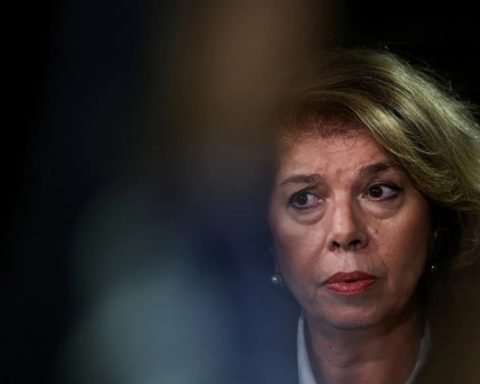
A political shockwave has hit Southern California after the mayor of Arcadia resigned and agreed to plead guilty to acting as an unregistered agent of the Chinese government while holding public office. Eileen Wang, 58, stepped down from her position on Monday following a federal plea agreement that alleges she participated in covert influence activity directed by officials linked to Beijing. The case has intensified scrutiny over foreign interference risks within American municipal politics and the vulnerability of local institutions to transnational influence operations.
The case centers on Wang’s role as an elected official in Arcadia, a suburb in Los Angeles County, where she served on a five-member city council that selects a rotating mayor. Federal prosecutors say Wang engaged in a coordinated effort between 2020 and 2022 to promote narratives aligned with the People’s Republic of China while failing to disclose her connections to foreign officials, as required under U.S. law. Authorities allege that her actions constituted acting as an unregistered foreign agent, a felony carrying a potential prison sentence of up to 10 years.
According to the U.S. Department of Justice, Wang worked alongside Yaoning “Mike” Sun in operating a media platform called U.S. News Center, which targeted Chinese American audiences. Prosecutors describe the website as a channel for pro-Beijing messaging rather than independent journalism. The pair allegedly received direct instructions from Chinese officials and affiliated intermediaries to publish content defending Chinese government policies and countering international criticism. Officials say this included rapid dissemination of politically sensitive materials provided through encrypted communication platforms.
One of the most cited examples in the case occurred in June 2021, when Wang allegedly received pre-drafted editorial content responding to a Los Angeles Times discussion of human rights allegations in Xinjiang. The material denied accusations of forced labor and genocide targeting Uyghur Muslims, claims that have been widely condemned by the United States and other governments as evidence of systematic abuse. Prosecutors say Wang published the content almost immediately after receiving it, demonstrating what they describe as direct operational alignment with foreign directives.
Federal authorities also allege that Wang maintained communication with individuals connected to Chinese state institutions, including figures previously linked to intelligence-related activities. Among them was John Chen, who has already been convicted and sentenced in a separate foreign agent case. Investigators argue that these connections form part of a broader pattern of influence operations targeting diaspora communities and leveraging culturally aligned media platforms to shape narratives abroad.
Wang’s legal team acknowledged the seriousness of the allegations in a public statement, saying she accepts responsibility for “past personal mistakes” while expressing remorse. Her attorneys emphasized that her conduct was limited to a specific period prior to and during the early stages of her political career. They also stated that her commitment to serving the Arcadia community remains unchanged, despite her resignation and pending criminal proceedings.
City officials confirmed that Wang’s resignation is effective immediately and that the city council will select a new mayor in its next session. A statement from Arcadia’s city management stressed that the federal investigation did not involve municipal funds, employees, or administrative operations, framing the matter as strictly personal conduct. However, the political impact has been significant, with residents and observers expressing concern about transparency and trust in local governance.
The case has drawn wider attention in Washington amid escalating tensions between the United States and China over trade, technology, and geopolitical influence. Security officials have repeatedly warned that foreign governments may attempt to exert influence not only at the federal level but also within state and local institutions. Prosecutors in this case described it as part of an ongoing effort to counter covert operations aimed at shaping public opinion and policy outcomes inside the United States.
Arcadia itself, a city with a majority Asian American population, has long been viewed as a culturally significant hub within Southern California’s Chinese diaspora community. That demographic context has made the case particularly sensitive, raising complex questions about identity, political participation, and the boundaries between community media and foreign influence.
Wang is expected to formally enter her guilty plea in federal court in the coming weeks. She has already appeared before a judge in downtown Los Angeles and is expected to face sentencing later this year. As proceedings continue, the case is likely to remain a focal point in broader national debates over espionage, influence operations, and the safeguarding of democratic institutions at every level of government.