Weeks of deadly protests in Bangladesh have triggered a bold new strategy from critics, who are urging the country’s vast diaspora to halt the flow of foreign remittances. This move aims to pressure the government of Prime Minister Sheikh Hasina, which is grappling with an economic crisis and a contentious political climate.
A Financial Lifeline in Jeopardy
Organisers are calling on nearly 10 million Bangladeshis living abroad to freeze the approximately $2 billion sent home monthly. This financial lifeline is crucial for the South Asian nation, which turned to the International Monetary Fund (IMF) for a bailout last year. Faiz Ahmad Taiyeb, a Bangladeshi engineer working for a telecom company in Europe, is a prominent voice in this movement. He believes that reducing remittances could financially undermine Hasina’s government. “By reducing remittances, we can cut off the financial lifeline to Hasina’s autocratic government,” Taiyeb asserted.
Expatriate Support
The call for a remittance boycott has gained traction among influential Bangladeshi expatriates, including Elias Hussain, a U.S.-based former TV journalist with over 2 million YouTube followers. Hussain’s endorsement amplifies the movement’s reach and impact.
Violent Clashes and Heavy-Handed Response
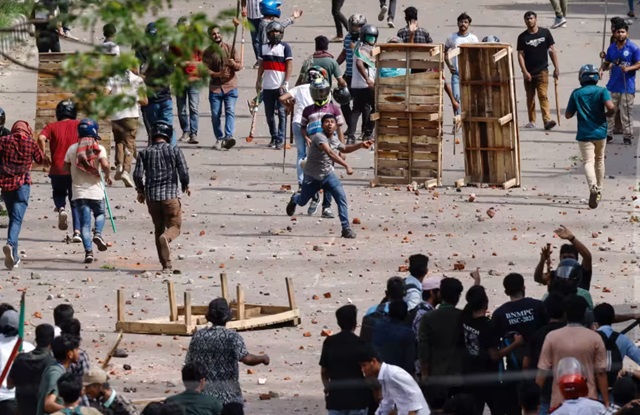
The backdrop to this economic strategy is a series of violent protests that have claimed more than 200 lives since they erupted last month. The protests were initially sparked by demands from students and other demonstrators to abolish public-sector job quotas amid rising youth unemployment. The government’s response has been severe, with thousands arrested and a curfew imposed.
Prime Minister Hasina’s administration, re-elected to a fourth term in controversial elections boycotted by the opposition, has also announced a ban on the main Islamic party, Jamaat-e-Islami, and its student wing, blaming them for the violence.
Economic Strain and International Scrutiny
The unrest has drawn international condemnation and added to Bangladesh’s economic woes. The country’s foreign exchange reserves have plummeted to about $18 billion from nearly $49 billion two years ago. Remittances, a significant source of foreign currency, totalled nearly $24 billion in the last fiscal year. Shafquat Rabbee, an adjunct instructor of business analytics at the University of Dallas, highlighted the critical role of remittances, comparing them to oil sales receipts for a Middle Eastern country. “Any reduction could run shockwaves through the country’s macro economy,” he warned.
Boycott Movement’s Reach
Leaders of the boycott movement, such as Tokyo-based apparel merchandiser Saddam Hossain, are urging Bangladeshis in Japan and South Korea to suspend remittances temporarily despite the financial strain. “I am doing this for my homeland,” Hossain said. “By killing students, this autocratic government of Hasina has forfeited all legitimacy.”
Government’s Counterarguments
The Hasina administration has strongly criticised the remittance freeze. Salim Mahmud, secretary of information and research for the ruling Awami League, labelled the boycott as “unpatriotic” and unrealistic in the long term. “People back home rely on this money,” he stated, adding that the boycott could encourage illegal remittance channels.
Economic Fallout
The protests and subsequent government actions have already caused significant economic damage, with business leaders estimating losses at $10 billion. The European Union has postponed negotiations with Bangladesh on a new cooperation deal, citing concerns over the government’s response to the unrest.
The impact of the remittance boycott remains uncertain. Bangladesh Bank reported a sharp decline in remittances between July 19 and July 24, attributed to a five-day internet blackout during the protests. However, economist Jyoti Rahman cautioned that it is too early to attribute these figures to the boycott.
Potential Consequences
If the remittance boycott gains traction, it could have severe consequences for Bangladesh’s economy. U.S.-based academic Rabbee warned that cutting remittances by half could push the country into insolvency and crash the local currency. Zaved Akhtar, president of the Foreign Investors Chamber of Commerce and Industry, echoed these concerns, noting that the full economic repercussions are still unfolding.
The remittance boycott could also backfire, potentially driving a wedge between the low-income population and the student-led protest movement. Dhaka-based economist Rubaiyath Sarwar emphasised the complexity of the situation, suggesting that the government might use the boycott to create friction among different social groups.