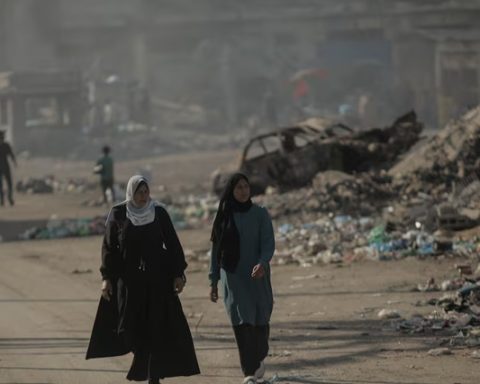

The conference hall was vibrating with heated discussion as the world representatives discussed a resolution on becoming a refugee. Against these low murmurs, one Pakistani representative stood up. Her speech was not a political one but a speech of experience. She reminisced the Sindh floods, which left hundreds of thousands of people homeless, the Afghan refugees whom Pakistan has accommodated over the years, and the voices that are so often missing in the international discourse. Everyone looked at her when she talked, and note-takers labored like frenzied men. By the end of the session, she had changed the emphasis from politics to human need. At this point, the Pakistan membership was no longer superficial in the UN Human Rights Council, rather it was deciding the narrative of the Global South.
Another significant development is that this year Pakistan finally was elected to the UNHRC membership with an overwhelming majority of 178 votes by the general assembly. Thus, the image of Pakistan in Geneva and New York discredits the old stereotype of the country as one filled with political instability and regional tension.
A Platform for the Marginalized
The Pakistani strategy at the Human Rights Council is informed by a practical understanding of vulnerability. Few countries have the experience of hosting refugees in the tens of millions and dealing with climate change-related disasters. These are not theoretical debates for academics; they are issues of life and death for millions of people.
In climate change and refugee protection dialogues, Pakistani representatives have consistently argued that human rights must be contextualized to the needs of displaced persons, environmental refugees, and economic migrants. This approach to global policy debates moves beyond the legalistic frameworks to the human costs that lie behind them.
The Human Rights Council’s agenda on human rights encompasses civil and political rights, economic, social, and cultural rights, and the right to development, all of which Pakistan has committed to promote in partnership with other member states and civil society organizations.
Navigating Complex Diplomatic Terrain
The presence of Pakistan has created controversy and complexity. In January 2026, a UN Human Rights Council endeavored to extend an autonomous enquiry in Iran. Pakistan voted against this motion which was subsequently recognized by the Iranian foreign minister.
So, these voting trends are indicative of the Pakistani effort to see that the international organizations observe the due process and observe geopolitical sensitivities, a difficult but calculated diplomatic stand.
Advocating Stronger Institutions
The human rights council is not the only human rights council where Pakistan plays a role. At the end of 2025, the Pakistani ambassador in the General Assembly noted that the UN General Assembly itself had to be strengthened as a channel of peacefully resolving disputes and collaborating. He called on the establishment of a special mechanism to police the execution of UN resolutions, since resolutions, which are non-binding, ought to maintain their moral and even political saliency, until they are executed.
This is in line with Pakistan’s stance on having inclusive global institutions that are not merely platforms for dialogue, but tools for accountability and justice.
Progress Reporting and Human Rights Commitments
In early 2026, the Pakistani delegation submitted the developments concerning the rights of children in the UN Committee on the Rights of the Child in Geneva. The report also emphasized the changes in legislation, such as a provincial piece of legislation, increasing the minimum legal age of marriage to 18, legislation making it a crime to exploit children online, and efforts to enhance food security and education. These engagements demonstrate that the rhetoric of human-rights diplomacy in Pakistan is not just on paper but rather it is based on tangible internal reforms.
Toward a More Equitable Global Order
As the Human Rights Council looks ahead to its agenda through 2028, the example of Pakistan’s leadership will continue to be a challenge and an inspiration to the rest of the world on how countries of the Global South can influence global policy. The interventions of Pakistan’s leadership serve as a reminder to the world that in international affairs, power does not lie solely with those countries that are wealthy or militarily strong, but with those that never fail to put the interests of the marginalized at the forefront of their agenda.
In a world where multilateralism is often strained by the weight of international tensions, the voice of Pakistan is a reminder that global governance is not just for the few but for all.