by Our Correspondent in Washington DC
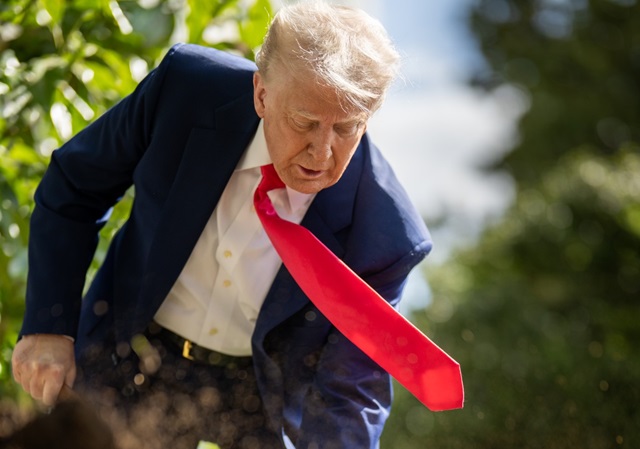
President Donald Trump announced a dramatic shift in his tariff strategy, increasing tariffs on China to 125% while pausing tariffs for other trade partners for 90 days. The decision comes after intense market volatility triggered by his initial tariff actions, which had sparked fears of a potential recession.
Trump’s tariffs on China, the world’s second-largest economy, will jump from 104% to 125%, effective immediately. In a post on Truth Social, Trump slammed Beijing for what he described as a “lack of respect” for global markets, asserting that the U.S. could no longer tolerate China’s trade practices. He emphasized that the move aimed to address what he called the unsustainable and unacceptable actions of China on the global trade stage.
In contrast, Trump announced a pause on tariffs for all other trade partners, reducing the previous country-specific tariffs to a universal 10% rate for 90 days. This pause applies only to countries that had not retaliated against the U.S. tariffs, with China remaining the exception. Trump’s administration portrayed the decision as part of a broader strategy, claiming it would provide an opportunity for negotiations and to secure better deals with international trade partners.
The announcement brought immediate relief to financial markets, which had been rattled by the prospect of soaring tariffs. Following the news, the stock market experienced a sharp rally, with the Dow Jones jumping 2,200 points, or 5.9%, and the S&P 500 and Nasdaq also seeing significant gains.
However, while the 90-day pause on tariffs may offer short-term relief, economists have cautioned that the underlying economic risks remain. Many warned that the trade tensions, particularly with China, could still lead to a recession, as the U.S. economy continues to absorb the impact of trade disruptions.
The move also came amid growing tensions between the U.S. and China, with Beijing retaliating by imposing its own tariffs of 84% on U.S. goods. Despite this, the Trump administration remains firm in its stance against China’s trade practices, with Treasury Secretary Scott Bessent suggesting that the U.S. would continue to pursue leverage in trade talks.
While some business leaders, including JPMorgan’s Jamie Dimon and Walmart executives, have expressed concerns about the long-term effects of the tariffs, Trump and his advisors continue to emphasize that the goal is to bring about fairer trade terms and reduce America’s reliance on foreign manufacturing.