Chinese President Xi Jinping has declared that the BRICS cooperation mechanism has become the world’s most influential platform for cooperation among emerging markets and developing countries, positioning the grouping at the centre of a wider contest over the future of global governance.
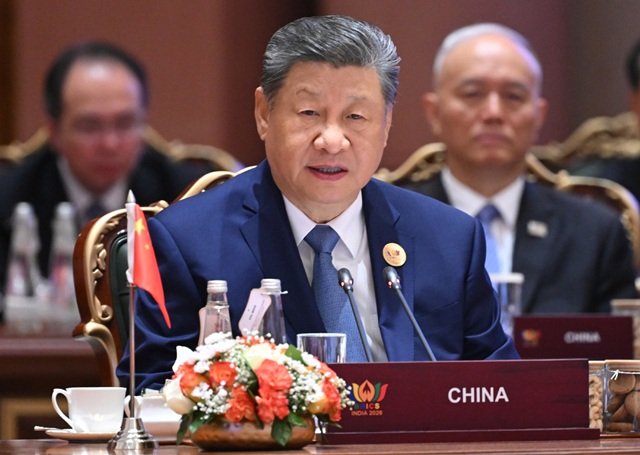
Addressing Session I of the 18th BRICS Summit in New Delhi on Saturday, Xi marked 20 years of BRICS cooperation by portraying the grouping’s evolution as evidence of the growing strength and confidence of the Global South. Over two decades, he said, BRICS countries had demonstrated “remarkable vitality and dynamism” while expanding both their membership and the scope of their cooperation.
For Xi, the significance of the anniversary lies not simply in the group’s longevity but in what he described as two decades of collective self-reliance. BRICS countries, he said, had actively explored development paths suited to their own national conditions, providing an example of how emerging markets and developing countries could pursue self-strengthening through unity.
The group had also spent two decades “standing together through thick and thin”, Xi said, pointing to its response to challenges including the global financial crisis, the COVID-19 pandemic and climate change. In his account, BRICS has simultaneously sought to defend the common interests of the Global South and provide the wider international system with stability and positive momentum.
The past 20 years, Xi said, had produced a “fruitful” record. BRICS had undergone a historic expansion, established a comprehensive, multi-tiered framework for cooperation and entered what he described as a new stage of high-quality development. The message from New Delhi was therefore not merely commemorative: Xi presented BRICS as an increasingly consequential mechanism for countries seeking a greater role in shaping international affairs.
His assessment comes against what he described as a profound transformation in the international system. The world, Xi said, is undergoing an accelerated transformation “unseen in a century”, while the Global South is rapidly growing in strength and the trend towards a multipolar world is “unstoppable”.
At the same time, however, Xi warned that countercurrents of unilateralism and power politics are surging. Multilateralism and the international order are under strain, while deficits in peace, development, security and governance continue to widen. Against that backdrop, he urged BRICS countries to “firmly stand on the right side of history” and become a pioneer of the times, steering the international order towards greater justice and equity and working towards what he called a community with a shared future for humanity.
Technology was one of the central areas in which Xi said BRICS should assume a pioneering role. He called on member countries to advance innovation-driven development, strengthen cooperation in artificial intelligence and encourage open-source development, openness, cooperation and sharing. Practical cooperation, he said, should be pushed into new areas and to new heights.
Xi also invited BRICS countries to participate actively in the World Artificial Intelligence Cooperation Organization. China, he said, had proposed an initiative to promote new industrialisation through artificial intelligence among BRICS countries and was willing to work with all parties to produce more results in research, development and application while deepening cooperation in industrial and supply chains.
Peace and stability represented another major test for the grouping. Xi urged BRICS countries to uphold a vision of common, comprehensive, cooperative and sustainable security, oppose the Cold War mentality and bloc confrontation, and reject violations of other countries’ sovereignty and interference in their internal affairs. The grouping, he said, should play a constructive role in resolving hotspot issues and contribute distinctive BRICS solutions addressing both their symptoms and root causes.
The Middle East featured prominently in that appeal. Xi said the situation remained complex and fluid and that the war had inflicted serious losses on people across the region while running against the common interests of the international community. He said he had set out four propositions aimed at de-escalation, ending hostilities and promoting peace, and urged relevant parties to maintain the direction of a political settlement and work towards a permanent, comprehensive ceasefire.
China, Xi said, would work with fellow BRICS members to play its due role in bringing peace and tranquillity to the Middle East.
Beyond geopolitics, Xi called for greater interaction among civilisations and peoples. BRICS countries, he said, should champion the common values of humanity, encourage exchanges and mutual learning among civilisations and promote harmonious coexistence. He urged greater cooperation in culture, tourism and education, stronger youth exchanges and more frequent interactions among peoples.
The grouping should also become a pioneer in reforming and improving global governance. Xi called for international relations to keep pace with the trend towards greater democracy, while promoting a more just and equitable global governance system and upholding the authority of the United Nations.
Trade and emerging domains of international governance were also placed within that agenda. Xi urged BRICS to support a multilateral trading system centred on the World Trade Organization and reject all forms of protectionist measures. He further called on the grouping to take a leading role in global governance in emerging domains including cyberspace, outer space and the deep sea, while amplifying the voice of Global South countries.
Yet the expansion of BRICS also places greater importance on maintaining cohesion among its members. Xi stressed that solidarity and cooperation had remained the driving force behind the group’s two-decade development. He called on members to remain sincere and candid with one another, seek common ground while respecting differences and respect each other’s core concerns. Communication and dialogue, he said, should be used to deepen mutual understanding, properly handle differences and ensure that cooperation continues to advance steadily.
The next phase of that effort will fall under China’s leadership. China will take over as the rotating chair of BRICS and host the 19th BRICS Summit next year. Xi said China was ready to work with all parties to build consensus, create a better future and embark on BRICS’ third “golden decade”, opening what he described as a bright future of prosperity and progress.
At the New Delhi summit, participants spoke highly of BRICS’ development over the past 20 years, describing the mechanism as possessing broad representation and great potential for development. They said that, amid escalating geopolitical conflicts and the rise of unilateralism, BRICS countries had a responsibility to speak up for the Global South, uphold multilateralism, support the central role of the United Nations, respect the sovereign equality of all countries, abide by international law, oppose interference in the internal affairs of other countries, support free trade and jointly address global challenges.
They also called for adherence to the BRICS spirit, deeper cooperation across sectors, greater economic resilience and a more just and inclusive international order, alongside a secure and prosperous multipolar world.
The participants praised China’s contribution to the development and expansion of the BRICS mechanism and backed its role as next year’s chair, including its hosting of the 19th BRICS Summit. The leaders also adopted a joint declaration at the summit.
After two decades of expansion, BRICS is therefore entering its next phase with an increasingly explicit ambition: to give the Global South a stronger collective voice while challenging what its members regard as deficiencies in the existing international order. The test for the grouping’s “third golden decade” will now be whether its expanding role can be matched by sustained cooperation, consensus and practical results.