Britain faces mounting pressure to significantly increase its defence budget, as adversarial nations including Russia, China, and Iran have ramped up military spending in recent years, leaving the UK at risk of falling behind, according to The Times.
Over the past decade, Russia, Iran, and China have all significantly raised their defence budgets. Research from the House of Commons library reveals that Russia’s defence spending surged by 34%, Iran increased spending by 57%, and China by 60%. In contrast, the UK’s defence budget grew by just 14% in 2022 cash terms during the same period, prompting concerns from military experts and political figures alike.
Sir Keir Starmer, leader of the opposition Labour Party, is under pressure to act. His party has faced calls to provide a clear timetable for meeting his pledge to raise Britain’s defence spending to 2.5% of GDP, a target that remains unfulfilled. The UK’s current defence budget is far smaller than that of its adversaries, with Russia planning to allocate £109 billion to its military next year—almost double the £56.9 billion earmarked for the UK’s Ministry of Defence in the autumn budget.
Helen Maguire, the Liberal Democrats’ defence spokeswoman, emphasized the urgency of the situation, stating: “With war waging on our continent, hostile states increasing their defence spending, and an unreliable partner elected across the Atlantic, it is vitally important for Britain’s defences to be strengthened.” Maguire has called on Starmer’s Labour to establish a clear pathway to meeting the 2.5% GDP target ahead of the inauguration of President-elect Donald Trump on 20 January.
The UK’s military capacity is under increasing strain. Over the past several decades, British defence spending has fluctuated dramatically, particularly following the end of the Cold War. Between 2016 and 2019, the UK’s defence budget fell below NATO’s 2% target, while countries like Russia, China, and Iran continued to bolster their military capabilities.
Currently, the British armed forces face significant challenges. The army is set to shrink to just 72,500 troops under plans announced by the previous Conservative government, and there are concerns that this number is insufficient to meet the growing threats to national security. James Heappey, a former minister at the Ministry of Defence (MoD), warned that the UK military is no longer large enough to defend the country, stressing that the army needs to grow to at least 85,000 troops, with additional personnel needed for the navy and air force.
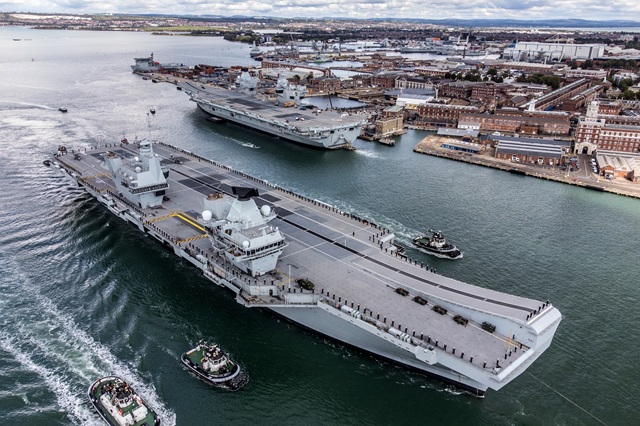
The Royal Navy is also facing challenges. Its two aircraft carriers, HMS Prince of Wales and HMS Queen Elizabeth, regularly patrol without a full complement of F-35 fighter jets, reducing their operational capability. The vulnerability of large naval vessels to modern threats, such as drone and missile attacks, was starkly demonstrated in 2022 when Ukraine’s forces sank Russia’s flagship Moskva in the Black Sea.
In response to these challenges, Starmer has appointed Lord Robertson of Port Ellen, a former NATO secretary-general, to conduct a review of the UK’s defences. However, modernizing the British armed forces would require significant investment, potentially in the tens of billions of pounds, and would likely necessitate a reallocation of resources from other public services.
John Healey, the UK’s Defence Secretary, acknowledged the country’s ongoing commitment to European security, particularly in light of rising global tensions. During a visit to UK troops in Estonia, Healey emphasized that Britain’s military presence in the Baltic region sends a powerful message to both allies and adversaries about the UK’s readiness to defend its values. “Our British deployment in Estonia demonstrates our unshakeable commitment to NATO and the security of Europe, keeping us secure at home and strong abroad,” Healey said.