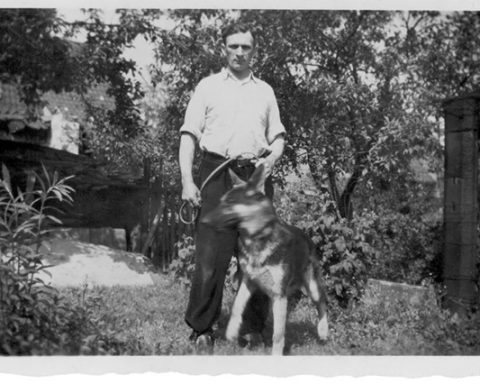
A newly released book is shining light on a long-forgotten British spy who managed to infiltrate the heart of Hitler’s inner circle, dramatically shaping Britain’s preparations for World War II. As reported by Times UK, the book titled The Spy and the Devil, by former Foreign Office official Tim Willasey-Wilsey, uncovers the remarkable story of Bill de Ropp — a suave, sharp-witted agent whose name has been largely lost to history.
According to the Times UK report, de Ropp worked for MI6 (then known as the Secret Intelligence Service) during the rise of the Nazi regime, using his aristocratic background and impeccable British charm to earn the trust of top Nazi officials, including Alfred Rosenberg and Adolf Hitler himself. Born in modern-day Lithuania and later naturalised as a Briton, de Ropp leveraged social connections to get close to the party’s elite — all while feeding vital intelligence back to London.
In a remarkable twist, just days before Hitler’s invasion of Poland in 1939, Rosenberg — unaware of de Ropp’s true identity — warned him to flee Germany for his safety. In doing so, the high-ranking Nazi inadvertently helped a British spy escape just before war broke out.
De Ropp’s intelligence work had far-reaching implications. His reports helped convince the British government to rearm in the 1930s, after years of military neglect. Notably, he arranged visits to German aircraft factories for British aviation experts, including Fred Winterbotham and Sir Roy Fedden, who returned home with crucial insights that would later shape British air strategy.
The Times UK highlights how de Ropp’s unique position allowed him to meet with Hitler over a dozen times. Despite an awkward first meeting — during which de Ropp chain-smoked in front of a disgusted Hitler and clashed with him over anti-Semitic remarks — he regained the Nazi leader’s trust and continued to be seen as a valuable British “observer.”
“It really was a masterclass in espionage,” Willasey-Wilsey told Times UK. “He was hiding in plain sight — never pretending to be something he wasn’t, yet gaining access most spies could only dream of.”
Perhaps most striking was de Ropp’s role in shaping British foreign policy. Prior to the 1938 Munich Agreement, his intelligence formed the foundation of a secret MI6 memo titled “What Should We Do?” — a policy paper advising Prime Minister Neville Chamberlain to concede the Sudetenland to Hitler but to urgently rearm Britain. An estimated 70 percent of the intelligence behind that document came directly from de Ropp.
Willasey-Wilsey’s discovery of the story began with scattered references in official archives and culminated in a visit to de Ropp’s grandson in Tennessee, who unveiled a treasure trove of letters, diaries, and photos that brought the tale to life.
As the author noted to Times UK, de Ropp’s efforts helped transform MI6 from a peripheral player in government circles into a central pillar of Britain’s national security apparatus.
Though suspicions eventually mounted in Nazi Germany, and de Ropp was forced to leave the country, his legacy as one of MI6’s earliest and most effective nation-state spies is finally being recognized — eight decades after he quietly helped change the course of history.