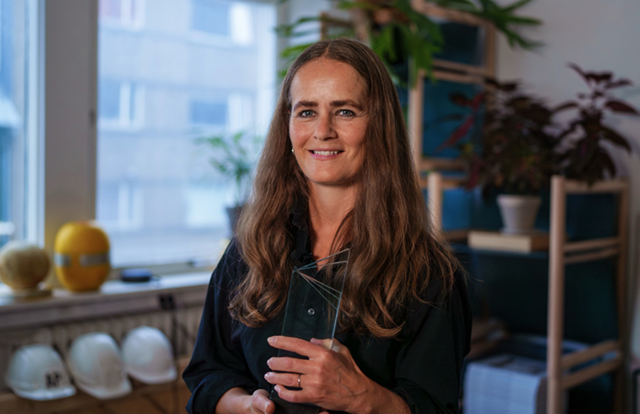
In a vision that sounds more like science fiction than architecture, Icelandic architect Arnhildur Pálmadóttir is proposing a radical rethink of urban construction: using molten lava as a sustainable building material. As reported by MIT Technology Review, her concept, dubbed Lavaforming, aims to channel the immense energy of volcanic eruptions into the very foundations of future cities.
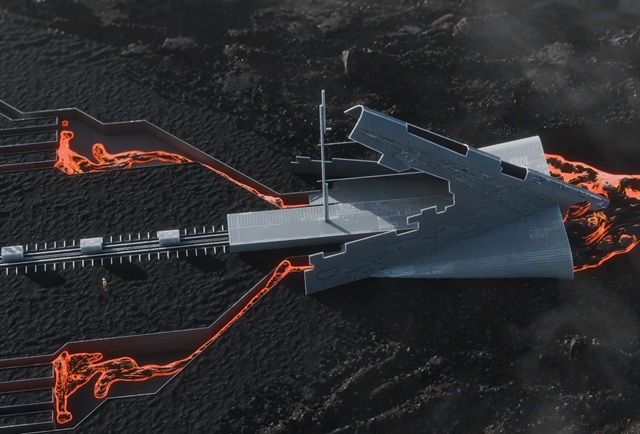
Pálmadóttir, who witnessed a volcano erupt near her childhood home in Húsavík, has spent the last five years researching how cities might be formed directly from lava flows. Working from her Reykjavik-based studio S.AP Arkitektar, and in collaboration with her son and fellow architect Arnar Skarphéðinsson, she has developed several speculative techniques—ranging from 3D-printing bricks out of lava to directing molten flows into trench-like molds that could solidify into structural elements.
This ambitious project is now gaining international attention. The duo’s upcoming speculative film, Lavaforming, set in the year 2150 in a fictional lava-built city named Eldborg, will debut at the prestigious Venice Biennale this May. The film imagines a society that has not only harnessed the destructive force of volcanoes but reshaped it into a tool for sustainable living.
[S. AP Arkitektar]
The environmental rationale behind Pálmadóttir’s work is pressing. Construction materials like concrete and steel currently account for 37% of global carbon dioxide emissions. Lava, on the other hand, is naturally occurring, locally abundant in volcanic regions, and, when cooled, forms durable materials like basalt—among the hardest rocks on Earth. By using lava in its molten state rather than quarrying volcanic rock, the process could drastically reduce the carbon footprint of building.
“There’s an urgent need to reimagine how and what we build with,” Pálmadóttir told MIT Technology Review. “And I think it’s important for architects not to be only in the present—because if we’re only working inside the system, we won’t change anything.”
Of course, the idea is not without challenges. Accurately predicting lava flows remains a complex science, requiring advanced remote sensing, data modeling, and high-powered simulations. But recent eruptions on Iceland’s Reykjanes Peninsula have provided volcanologists, like the Icelandic Meteorological Office’s Gro Birkefeldt M. Pedersen, with invaluable data. Pedersen, who has advised Pálmadóttir on several occasions, believes significant advances in lava forecasting could be made within the next decade.
Beyond its material innovation, Lavaforming also raises deeper questions about ownership and equity. Skarphéðinsson views the project not just as an architectural experiment but as a political statement: “This isn’t just about building with lava. It’s about who gets to decide how natural resources are used—and who benefits.”
The project draws inspiration from Iceland’s history of radical environmental transformation. Once almost entirely dependent on fossil fuels, the country now sources over 85% of its energy from renewable geothermal and hydropower. Could lava be the next big step?
While critics may scoff at the idea of lava as a construction material, researchers like Syracuse University volcanologist Jeffrey Karson see potential. Having led over a thousand controlled lava pours, Karson believes that with proper cooling techniques and reinforcements, lava could become a viable alternative to conventional materials.
Pálmadóttir is under no illusion that her vision will be realized tomorrow. “We might not see it in our lifetime,” she admits. “But the ripple effects of thinking this way—that’s what matters.”
From a childhood awe-struck by volcanic skies to a career built on their potential, Pálmadóttir’s story is as much about imagination as it is about innovation. And in a warming world desperate for new ideas, her lava cities just might be the spark we need.