The latest issue of The China Leadership Monitor (CLM) examines a question with growing global significance: is China working with Russia not only to blunt American power but also to advance alternative mechanisms for global and regional order? The answer emerging from the evidence is more complicated than the idea of a unified Sino-Russian bloc. China and Russia are increasingly aligned against U.S. power and Western pressure, yet they remain unwilling to surrender the flexibility that comes from avoiding a formal alliance.
Under Xi Jinping, the relationship has deepened considerably. When Xi took office in 2012, China-Russia ties were already on an upswing. The partnership was then in its 15th year, while the 2001 Treaty of Good-Neighborliness and Friendly Cooperation had established a framework that was subsequently extended to 2021 and then again in five-year increments, with the next phase set to begin in February 2027. Russian Foreign Minister Sergey Lavrov described the treaty as creating a model of cooperation that imposed no constraints on either country’s sovereignty, giving the relationship flexibility and advantages over “classical alliances”. PRC Foreign Minister Wang Yi, meanwhile, credited it with forging “a new type of state-to-state and major-country relations”.
That language has acquired particular significance. The concept of “new type of great power relations”, often associated with China’s approach to the United States, actually originated in a 2014 speech Xi gave to a Moscow think-tank and was initially applied to China-Russia relations before being used as a framework for China-U.S. ties.
The relationship has evolved through a series of inflection points. China and Russia have supported a multipolar world order since declaring their strategic partnership in 1997, while advocating non-interference in domestic affairs, opposing “hegemonism” and respecting each other’s positions on territorial integrity and sovereignty. The 2001 treaty helped resolve the final section of their disputed border, while their first bilateral Peace Mission military exercises followed in 2005.
The 2008 global financial crisis gave their economic and institutional ambitions further momentum. Both countries interpreted the crisis as evidence of failures in Western approaches to development and economic governance. The emergence of BRICS in 2009 provided one expression of their shared interest in a multipolar order, while the crisis also helped drive energy cooperation. The China Development Bank provided a $25 billion loan connected to the East Siberian Pacific Ocean oil pipeline in exchange for annual fuel deliveries and a dedicated spur to China.
Energy cooperation subsequently became one of the most substantial pillars of the relationship, although it was rarely straightforward. The ESPO pipeline was completed in 2011 and now sends 30 million metric tons of oil annually to China. China’s involvement in Russian gas expanded through investments in Sakhalin and the Arctic, including major stakes in the Yamal LNG projects. The Power of Siberia pipeline, negotiated over two decades because of disagreements over route and price, ultimately produced a $400 billion gas agreement in 2014. It began shipping gas in 2019 and was fully completed in November 2024.
Yet the economic relationship long remained weaker than the political one, producing what observers called “hot politics, cold economics”. That imbalance has begun to change, particularly since the full-scale war in Ukraine. By 2024, bilateral trade had doubled compared with 2020, reaching $244 billion. Following a 6.5 percent contraction in 2025, trade increased by 25 percent in the first half of 2026, reaching $134.5 billion.
For Russia, the war has transformed China’s importance. Before the full-scale invasion, China was one of several major strategic partners. Since 2022, Russia’s access to technology imports, energy markets and Arctic investment has narrowed considerably, making China a lifeline. China now purchases 50 percent of Russian oil, 31 percent of its pipeline gas, 23 percent of its LNG and 37 percent of its coal. Chinese payment mechanisms and RMB clearing have also helped Russia sustain trade.
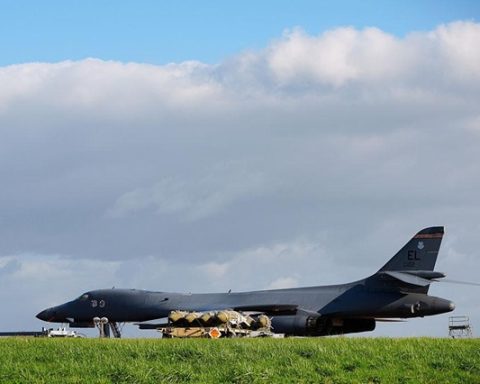
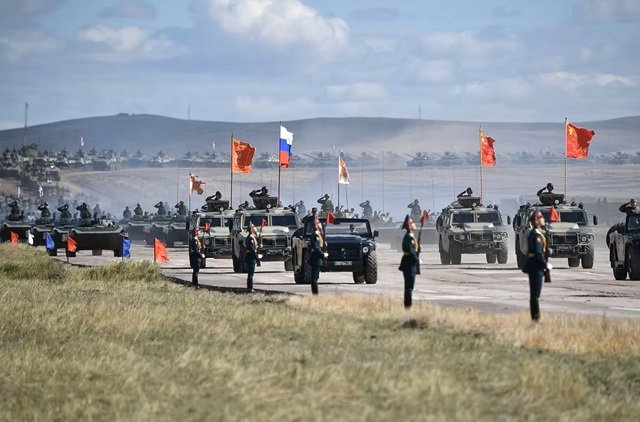
The military dimension is becoming even more consequential. Russian military sales to China revived after 2014, including major contracts for Su-35 fighters and S-400 systems. Since then, cooperation has expanded into aircraft, missiles, satellite systems and military exercises. Joint activities have grown more complex, extending into sensitive areas. Chinese aircraft were allowed access to Russian bases during a joint strategic bomber patrol in July 2024, while Chinese and Russian diesel submarines participated in exercises in 2025 and 2026. Joint Sea 2026 included submarine rescue, attacks against enemy vessels, air and missile defence and, for the first time in China-Russia exercises, operations involving drones.
The war in Ukraine has added another dimension: battlefield experience. According to three European intelligence agencies and documents obtained by Reuters, 200 Russian troops secretly received training in drone warfare and mine sweeping in China under a July 1, 2025 agreement. Another contingent reportedly received training in radiological, biological and chemical warfare.
At the same time, Russia has become increasingly useful to China. The People’s Liberation Army has not fought a war since 1979 and has never experienced the kind of drone warfare seen in Ukraine. Reporting cited in the CLM material indicates that Russia has trained PLA troops in drone warfare and urban combat since 2024. Other reporting describes Russian weapons, equipment and training being provided in ways connected to China’s Taiwan-related preparations.
This growing military interaction has strengthened what Xi calls “back-to-back strategic coordination with Russia”. The phrase is significant because it captures a central feature of the relationship: China benefits from avoiding a two-front threat while Russia gains a powerful partner against Western pressure.
Yet the partnership has limits. China and Russia do not share identical interests, and neither wants to follow the other’s agenda. Russia has not formally joined China’s Belt and Road Initiative, preferring its own Greater Eurasian Partnership. Both describe themselves as potential leaders of the Global South, but their visions of that leadership differ. Chinese analysts sometimes present the relationship as a model for a new international order, while Russian observers resist the idea of Chinese dominance.
That tension explains why the relationship remains deliberately short of an alliance. Lavrov has praised the flexibility of a partnership that imposes few constraints, while Chinese scholars have similarly argued that it avoids the “hijacking effect” in which one partner is dragged into another’s conflict.
The latest CLM assessment therefore points to something more complex than a unified China-Russia campaign to replace the United States. Their governments share opposition to hegemonism, unilateralism and Western pressure, and their military and technological cooperation is deepening. But their objectives are not identical, their interests do not always coincide, and both value the freedom to act independently.
The result is a partnership that may be more consequential precisely because it is not an alliance. China and Russia can coordinate when their interests converge, support one another when strategic pressure intensifies, and remain separate when their priorities diverge. For Russia, China has become increasingly indispensable. For China, Russia provides strategic depth, resources and battlefield experience.
Their relationship is therefore reshaping the balance around them without necessarily creating a single alternative order. Its significance lies not in a treaty binding Beijing and Moscow to fight together, but in the growing ability of two major powers to reinforce one another while preserving the freedom to pursue their own agendas.