China on Thursday unveiled a comprehensive blueprint for the 2026-2030 period, outlining major development targets and strategic priorities as a government work report was submitted to the National People’s Congress (NPC) for deliberation. The report sets the stage for China’s 15th Five-Year Plan, emphasizing steady economic growth, innovation-driven development, green transition, and enhanced global engagement.
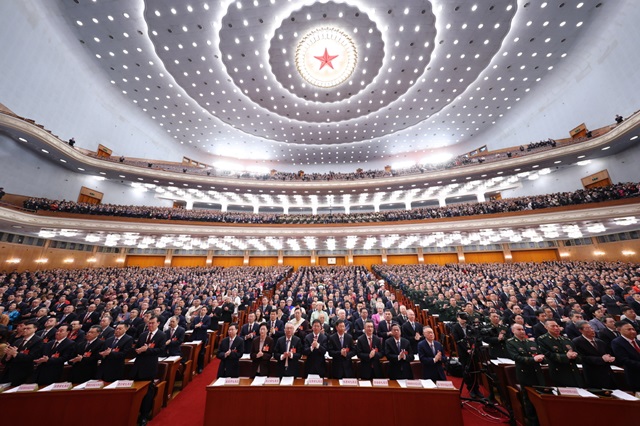
For 2026, China aims for GDP growth between 4.5 and 5 percent, a figure designed to balance structural reforms, cyclical economic realities, and long-term development goals. Premier Li Qiang, delivering the report at the opening of the fourth session of the 14th NPC, stressed that local governments must tailor strategies to their regional conditions to meet national targets. Analysts have framed the growth target as both realistic and strategic, reflecting China’s pragmatic approach to high-quality development amid shifting domestic and global economic dynamics.
The 2026 agenda also includes creating over 12 million new urban jobs, maintaining a consumer price index growth target of around 2 percent, and keeping the fiscal deficit-to-GDP ratio near 4 percent. Personal income growth is expected to align with overall economic expansion, while grain output is projected at roughly 700 million metric tons. Carbon dioxide emissions per unit of GDP are targeted for a reduction of approximately 3.8 percent, reflecting China’s commitment to a greener, more sustainable growth model.
Beyond 2026, the 15th Five-Year Plan outlines ambitious multi-year goals. China intends to maintain GDP growth within an “appropriate range,” adjusting annual targets to real-world conditions. The plan aims to double per capita GDP from 2020 levels by 2035, bringing the nation to the threshold of a moderately developed country. Innovation-led and green development are central pillars, with an expected average annual increase of at least 7 percent in national R&D spending and a cumulative 17 percent reduction in carbon dioxide emissions per unit of GDP from 2026 to 2030.
The government report also highlights life expectancy goals, aiming to raise the national average to 80 years, and projects increasing the value added of core digital economy industries to 12.5 percent of GDP. To operationalize these targets, China proposes 109 major projects spanning six key areas, including cultivating new quality productive forces, advancing technological innovation, and improving public well-being. These initiatives reflect the nation’s dual priorities of economic modernization and social development.
Premier Li emphasized that Hong Kong and Macao remain strategic anchors within China’s national development. He reaffirmed adherence to the “one country, two systems” policy and called for enhanced governance efficiency, leveraging their unique strengths and international linkages to promote long-term prosperity and stability. Li singled out the Guangdong-Hong Kong-Macao Greater Bay Area for development as a world-class hub for scientific and technological innovation, highlighting the SARs’ integral role in advancing national modernization and integrating into broader economic strategies.
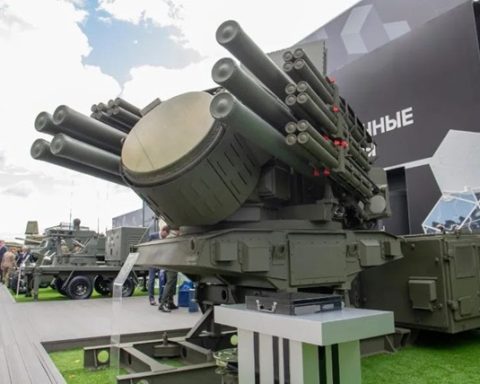
Defense and security priorities also feature prominently. China plans a 7 percent increase in defense spending in 2026, marking the 11th consecutive year of single-digit growth. Approximately 1.9 trillion yuan ($275 billion) will be allocated to personnel, routine training, and equipment modernization. Analysts note that the allocation reflects a careful balance of national defense needs, economic realities, and the evolving international security environment. Over the past year, China has made significant advancements, including commissioning its third aircraft carrier, the Fujian, and unveiling advanced tanks, hypersonic missiles, drones, and components of the nuclear triad. These developments underscore the importance of sustained investment to maintain technological and operational superiority.
China’s strategic outlook extends to foreign policy and global engagement. The government report emphasizes opposition to hegemonism and power politics, commitment to international fairness, and adherence to an independent foreign policy of peace. It pledges a resolute stance against separatist forces advocating “Taiwan independence” and calls for countering external interference. Concurrently, China aims to expand its global network of partnerships, reflecting a dual approach of defensive preparedness and proactive international engagement.
On the domestic innovation front, China plans to establish three international centers for science and technology, transforming them into world-class innovation engines. The country also intends to expand market access, particularly in the service sector, as part of an effort to open wider to the outside world. Such measures are designed to stimulate high-quality growth, foster digital transformation, and consolidate China’s competitive advantages in global technological and industrial arenas.
Environmental sustainability remains a central theme. China projects a 17 percent reduction in carbon dioxide emissions per unit of GDP over the 2026-2030 period, demonstrating a commitment to green development while maintaining economic growth. These targets align with broader global climate objectives and signal China’s intent to lead in sustainable economic modernization.
The NPC session, described by Chinese and international observers as a key platform for democratic governance with Chinese characteristics, provides insight into how the nation channels public participation into policy formation and national planning. Editorials in the Global Times highlight the duality of process-oriented and results-oriented governance, emphasizing the integration of public input with centralized leadership to achieve coherent and effective national strategies. The “two sessions” mechanism is viewed domestically and internationally as a showcase of China’s unique model of people-centered development, blending consultation, oversight, and policy implementation.
As China embarks on the 15th Five-Year Plan, the convergence of economic, technological, environmental, regional, and security priorities reflects a holistic approach to governance. By combining pragmatic growth targets, innovation-driven development, defense modernization, and strategic international engagement, the country aims to strengthen domestic stability while projecting global influence. Analysts note that China’s policies for 2026-2030 embody a long-term vision, balancing immediate needs with broader developmental ambitions, and providing a roadmap for achieving the dual goals of socialist modernization and enhanced international stature.