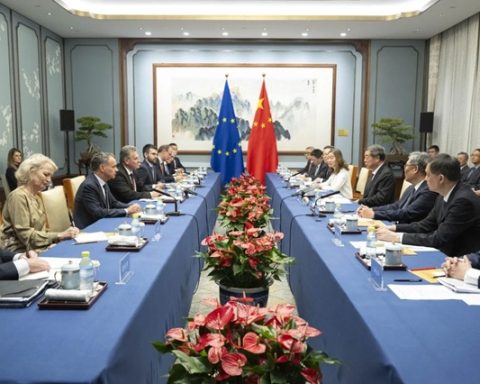
In recent times, the Chinese Foreign Minister has repeatedly asserted on various occasions that China is a peace-loving country and that it will do its utmost to maintain global peace, even in the present chaotic conditions. According to him, China vows to uphold stability amidst geopolitical turbulence. At one point, it offered to mediate between Russia and Ukraine, and now it has offered to mediate between Russia and the USA!
Those who have observed China’s actions over the last several decades would find it extremely difficult to believe that the Chinese government is genuinely peace-loving.
No one can forget China’s invasion of peaceful Tibet several decades ago, during which thousands of innocent, protesting Tibetans were massacred. China has since maintained a vice-like grip over Tibet, systematically eradicating traditional Tibetan culture and practices. Tibet today is no longer what it was several decades ago.
China waged war against India in 1962 and continues to hold thousands of kilometres of Indian territory, falsely claiming it as part of China. It now even claims that Arunachal Pradesh, an Indian state, belongs to it. Furthermore, China has approved the construction of the world’s largest hydropower dam—a $137 billion project—on the Yarlung Zangbo River (Brahmaputra) in Tibet. This has raised concerns in India and Bangladesh over potential environmental and water resource impacts. However, China has completely disregarded these concerns. Over the last several years, China has frequently engaged in military conflicts along the Indo-China border and has adopted an unpredictable stance in its relations with India.
China is also creating tensions with the Philippines in the South China Sea, leading to frequent confrontations. Additionally, it has ongoing territorial disputes with Japan over the Senkaku Islands and with Vietnam.
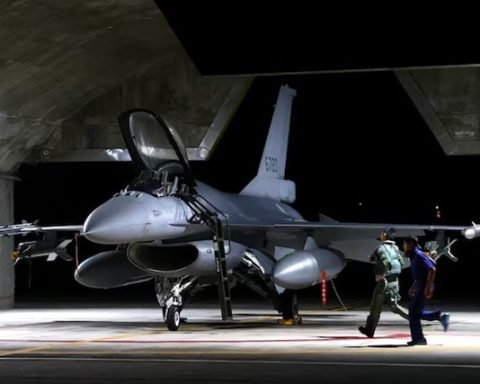
The Chinese military has now openly warned of tightening its grip around Taiwan and has not concealed its ambition to take over the island. It has consistently threatened Taiwan with aggressive military manoeuvres around its borders.
Taiwan was established as a separate state following China’s internal war several decades ago, which led to a split. If mainland China claims that Taiwan belongs to it, then by the same logic, Taiwan could also claim that mainland China belongs to it.
China’s expansionist ambitions and its frequent conflicts with its neighbours are now well known. Therefore, its claim of being committed to world peace cannot be believed. Many may see this as akin to “the devil quoting scripture.”
There is no doubt that China has made remarkable economic and industrial progress over the last few decades, becoming the world’s second-largest economy after the USA. However, China now depends on the rest of the world for trade. It is in China’s interest to talk about peace to ensure that its global market share remains unchallenged—especially with the US President threatening to impose tariffs on Chinese exports to the USA. The US market is too valuable for China to lose, which is why it is now emphasising peace.
When China continues to adopt aggressive postures against its neighbours and coerces smaller nations into debt traps to gain economic leverage, its commitment to global peace appears insincere.
In the present scenario, the only argument that could support China’s claim of being peace-loving is that other powerful nations, such as the USA and Russia, also make similar claims. In reality, China, the USA, and Russia all seem to fall into the same category when it comes to professing their commitment to peace. Their claims appear hollow and insincere, and discerning individuals across the world recognise this.