When Chinese state television microphones recently caught President Xi Jinping and Russian leader Vladimir Putin discussing the idea of living to 150 — or perhaps forever — the world reacted with astonishment and unease. But in China’s thriving biotech sector, such ambitions are increasingly treated as scientific goals rather than science fiction. According to The New York Times, the conversation has reignited interest in China’s growing longevity industry, which is now supported by both state investment and private entrepreneurship.
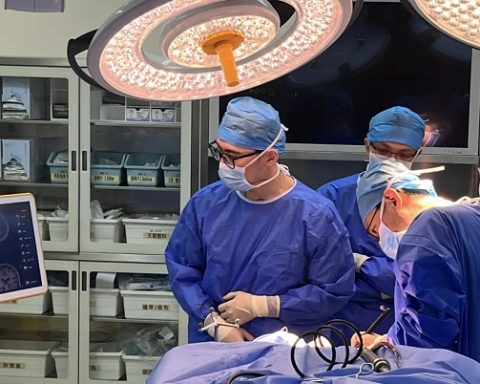
At the center of this pursuit is Lonvi Biosciences, a start-up in Shenzhen devoted to anti-aging research. “Living to 150 is definitely realistic,” said Lyu Qinghua, the company’s chief technology officer, who believes new therapies could soon eliminate cancer and drastically slow aging. Lonvi’s scientists are developing pills based on a compound extracted from grapeseed known as procyanidin C1 (PCC1), which they claim can purge the body of so-called “zombie cells” — aged cells that harm healthy ones. The company’s chief executive, Yip “Zico” Tszho, calls their capsule “the holy grail” of anti-aging medicine, predicting it could help humans live to 120 or more.
China’s fascination with immortality dates back over two millennia to the first emperor, Qin Shi Huang, who ordered an empire-wide search for elixirs of eternal life — a quest that ironically may have hastened his death from mercury poisoning. Today’s longevity seekers, however, have replaced mystic potions with molecular biology and artificial intelligence. The New York Times noted that China has made longevity research a national priority, pouring billions into biotech initiatives in an effort to rival Western breakthroughs in medicine and aging science.
The industry now spans from sophisticated laboratories to luxury “longevity hospitals” and wellness expos. In Shanghai, companies like Time Pie and SuperiorMed have built entire business empires around anti-aging conferences, supplements, and even conceptual “immortality islands.” Visitors at recent longevity fairs browsed cryogenic chambers, hyperbaric oxygen masks, and red-light therapy rooms, as entrepreneurs pitched everything from goji berry extracts to futuristic organ-replacement technologies.
Experts say China’s longevity research has evolved rapidly, catching up with the West in both scale and ambition. Harvard Medical School professor Vadim Gladyshev, a pioneer in aging studies, told The New York Times that Chinese scientists are “rapidly catching up” after years of lagging behind. He cited breakthroughs like the discovery that connecting the circulatory systems of old and young mice can extend lifespan — a concept now being actively explored in Chinese laboratories.
China’s average life expectancy reached 79 last year, according to The People’s Daily, five years above the global average but still short of Japan’s 85. Achieving the 150-year lifespan mentioned by Xi would require enormous scientific leaps, but researchers remain undeterred. David Barzilai, a U.S.-based physician specializing in aging, told the Times that while China is taking longevity seriously at both policy and research levels, “strong scientific intent does not guarantee uniformly high rigor or translational success.”
Not everyone in the field shares Lonvi’s optimism. German American scientist Steve Horvath, who pioneered the “aging clock” biomarker, told the Times that while longevity science has matured significantly, talk of immortality remains “absurd” in serious circles. Still, immortality continues to be a powerful marketing tool. Singapore-based investor Bo Yang Wang, through his fund Immortal Dragons, has been financing projects ranging from cryogenic preservation to 3-D organ printing.
For now, Lonvi’s scientists in Shenzhen are focused on making incremental advances rather than promising eternal life. Their grapeseed-derived anti-aging pills, they claim, can help users live longer and healthier lives — perhaps up to 120 years. “Rich people are like Qin Shi Huang,” said Yip with a smile. “They’re still looking for immortality — or at least a little more time.”
As The New York Times observed, what began as an overheard conversation between two world leaders has become a symbol of China’s growing belief that death itself may one day be negotiable — a dream blending ancient ambition, modern science, and national pride.