The recent surge of United States military activity in Bangladesh marks a notable shift in the security landscape of South Asia’s eastern littoral. In September 2025, Bangladesh’s Chittagong region became the focal point of heightened American engagement when approximately 120 US Army and Air Force personnel arrived for what was officially termed “joint exercises” with the Bangladesh Armed Forces. Although labelled as routine cooperation, the scale, timing, and opacity surrounding these activities signal a new phase in US-Bangladesh defence relations that warrants closer scrutiny.
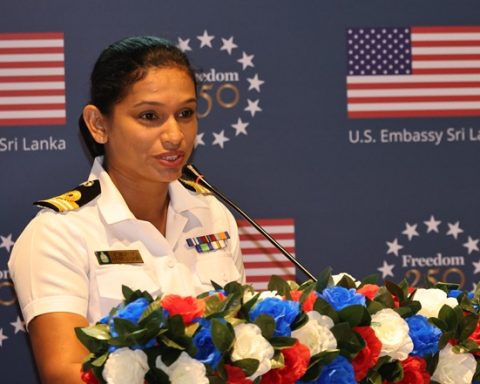
At the centre of the recent developments is “Pacific Angel 25-3,” a humanitarian and disaster-preparedness exercise involving the US, Bangladesh and Sri Lanka Air Forces at the Zahurul Haque Air Base in Chittagong. The week-long programme included medical teams, engineering support, and air-safety drills designed to simulate large-scale crises. With 92 members of the US Air Force, 90 members of the Bangladesh Air Force and personnel from regional partners participating, the exercise embodied Washington’s Indo-Pacific doctrine of enhancing resilience and interoperability among friendly militaries. Publicly, US officials framed the event as evidence of a deepening humanitarian commitment, highlighting disaster response capacity and medical preparedness.
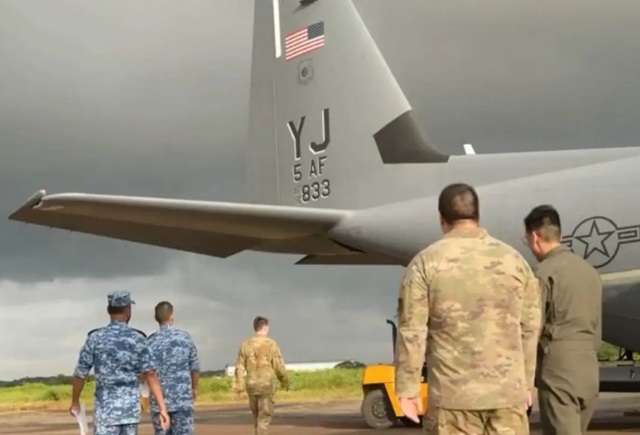
Yet parallel developments have raised questions. Beyond the formal exercise, US military aircraft – including C-130J Super Hercules transport planes typically stationed at Yokota, Japan – landed at Chittagong’s Shah Amanat International Airport. Around the same time, an Egyptian Air Force transport plane also arrived, suggesting a multinational dimension to activities in Bangladesh’s southeast corridor. Intelligence reports cited in regional media pointed to advance teams from Qatar and Thailand, hinting at a coalition framework extending beyond bilateral drills. The choice of location is strategic: the Cox’s Bazar-Chittagong corridor sits astride maritime lanes in the Bay of Bengal and borders India’s Northeast and Myanmar’s Rakhine State, making it a pivotal node for regional surveillance, humanitarian deployment, and potential military logistics.
Domestic and regional reactions have reflected the sensitivity of this expansion. Bangladesh’s Communist Party condemned what it called “US imperialism” and accused the Interim Government of exceeding its authority by permitting such deployments. Critics invoked historical precedents from Latin America and the Middle East to warn that joint military exercises often mask geopolitical ambitions. India and Myanmar, meanwhile, have watched the developments with concern, given the corridor’s proximity to their borders and the possibility of Bangladesh being leveraged as an access point for extra-regional power projection.
These apprehensions are not without context. The US has invested in building interoperability with Bangladesh through exercises such as Tiger Lightning-2025 and previous iterations of Pacific Angel, which largely emphasised peacekeeping and disaster response. However, the September 2025 exercise appeared qualitatively different – larger in scale, less transparent, and coinciding with the unexplained death of a US Special Forces officer in Dhaka. This raised speculation about whether Bangladesh is transitioning from a venue for periodic drills to a strategic foothold within Washington’s Indo-Pacific architecture.
For Dhaka, the calculus is complex. The Interim Government led by Nobel laureate Muhammad Yunus has sought to balance Chinese infrastructure investments under the Belt and Road Initiative with American offers of training, aid, and defence cooperation. While increased US engagement can enhance Bangladesh’s disaster-response and peacekeeping capabilities, it also risks domestic backlash and complicates relations with Beijing. For the United States, Bangladesh represents a geographically advantageous partner whose coastline opens onto the Bay of Bengal and whose proximity to Myanmar and India allows rapid response to regional contingencies. For India, which depends heavily on Bay of Bengal sea lanes and maintains sensitive assets along its eastern seaboard, any sustained US military presence in Bangladesh could herald a more crowded strategic theatre.
In essence, the recent US military presence in Bangladesh represents more than a routine joint exercise. It embodies the convergence of humanitarian, strategic, and geopolitical imperatives in a region increasingly shaped by great-power rivalry. Whether this marks the beginning of a deeper military alignment or remains a transient episode will depend on how Dhaka manages its relationships with Washington, Beijing, and New Delhi. What is clear is that the quiet arrival of American troops and aircraft in Chittagong has resonated far beyond Bangladesh’s borders, signalling the country’s growing salience as a key node in the evolving Indo-Pacific security architecture.