A deceased senior figure of Colombia’s Catholic Church has been accused of repeated sexual abuse, in revelations that are intensifying scrutiny of institutional responses to such allegations. A man identified as Andrés claimed in a radio interview that Cardinal Pedro Rubiano Sáenz, who died in April 2024, abused him multiple times beginning in 1983, when he was a teenager. The accusations surfaced publicly just hours after a report cited by El País detailed multiple cases of alleged abuse involving clergy members and was submitted to the Vatican for investigation.
According to Andrés, who spoke on Caracol Radio, the abuse began when he was 14 years old after being forced to leave his home in Bogotá. Newly arrived in the city from Bucaramanga and without resources, he sought refuge at the Primatial Cathedral. There, he was taken in by a priest identified in the El País dossier by the initials J.A.B.N., who allegedly offered him shelter in exchange for sexual acts. Andrés described a pattern of coercion tied to his vulnerability, saying the abuse began the same night he was given food and a place to sleep.
The testimony further alleges that this priest later introduced him to Cardinal Rubiano. Andrés recounted that the first encounter took place in a parking area of the Major Seminary of Bogotá, where he says the cardinal subjected him to sexual acts. He stated that he attempted to resist further abuse but was unable to escape due to fear of returning to homelessness in an unfamiliar city. According to his account, these encounters with Rubiano continued regularly over several months in 1983 and extended intermittently for years.
The allegations describe a broader pattern of exploitation. Andrés claims that he and other youths were used by clergy members not only for abuse but also in what he described as “medical controls” involving other minors recruited through parish schools. He portrayed an environment in which victims were treated as objects and subjected to ongoing manipulation. The long-term impact, he said, was severe, leading to substance abuse and years of instability before he distanced himself from that environment in 1999.
The report cited by El País includes Andrés’s testimony among several others involving clergy in Colombia and elsewhere in the Americas. The newspaper stated that it had contacted the Archdiocese of Bogotá regarding the allegations but had received no response by the time of publication. The lack of official comment has added to concerns about transparency and accountability within church structures.
Andrés also described earlier attempts to report the abuse. In 2000, during a visit to the Vatican, he said he submitted a written complaint addressed to Joaquín Navarro-Valls, a close aide to Pope John Paul II. He claims he included supporting materials but never received a reply. Two decades later, in 2021, he again sought to formally denounce the alleged abuse through the Archdiocese of Bogotá’s Office of Good Treatment, which had been established to address such cases.
He recounted meeting with the current archbishop, Cardinal Luis José Rueda Aparicio, who allegedly encouraged him to document his experience and promised support, including legal and psychological assistance. While Andrés said he did receive some therapy, he claims that no further action was taken. He described the outcome as “total silence,” expressing frustration over what he perceives as institutional inaction.
The survivor also reached out to other church officials and institutions, including the Apostolic Nunciature in Colombia and members of Vatican bodies responsible for handling abuse cases. He named several individuals he believes did not adequately process his complaint. According to his account, a legal filing with Colombia’s prosecutor’s office later revealed that none of the church institutions had formally advanced his allegations for investigation.
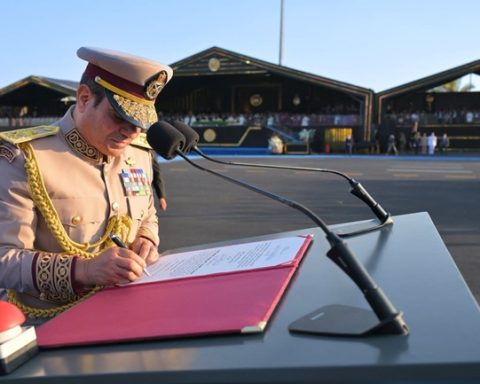
The case is complicated by the passage of time and the death of key figures. Andrés noted that the priest who initially took him in was killed in 2001, while Cardinal Rubiano himself died in 2024 without ever publicly facing accusations of this nature. Rubiano had served as Archbishop of Bogotá from 1994 to 2010 and was made a cardinal in 2001, becoming one of the most prominent figures in Colombian Catholicism over several decades.
Now 57 years old, Andrés says he continues to suffer lasting psychological and emotional effects. He has not been able to share his experience with his family and described feelings of anger, shame, and ongoing trauma. His testimony adds to a growing body of allegations that are prompting renewed calls for investigation and institutional accountability within the Catholic Church in Colombia and beyond.
The Vatican has not yet publicly commented on the dossier referenced by El País, and it remains unclear whether a formal inquiry will proceed. Meanwhile, the case underscores the broader challenges faced by survivors seeking recognition and justice, particularly when allegations emerge years after the events and involve individuals who are no longer alive to respond.