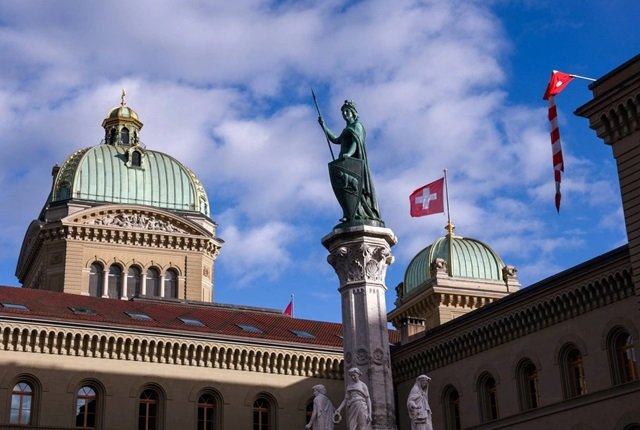
Switzerland is preparing for a closely contested referendum on whether to relax restrictions on exports of Swiss-made weapons, reopening a debate over the country’s centuries-old policy of neutrality and its place in an increasingly militarised Europe.
The proposed amendment to the War Material Act, approved by Parliament late last year, would make it easier for foreign governments to transfer Swiss-made military equipment to other countries. Final opinion polls published last week put support at 49%, with the measure holding a lead of no more than three percentage points ahead of Sunday’s vote.
The referendum reflects tensions that have intensified since Russia’s full-scale invasion of Ukraine in 2022. Switzerland adopted European Union sanctions against Moscow that year, prompting criticism from opponents who argued that the decision compromised its neutrality. A subsequent attempt to enshrine a stricter interpretation of neutrality in the constitution was rejected in a referendum this summer.
“Switzerland has had a very hard time finding a coherent strategy at least since the war in Ukraine began,” said Evelyne Schmid, a professor of international law at the University of Lausanne. She argued that the country could not simultaneously maintain permanent neutrality and supply weapons whenever circumstances suited its interests.
Under rules tightened in late 2021, Switzerland is prohibited from exporting weapons to countries involved in armed conflicts. The restrictions prevented the transfer of Swiss-made equipment to Ukraine and strained relations with European partners. In 2023, the government blocked state-owned arms manufacturer Ruag from selling nearly 100 tanks to Germany, which intended to refurbish them before sending them to Ukraine.
The defence industry and the government support the proposed changes, arguing that the existing restrictions undermine the competitiveness of Swiss manufacturers and weaken national security. Officials say a strong domestic defence sector, integrated into international supply chains, is necessary to secure access to essential equipment and materials.
However, the proposed amendment would not enable Switzerland to supply weapons directly to Ukraine. Its existing embargo on Russia means that arms deliveries to Kyiv would confer a military advantage incompatible with the country’s neutrality, according to the rationale behind the restrictions.
The revised law would remove a clause requiring countries to obtain Swiss approval before re-exporting Swiss-made military equipment. It would also establish a list of partner states eligible to purchase Swiss arms even during conflicts, while creating greater flexibility for exports involving the United States, the country’s second-largest market for the Swiss defence industry.
Opponents warn that removing the re-export requirement would deprive Switzerland of control over the eventual destination of its weapons, potentially allowing them to reach authoritarian governments, rogue states or terrorist organisations.
“Autocracies and dictators around the globe stand to benefit, and Swiss weapons would then be used in conflicts where that is certainly not wanted,” said Fabian Molina, a Social Democrat lawmaker involved in the campaign against the amendment.
Molina also disputes claims that export restrictions have seriously damaged the industry, pointing to a recovery in arms sales after declines in 2023 and 2024. He said exports were on course for another strong year in 2026, despite a ban on new exports to the United States linked to the Iran war.
Industry executives, however, argue that Switzerland risks losing business as European governments increase defence spending. Oliver Duerr, who until recently headed Rheinmetall’s Zurich-based air defence division, said customers had become increasingly reluctant to enter into agreements because of Swiss export restrictions.
“The discussions I’ve had with so many customers are ones I never had before,” he said, adding that damage had already been done but its recovery remained uncertain.
The government maintains that closer integration into international defence supply chains is essential for Switzerland’s foreign and security policy, leaving voters to weigh the economic and security arguments against concerns over the country’s traditional neutrality.