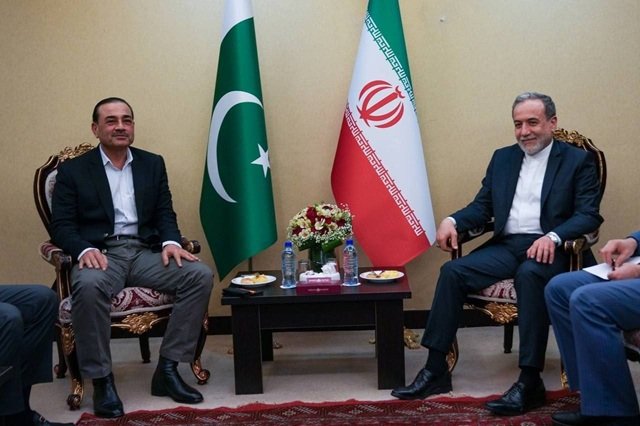
On November 16, Iranian Foreign Minister Abbas Araghchi met Field Marshal Asim Munir in Islamabad on the sidelines of an Economic Cooperation Organization meeting. The same report noted President Trump’s view that economic pressure alone is enough and that he needs no deal. A few weeks earlier, in Doha, Pakistan had joined Turkey, Qatar and Indonesia in signing the Badr Memorandum of Understanding on defense cooperation. Pakistan is now both the trusted go-between for Washington and Tehran and a signatory to a growing web of security pacts. The question for Islamabad is whether those two roles can coexist.
Pakistan earned its place at the table. It hosted the April Islamabad talks, the highest-level direct engagement between Washington and Tehran since 1979. In June, Prime Minister Shehbaz Sharif signed the Islamabad MoU as mediator. That interim deal then unravelled when fighting resumed weeks later, and on October 20 Tehran told Munir there would be no talks until its demands were met. Yet Araghchi has since said Iran trusts Pakistan’s mediation, while still insisting on frozen-asset releases, sanctions relief and an end to the US naval blockade. That trust is Pakistan’s main diplomatic asset.
Islamabad has also widened the circle. The Regional Four (R4) of Pakistan, Saudi Arabia, Turkey and Egypt was established in Riyadh in March. Its foreign ministers met their European counterparts from Britain, France, Germany and Italy (the E4) in Istanbul on October 23. Three days later, security chiefs from Pakistan, Turkey and Saudi Arabia travelled to Tehran. Foreign Minister Ishaq Dar says Germany has invited the eight countries to talks in December, with a date still to be fixed. He also says Islamabad is an acceptable venue to both Iran and the US for direct talks.
The other track is harder-edged. In August, Pakistan, Saudi Arabia and Turkey signed the Mecca Joint Defense Agreement, treating an attack on one as an attack on all. It builds on Pakistan’s September 2025 mutual defense pact with Riyadh. On October 5, Turkey and Pakistan agreed to activate collective deterrence measures after Houthi attacks on Saudi Arabia. Badr is different in kind. It covers military production, technical training, and research and development rather than a mutual-defense clause. The South China Morning Post reads it as an attempt to shed dependence on Western arms sales and the political strings attached.
The tension between the two tracks is real. A mediator’s currency is perceived impartiality. Pakistani officials and the pact’s signatories describe the Mecca agreement as collective deterrence rather than a military arrangement, but Tehran may not draw that distinction. The sequence is worth noting: the pact’s activation came on October 5, and Iran’s “no talks” message to Munir came on October 20. Those two events do not prove cause and effect, but they show how little margin Islamabad has. Washington adds pressure of its own. If Mr. Trump believes pressure is enough, mediators are working against the stated preferences of one of the two parties they are trying to bring together.
The pacts also look less decisive than their headlines. One analysis for MBN argued that Pakistan has chosen mediation over military intervention, that Turkey has offered capability without commitment, and that the Mecca pact has so far revealed what its members will not do. It also noted that Pakistan’s defense minister walked back his own warning that an attack on Saudi Arabia could activate the pact. Seen that way, restraint is what keeps Pakistan credible as a broker, but it raises questions about what the pacts are worth to partners who expected more.
Pakistan can manage the tension if it is deliberate about it. First, it should keep Badr what it says it is, an industrial and training partnership, and publish enough about its scope to prevent it being read as a bloc. Second, it should state clearly that its obligations under the Mecca pact are defensive and bounded, so that Tehran cannot read collective deterrence as preparation for offensive action. Third, it should use the December R4+E4 meeting to give mediation institutional weight, with a protected negotiating channel that is separate from defense diplomacy. Fourth, it should keep pressing Washington on the sequencing Tehran wants, because Iran’s conditions on sanctions, assets and the blockade are the real obstacle to talks.
Pakistan’s leverage comes from being needed by everyone at once. Defense pacts add security but also add suspicion. The country’s long-term interest lies in showing that deterrence and diplomacy can serve the same purpose, which is preventing a wider war. If it fails, the broker’s chair may be the first thing it loses.