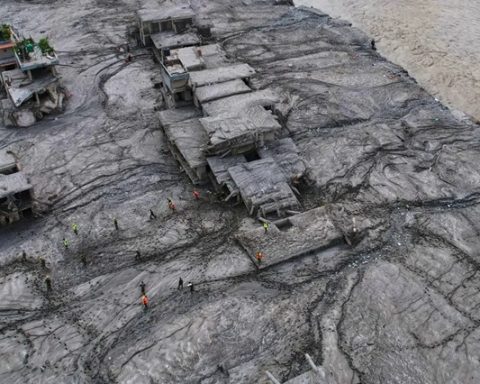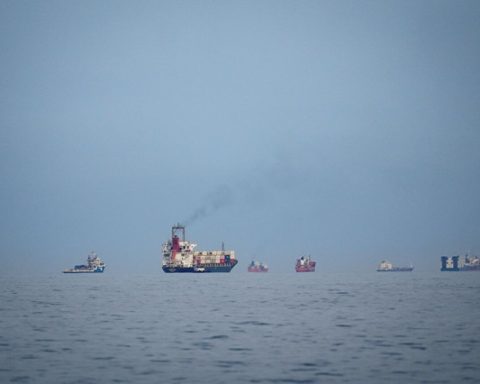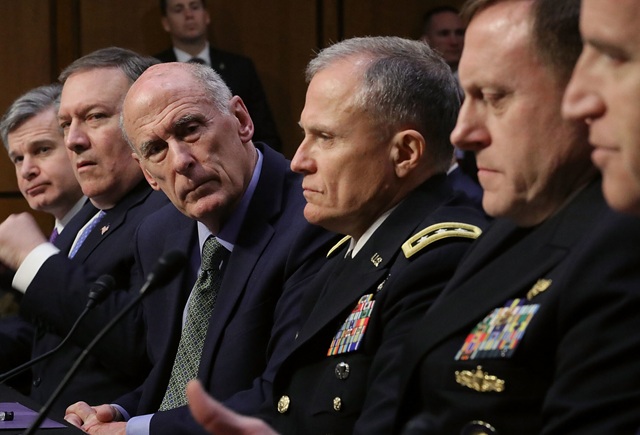
For over two decades, the U.S. Intelligence Community (IC) warned that climate change posed grave threats to global stability, from food and water insecurity to population displacement and ecological collapse. But in a stunning reversal, the IC’s 2025 Annual Threat Assessment—its most prominent public report to Congress—doesn’t mention climate change at all. It’s the first such omission since 2009, and it comes despite a long paper trail of classified and declassified warnings spanning administrations and intelligence agencies.
Today, the National Security Archive released a new collection of 45 U.S. intelligence documents tracing the evolution—and quiet unraveling—of the IC’s engagement with climate security. The reports, spanning from the Cold War to the present, reveal a pattern of increasing awareness, followed by recent erasure. From the CIA’s once top-secret CORONA satellite program in the 1960s to a now-classified 2008 National Intelligence Assessment (NIA) on climate change, the IC has intermittently recognized the growing risks of environmental instability—yet repeatedly failed to confront the root causes or U.S. culpability.
The Archive is now calling on the Office of the Director of National Intelligence (ODNI) to declassify the 2008 NIA, the only comprehensive climate assessment still hidden from public view. Analysts believe its conclusions remain foundational to more recent intelligence products, raising questions about transparency, scientific integrity, and whether the government is suppressing climate truths that contradict its policies.
Despite periodic advances, the intelligence community has largely analyzed climate change through a narrow geopolitical lens—focusing on “threat multipliers” like resource conflicts and refugee flows in other countries—while downplaying domestic vulnerabilities and avoiding mention of fossil fuel consumption, greenhouse gas emissions, or U.S. military contributions. Former officials, including Dr. Rod Schoonover of the State Department’s Bureau of Intelligence and Research, say this “state-centric” approach has long constrained the IC’s ability to reckon with climate change as a borderless, systemic crisis.
Even under past administrations that supported climate action, such as Obama’s, the IC struggled to integrate environmental intelligence beyond regional scenarios or external partnerships. Reports often leaned heavily on outside scientists, academic experts, and IPCC data—highlighting both collaboration and internal capacity gaps.
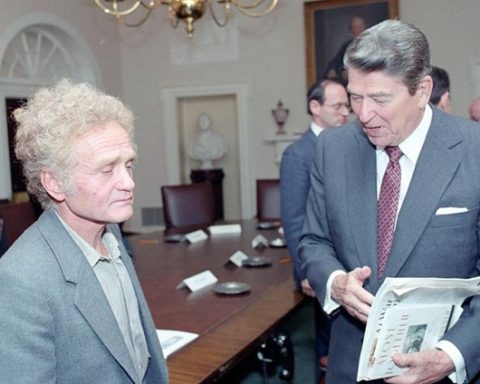
The Trump administration’s first term saw aggressive rollback of environmental policy and open hostility toward climate science, but intelligence reports from 2017 to 2019 still included recycled language on human security and biodiversity loss. Behind the scenes, attempts to testify before Congress about climate threats were blocked or censored. By 2020, no threat assessment was released at all.
The Biden administration attempted a course correction, commissioning the IC’s first-ever National Intelligence Estimate (NIE) on climate change in 2021. Yet critics called the report too cautious, overly focused on international tensions, and ultimately lacking urgency. Subsequent Annual Threat Assessments included brief references to climate-related financing and migration risks—but still skirted the issue of domestic emissions or structural drivers.
Now, in 2025, with climate change entirely scrubbed from the ODNI’s latest assessment under Director Tulsi Gabbard and President Trump’s second term, alarm bells are ringing. Former intelligence officials and environmental policy experts warn that ignoring climate threats in official risk assessments is not just negligent—it’s dangerous. It sends a message that the government no longer views planetary instability as a serious risk to national security, even as wildfires, floods, and extreme heat escalate at home and abroad.
The newly released documents offer a sobering view: decades of intelligence warnings about climate change have led to little action, and now, near silence. As datasets disappear from federal websites and key reports vanish from public records, the question isn’t whether the IC understands the threat. It’s whether it’s still allowed to say it out loud.