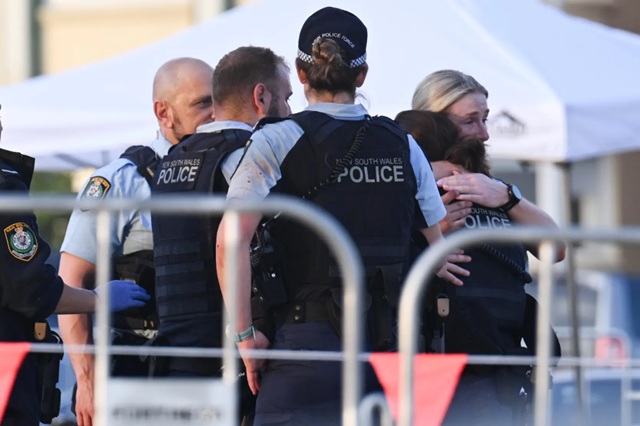
Updated Story: Australia is reeling after a devastating mass shooting at Bondi Beach on Sunday claimed the lives of at least 16 people, including a Holocaust survivor, a young French professional exploring life in Sydney, and a well-known rabbi who had publicly spoken about fighting hatred with joy. The attack, which unfolded during a Chanukah by the Sea gathering hosted by the Jewish community, also left the alleged gunman dead at the scene. The death toll rose early Monday after two critically injured victims died overnight in hospital. Thirty-eight people remain under medical care across Sydney.
NSW Premier Chris Minns confirmed the scale of the tragedy on Monday morning, revealing the victims ranged in age from just 10 years old to 87. “This is a heartbreaking loss of life,” Minns said, as authorities continued to piece together the events of what police are treating as a terrorist attack targeting Sydney’s Jewish community.
Among the victims was Dan Elkayam, a French national in his late 20s who had made Australia his home for several years. French President Emmanuel Macron confirmed Elkayam’s death, while France’s foreign affairs minister said he had been celebrating Hanukkah at the beach when he was killed. An IT analyst for NBC Universal, Elkayam was described by friends as adventurous and deeply engaged in Sydney life, regularly sharing photos of beach outings and travels across Australia.
Elkayam was also an avid soccer player and a member of the Rockdale Ilinden Football Club, where teammates described him as “an extremely talented and popular figure” in the Premier League 1 team. “Our deepest and sincerest condolences to Dan’s family, friends and all that knew him,” the club said in a statement. “He will be missed.”
Another victim identified was Eli Schlanger, 41, an assistant rabbi at Chabad of Bondi, a husband and father of five young children, including a baby boy. British-born Schlanger was widely known within the Jewish community for his warmth and optimism. Last year, he posted a video on social media showing himself dancing joyfully during Chanukah, saying happiness was the most powerful response to antisemitism.
Schlanger was one of the organisers of the Chanukah by the Sea event and had served the Bondi community as a rabbi and chaplain for 18 years following his marriage to his wife, Chaya. His death was confirmed by Chabad, the global Jewish movement that hosted the event. His cousin, Rabbi Zalman Lewis, said Schlanger’s killing was incomprehensible. “How can a joyful rabbi, who went to a beach to spread happiness and light, to make the world a better place, have his life ended in this way?” he said.
Lewis urged the community to respond as Schlanger would have wanted—through kindness, unity and hope. “Let’s flood the world with goodness,” he said. “As difficult as it might seem, light and goodwill always win.”
A deeply emotional address was delivered on Monday morning by Rabbi Yehoram Ulman, head of the Sydney Beth Din and Chabad Bondi, and Schlanger’s father-in-law. Fighting back tears during morning prayers, Ulman said those who sought to terrorise and demoralise the Jewish community would not succeed. “Now is the time to unite, to forget petty things,” he said. “They’re looking to us.”
Also killed was Alex Kleytman, a Holocaust survivor originally from Ukraine, who attended the event with his wife. Chabad said Kleytman died shielding his wife from the gunman’s bullets. He is survived by his wife, two children and 11 grandchildren. Community members described his final act as one of profound courage and love.
Another victim, Reuven Morrison, was remembered as a businessman and member of the Chabad community who emigrated from the former Soviet Union. Chabad said Morrison discovered his Jewish identity after settling in Sydney and divided his time between business in Sydney and family life in Melbourne with his wife and daughter.
NSW Police also confirmed the deaths of a 10-year-old girl and a 40-year-old man who succumbed to their injuries in hospital. Authorities have not yet released their names.
The attack left dozens injured. NSW Health said 42 patients were transported to or presented at Sydney hospitals, with multiple victims in critical condition. As of Monday morning, patients remained under care at Prince of Wales Hospital, St George Hospital, Royal Prince Alfred Hospital, St Vincent’s Hospital, Sydney Children’s Hospital in Randwick, Royal North Shore Hospital, Liverpool Hospital, Sutherland Hospital and Sydney Eye Hospital. Two patients have died since being admitted.
Police have identified one of the alleged gunmen as Naveed Akram, a 24-year-old recently unemployed bricklayer from western Sydney. Akram was apprehended at the scene alongside another alleged shooter, who died during the incident. Authorities have confirmed Akram is not the deceased gunman.
Speaking as police surrounded her family home in Bonnyrigg, Akram’s mother, Verena, said her son had told family members he was going away on holiday. She said he last spoke to her on Sunday morning and claimed he was swimming and scuba diving at Jervis Bay. She said she could not believe he was involved in the attack, describing him as quiet, disciplined and non-violent.
“He doesn’t have a firearm. He doesn’t even go out,” she said. “He goes to work, comes home, exercises—that’s it. Anyone would wish to have a son like my son.”
Akram had been laid off two months earlier after his employer became insolvent and was reportedly seeking new work. Police sources say Akram appeared in a now-deleted 2022 social media post indicating he had completed Koran studies at a western Sydney institute. Investigators remain at the family home as inquiries continue, with the surrounding area closed to the public.
Authorities say the investigation remains ongoing as Sydney mourns one of the deadliest attacks in its recent history.
Read Our Previous Story:
At least 16 people were killed and around a dozen others wounded after gunmen opened fire during a Jewish Hanukkah celebration at Sydney’s iconic Bondi Beach on Sunday, in an attack that has sent shockwaves across Australia and drawn international condemnation. New South Wales police confirmed that two suspects were taken into custody, while Australian state television reported that one of the gunmen was among those killed. Emergency services said the injured, including two police officers, were rushed to nearby hospitals as the area was placed under lockdown.
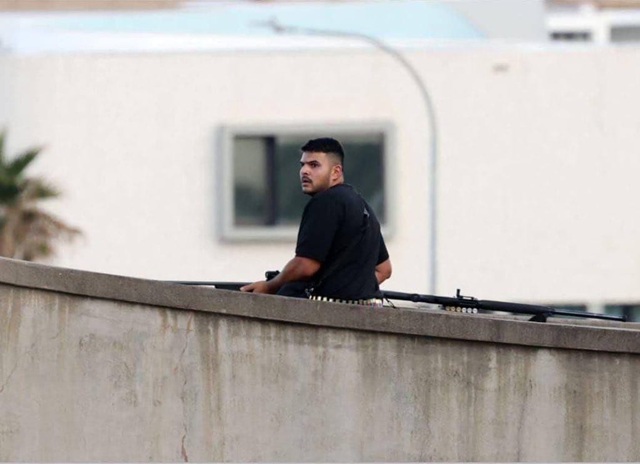
The shooting unfolded during an event marking the Jewish Festival of Lights, when families and community members had gathered on the beach to light the first Hanukkah candle. Witnesses described scenes of chaos and terror. One eyewitness, identified only as Gil, said the gunman appeared to be firing indiscriminately from an elevated position, likening the victims to “fish in a barrel”. Another local resident told Australian media he saw at least ten people lying on the ground with blood everywhere, as panicked crowds fled the scene.
Prime Minister Anthony Albanese described the incident as “shocking and distressing”, urging the public to follow police instructions while emergency responders worked to save lives. Opposition leaders echoed the sentiment, calling the loss of life significant and devastating. UK Prime Minister Keir Starmer also reacted, saying the news from Sydney was “deeply distressing” and expressing solidarity with those affected.
Israeli leaders strongly condemned the attack, framing it as part of a wider pattern of antisemitic violence. President Isaac Herzog said Jewish families who had gathered peacefully to celebrate Hanukkah were targeted by “vile terrorists”, sharing an image of a bloodstained Jewish prayer shawl to underline the brutality of the attack. Israel’s Foreign Minister Gideon Saar said the shooting was the result of what he described as ongoing “antisemitic rampages” in Australia, warning that calls to “globalise the intifada” had translated into real-world violence.
Australia has seen a series of antisemitic incidents since the outbreak of the Gaza war in October 2023, including attacks on synagogues, Jewish-owned properties and vehicles. Community leaders said the Bondi Beach shooting marked an unprecedented escalation, striking at what was meant to be a joyful and inclusive public celebration. Alex Ryvchin, co-chief executive of the Executive Council of Australian Jewry, said the community had come together to mark a happy occasion and that the scale of the violence was beyond anything previously imagined.
The Israeli Embassy in New Delhi also issued a strong statement condemning the “horrific attack” at Bondi Beach, extending condolences to the families of the victims and warning that those who call to globalise the intifada are, in effect, calling for the murder of innocent Jews worldwide. The embassy said such calls would not be allowed to succeed.
Speaking to Sri Lanka Guardian, Professor Rohan Gunaratna, a leading global terrorism expert and the founder of the International Centre for Political Violence and Terrorism Research (ICPVTR) at the S. Rajaratnam School of International Studies in Singapore, described the Bondi Beach shooting as an act of international terrorism. He said it was the worst terrorist attack Australia had experienced in recent years and warned that extremist networks continue to exploit open societies.
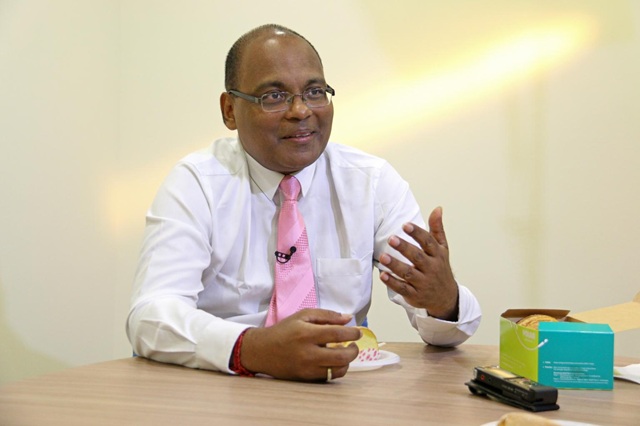
Professor Gunaratna said that as long as Australia permits extremist groups to radicalise citizens and residents, individuals will continue to join terrorist organisations and even align with hostile states such as Iran to carry out attacks. He called on Australian authorities to halt pro-Hamas protests and demonstrations, improve the cultural integration of diaspora and migrant communities, and establish comprehensive rehabilitation programmes to deradicalise individuals holding extremist and exclusivist views.
He further revealed that security and intelligence agencies had received information indicating that acts of violence, ranging from sabotage to terrorism, could occur during Jewish celebrations linked to the Festival of Lights. According to Professor Gunaratna, governments must move beyond basic counter-terrorism cooperation towards deeper collaboration and partnership, allowing intelligence to be used more effectively to warn the public and prevent mass-casualty attacks.
Meanwhile, Israeli media has revealed that Israel had recently shared intelligence with Australia indicating that Iran was putting infrastructure in place and smuggling weapons into the country. According to these reports, the alleged activity was intended to facilitate potential attacks against Jewish targets, highlighting heightened security concerns and the importance of continued vigilance by authorities.
Subsequently, Iran’s Ministry of Foreign Affairs dismissed the allegations, with spokesperson Esmaeil Baqaei characterizing the claims as unfounded and politically motivated. In a statement issued via his official account, Baqaei rejected suggestions that Iran was engaged in covert activities targeting Jewish interests abroad, arguing that such assertions were designed to divert attention from Israel’s own actions and to justify heightened security measures against Iran.
Baqaei further stated that Iran remains committed to diplomatic norms and respect for international law, warning against what he described as the misuse of intelligence narratives to escalate tensions. He urged foreign governments, including Australia, to independently verify security claims and to avoid actions that could exacerbate regional instability or undermine diplomatic engagement.
As investigations continue and the nation mourns, the Bondi Beach shooting has reignited urgent debates in Australia over extremism, intelligence sharing and community cohesion, with leaders under mounting pressure to ensure that such an attack is never repeated.