For decades, the term “Greater Israel” was largely treated as a fringe fantasy—a biblical myth or the speculative dream of far-right ideologues. Yet mounting evidence suggests that Israel’s territorial ambitions extend far beyond myth, with land grabs, policy moves, and strategic interventions pointing to a long-term plan to expand influence from the Nile to the Euphrates. What was once dismissed as fringe rhetoric is increasingly being seen by analysts as a deliberate blueprint for regional dominance.
The concept of Eretz Yisrael, or the Land of Israel, finds its roots in the Torah. Genesis 15:18 describes a covenant granting land “from the river of Egypt to the great river, the Euphrates.” Over the years, Israel’s leaders have invoked these boundaries in different ways. David Ben-Gurion, Israel’s first prime minister, emphasized that “the boundaries of Zionist aspirations are the concerns of the Jewish people, and no external factor will be able to limit them,” affirming the centrality of expansionist vision alongside the formal acceptance of the 1947 UN Partition Plan.
The Six-Day War of 1967 marked a turning point. In the span of just days, Israel captured the West Bank, Gaza, the Golan Heights, and the Sinai Peninsula. The swift military success provided both the impetus and the precedent for the postwar emergence of the Movement for Greater Israel, which sought to solidify and extend territorial control. In subsequent decades, this vision has been articulated and operationalized by influential politicians and strategists.
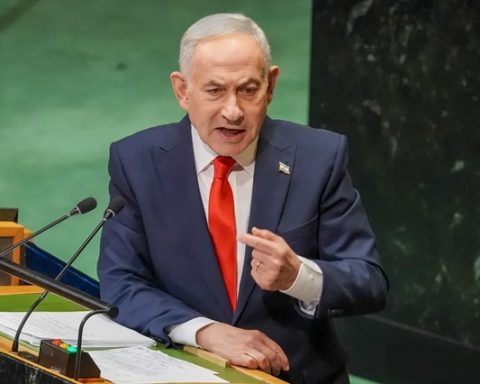
Bezalel Smotrich, a key architect of West Bank settlements, published “The Decisive Plan” in 2017, asserting that there is only one national self-determination west of the Jordan River—the Jewish one. Israeli Prime Minister Benjamin Netanyahu has repeatedly endorsed similar goals. In 2023, he presented two controversial maps at the United Nations, dubbed the “Map of Blessing” and the “Map of Curse,” which effectively erased the prospect of a Palestinian state. In 2024, when asked directly about Greater Israel, he openly backed the vision, signaling its enduring relevance in Israeli political discourse.
Strategists have long theorized about the broader implications of such expansion. The 1970s civil war in Lebanon, which fractured the country into sectarian mini-states, provided a template later referenced in Israel’s regional planning. In 1982, Israeli intelligence advisor Oded Yinon outlined in A Strategy for Israel a plan for the collapse of surrounding Arab states into weak, ethnically or sectarian-based enclaves. The ultimate goal, Yinon argued, was to establish Israel as the unchallenged regional power, using Lebanonisation as a precedent for reshaping the entire Middle East.
Overlaying the Greater Israel vision onto contemporary maps highlights the remaining obstacles: the Iran-led Axis of Resistance, comprised of Iran, Hezbollah, and allied groups, represents the primary barrier to unimpeded expansion. In parallel, Israel has leveraged both diplomacy and military intervention to assert influence across multiple neighboring states. Iran faces pressure through Kurdish factions and the concept of “David’s Corridor,” which aims to cut Iranian supply lines to Hezbollah via Syria and Iraqi Kurdistan. Palestinian territories have shrunk to isolated enclaves after decades of Israeli control, with historical UN allocations long overtaken by conquest and settlement.
Lebanon remains fragmented, with Israeli forces having displaced thousands from southern regions, including Beirut’s southern suburbs. Syria has experienced Israeli occupation south of disengagement lines, alongside influence over Druze and Kurdish factions. Iraq has been affected by Israel’s push for Kurdish autonomy in the north, while Egypt and Jordan face challenges to sovereignty in northern Sinai and the West Bank, respectively. Far-right rhetoric labeling Jordan as a default Palestinian state further complicates regional dynamics. Even Turkey and Pakistan are implicated, with northern Syria and Balochistan identified as strategic zones to limit regional competitors and allies of Iran.
The cumulative effect of these strategies is the gradual reconfiguration of political, territorial, and military balances across the Middle East. Critics argue that the vision of Greater Israel, once dismissed as speculative or ideological, is being implemented through incremental steps: settlement expansion, strategic alliances with local factions, and targeted interventions in fragile states. Each move—whether in Lebanon, Syria, Iraq, or the Palestinian territories—demonstrates the convergence of ideology and realpolitik, aimed at maximizing Israel’s influence while minimizing resistance.
Observers note that what distinguishes the current strategy from past expansionist rhetoric is its systematic approach. From the legalistic framing of historical claims to tactical maneuvers leveraging regional instability, Israel’s actions suggest a deliberate blueprint rather than ad hoc policy. The overlap between historical claims, modern settlements, and military interventions reflects a complex interplay between religious aspiration, strategic calculation, and regional power projection.
Whether Greater Israel remains an achievable objective is hotly debated. While analysts acknowledge formidable obstacles—including regional opposition, international law, and shifting alliances—the combination of political will, military capacity, and ideological commitment underscores the seriousness with which these ambitions are pursued. For neighboring states, the implications are profound: territorial integrity, political autonomy, and regional influence are all increasingly contested in a landscape shaped by decades of conflict, settlement, and strategic calculation.