Could the changes of power in Sri Lanka, Bangladesh, and Nepal in 2022, 2024, and 2025 resemble the violent shift at Plassey in 1757? The relevance of this question lies in historian E. H. Carr’s argument that history is “an endless dialogue between the present and the past”. It is important to remember that the British ruled the Indian subcontinent for 190 years after the Battle of Plassey in 1757. At the same time, it has been widely discussed and argued that internal protests and conspiratorial activities orchestrated by Western powers, particularly the American Deep State, have resulted in bloody transfers of power in Sri Lanka, Bangladesh, and Nepal.
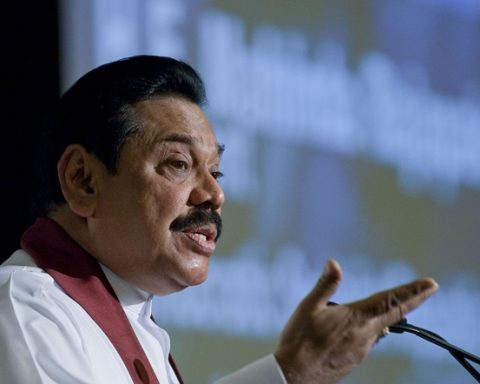
The first instance of a forced departure from power was witnessed in Sri Lanka in 2022. In the early hours of 13 July 2022, beleaguered President Gotabaya Rajapaksa hastily fled the country, just days after thousands of furious protesters stormed his official residence, swam in his pool, and demanded his resignation.
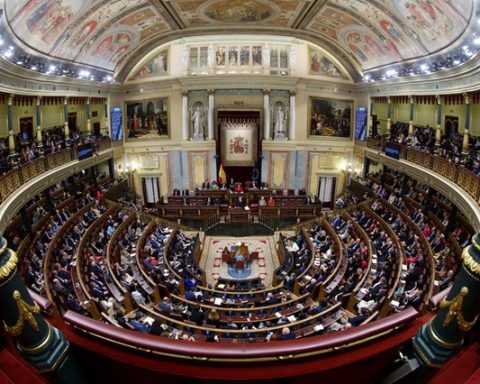
The second case was seen in Bangladesh in 2024. On 5 August 2024, former Prime Minister Sheikh Hasina resigned as large crowds of demonstrators surrounded the Gano Bhaban, the official residence of the prime minister. Later that day, Sheikh Hasina fled to India in a chaotic departure. Afterwards, the prime minister’s residence, Ganobhabon, was ransacked and looted, while parliament was stormed by violent protesters.
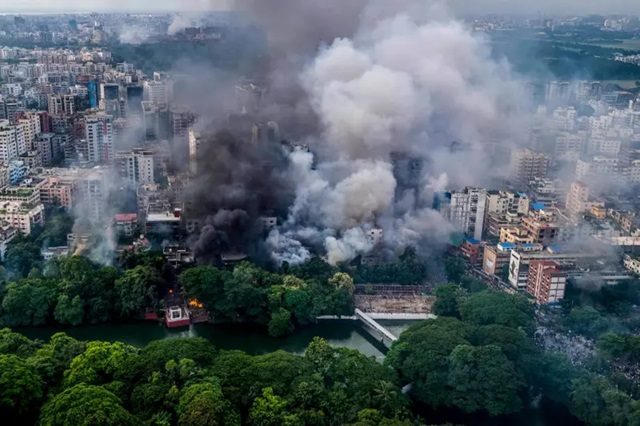
The most recent example occurred in Nepal. On 10 September 2025, former Prime Minister KP Oli stepped down and is reported to have escaped in a military helicopter during a significant uprising against corruption and a prohibition on social media. Intense demonstrations set fire to officials’ homes, looted the president’s residence, and stormed parliament, while many swam in the president’s pool and insisted on his resignation.
These abdications of power in three South Asian states between 2022 and 2025 may be viewed in the light of Nawab Siraj-ud-Daula’s defeat and assassination 268 years earlier, in 1757.
The battered body of Nawab Siraj-ud-Daula was paraded through the streets and bazaars of Murshidabad, mounted on the back of an elephant, to announce to the residents that the Nawab had been killed. The date was 3 July 1757. Captured at Rajmahal while fleeing, Siraj was brought to Murshidabad on 2 July. That night, between 2 and 3 July, he was hacked to death. His dismembered body was then displayed on elephants and paraded around the city. During this ‘horrific funeral procession’, the mahout either unknowingly or deliberately stopped in front of the residence of Hussain Quli Khan—whom Siraj had killed two years earlier. Drops of blood from Siraj’s corpse fell onto the very road where Hussain Quli Khan had been slain. This account is found in Siyar-ul-Mutakhkhairin, written by Syed Ghulam Hussain. In the spectacle of Siraj’s body, the paradox of his ‘closeness’ to and ‘distance’ from power was starkly evident.
The Battle of Plassey began at 8 a.m. on 23 June 1757. By noon, a storm and rain had soaked the Nawab’s ammunition. Soon after, Mir Madan was killed by an English bullet. With Mir Madan dead, Mohan Lal continued to fight bravely, but Siraj’s chief commander, Mir Jafar, stood by passively with his troops, facilitating his master’s defeat and the English victory. On Mir Jafar’s advice, Siraj-ud-Daula ordered a retreat. His troops scattered, and he himself fled the battlefield for his palace.
The next morning, 24 June 1757, Siraj reached the palace but was received by no one. According to Syed Ghulam Hossain Khan, “Nawab Siraj-ud-Daula fled from his palace at about three in the morning; it was the seventh day of the month of Shawwal.” Disguised, he set out for Bhagwangola, suffering hunger and thirst with his family and companions. Siyar-ul-Mutakhkhairin records that after disembarking briefly to prepare some khichdi (a South Asian dish of rice and lentils), Siraj encountered Shah Dana, a Fakir whose ear he had once cut off during his days of power. Seizing his chance for revenge, Shah Dana secretly informed Mir Jafar’s supporters of Siraj’s whereabouts.
The chronicler Karam Ali Khan, in Muzaffarnama, recounts how Alivardi Khan had earlier arranged the killing of Hussain Quli Khan, fearing his influence. Syed Ghulam Hussain Khan, in Siyar-ul-Mutakhkhairin, described this act as “innocent bloodshed”, which unleashed a destructive chain of events, culminating in the fall of the Nawab’s house and the devastation of Bengal.
Siraj-ud-Daula was captured by his own servants and brought back to Murshidabad on 15 Shawwal 1170 AH, eight days after fleeing the palace. Reduced to a pitiful state, he evoked both pity and reproach from those who remembered his former splendour. Meanwhile, Mir Jafar had ascended the throne. When Siraj was brought near the palace, Mir Jafar’s son ordered his humiliation, but most refused. Eventually, a man named Mohammadi Beg agreed to kill him. Siraj, recalling his own killing of Hussain Quli Khan, murmured, “The death of Hussain Quli Khan has been avenged,” before being hacked to death. His dismembered body was once again paraded on an elephant through Murshidabad, marking Mir Jafar’s seizure of power.
The killing of Siraj-ud-Daula was framed as an act of vengeance. Yet his commitment to independence endures in the consciousness of freedom-loving people across the Indian subcontinent. By contrast, the recent upheavals in Sri Lanka, Bangladesh, and Nepal were orchestrated by Generation-Z movements. Only in Bangladesh have students secured positions on the government’s advisory council. Mob violence and corruption have broken all past records there. While Sri Lanka and Nepal—both non-Muslim majority states—show signs of returning to normalcy, Muslim-majority Bangladesh continues to face mob violence, persecution of opposition parties, and attacks on religious and ethnic minorities.