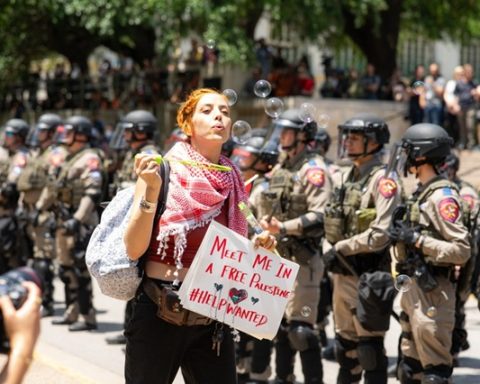
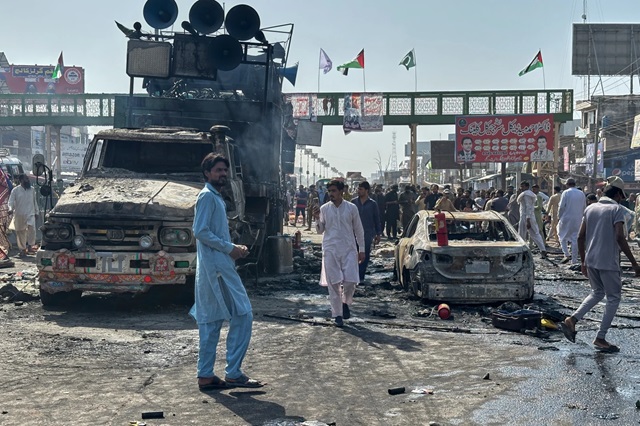
Pakistan appears to be in the process of creating another Frankensteinian monster for itself. Elements within the Tehreek-e-Labbaik Pakistan (TLP), long a protégé of the military establishment, and mobilized from time to time to embarrass or pressure the political leadership, appear to have gone rogue, raising an armed formation, the Tehreek-e-Labbaik Pakistan Force (TLPF). In the wake of the brutal repression of the TLP’s ‘Labbaik Ya Aqsa Million March’ protests against the ‘betrayal of Gaza’ and ‘normalisation’ of ties with Israel, the incipient terrorist formation has already claimed at least one sniper attack on a Peshawar security post on November 2, 2025, declaring this was its “first armed phase.” On November 8, TLPF made its “jihad declaration” against the military regime public, and called for a nationwide uprising to avenge the violence inflicted by the security forces (SFs) during the suppression of the October protests. The first week of November saw several videos circulating on Social Media, showing armed men in Lahore and Islamabad, led by TLP leaders including Muhammad Hussain Razvi, vowing “armed revolt” by the “fighter wing”, in retaliation to the Muridke massacre, and to fight against the “Zionist puppets” and “tyrannical” regime that “kills its own people in the name of Israel.”
Significantly, TLP was banned by the Federal Government under the Anti-Terrorism Act 1997, on October 24, 2025, citing “terrorism risks”.
Another element feeding into the escalation is the fact that TLP chief Saad Hussain Rizvi has remained untraceable since the October 13 firing in Muridke. Divergent reports suggest that he was shot and killed, that he was shot and is currently receiving treatment in military custody, or that he has been ‘traced’, and is soon to be arrested. His name is among 290 TLP leaders placed on a no-fly list on October 28, 2025.
It remains to be seen if TLPF emerges as a significant terrorist formation, but it is useful to recall similarities between recent events, and the siege of Lal Masjid in 2007 that birthed the Tehreek-e-Taliban Pakistan (TTP). The Lal Masjid, operated by two brothers, Abdul Aziz and Abdul Rashid, was another fundamentalist Islamic organisation much indulged by the military, till it crossed certain lines and the then-Pervez Musharraf regime laid siege on the sprawling complex, including the Jamia Uloom al Islamia Madrassa for boys, and the Jamia Hafsa Madrassah for girls. The complex was besieged on July 3, and overran resistance on July 11, with 154 fatalities officially acknowledged, including Abdul Rashid, his mother and a nephew. The TTP was created by the survivors of the siege of Lal Masjid, and their sympathisers, resulting in a surge in terrorism, with 6,683 killed in 2008, and another 11,317 in 2009 [South Asia Terrorism Portal data]. Between 2008 and 2015, Pakistan lost 52,069 lives to terrorism, before fatalities fell below the 2,000 per year mark.
Crucially, TTP has urged TLP to “take up arms to survive,” releasing videos from South Punjab calling TLP followers to join the jihad.
The brutal crackdown on the TLP has also drawn international criticism, including from the Afghan Taliban, who condemned the “direct gunfire and violent attacks” on protestors as excessive. Domestically, it exposed rifts: some junior army officers reportedly refused orders to fire on protesters, citing religious solidarity with ‘Gaza defenders.’
No major attacks by TLPF have yet materialized [till the time of writing], but the propaganda surges indicate recruitment, and the state’s ‘muscular approach’ may backfire, feeding the very insurgency it seeks to crush.