Francis Fukuyama, the renowned political scientist and Stanford fellow, cautions that the Trump administration’s approach to Venezuela risks becoming another failed foreign intervention. In a recent column for Persuasion, Fukuyama argues that Washington’s current strategy—a minimalist form of “nation-building-lite” aimed primarily at restoring oil production—overlooks the essential prerequisites for stability: democratic legitimacy, security, and local buy-in.
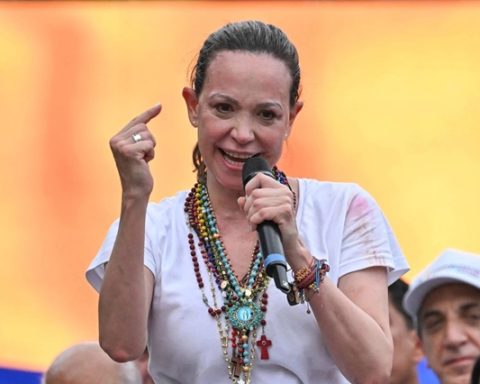
Fukuyama draws parallels with previous U.S. interventions in Afghanistan and Iraq, noting that both cases demonstrated the high cost and complexity of nation building. Those efforts faltered because Washington underestimated the resources, time, and local cooperation required to create functioning successor governments. In Venezuela, the Trump administration has decapitated the Maduro regime and sought to extract oil wealth while bypassing popular democratic leaders like María Corina Machado. Delcy Rodríguez, a former regime loyalist, has been positioned as a partner, while American oil companies are encouraged to invest in restoring the country’s oil infrastructure.
However, Fukuyama stresses that even this limited goal faces daunting obstacles. Venezuela’s economy is in collapse due to U.S. sanctions, the Maduro regime’s corruption and mismanagement, and the depletion of PDVSA, the state oil company. Competent engineers and managers who could revive production are unlikely to return without security guarantees and a legitimate government. Meanwhile, armed militias and criminal gangs loyal to the old regime remain a threat, making it difficult for any proxy leadership to assert control.
The scholar also highlights the broader societal challenges. Nearly eight million Venezuelans have fled the country, creating a large diaspora that has strained neighboring nations and includes a talented workforce critical to the country’s recovery. Fukuyama emphasizes that conditions must be created for their safe return, which cannot occur under continued authoritarian rule. Democratic legitimacy, he notes, is not merely idealistic; it is a necessary component of power, stability, and economic recovery.
Even if Washington were to push for elections or engage international bodies like the Organization of American States to oversee a transition, Fukuyama warns that nation-building-lite is likely to evolve into full-scale nation building. Security concerns must be addressed first, particularly in a country with one of the highest murder rates in the Western Hemisphere and persistent threats from both regime loyalists and criminal groups. The risk of “mission creep” is high, echoing the unintended expansion of American involvement in Iraq and Afghanistan.
Finally, Fukuyama cautions that a new democratic government will face its own hurdles. Opposition groups often lack the institutional experience to govern effectively, making the assembly of a skilled technocratic team essential. Many of these individuals reside in the émigré community, and their engagement will require deliberate mobilization and sustained support—resources that the current administration has not prioritized.
According to Fukuyama, the Trump administration’s Venezuela policy may be more about oil extraction and geopolitical signaling than fostering democracy. Without careful planning, local cooperation, and a commitment to security and governance, the minimalist intervention risks repeating the costly failures of America’s prior nation-building exercises.