Hamas is seeking to secure a future role for its vast security and civil workforce in Gaza by pushing to incorporate its police force into a new U.S.-backed Palestinian administration, a move likely to face stiff resistance from Israel and complicate efforts to demilitarize the enclave, according to sources cited by Reuters.
The proposal comes as Hamas debates whether to relinquish its weapons under a fragile, multi-phase ceasefire agreement brokered by U.S. President Donald Trump. The deal, reached in October, links further Israeli troop withdrawals from Gaza to Hamas giving up its arms. While the agreement envisions a post-war governance structure that excludes Hamas, the group continues to exert control over just under half of the territory and is maneuvering to preserve its influence.
At the center of the dispute is the National Committee for the Administration of Gaza, a U.S.-overseen technocratic body tasked with taking over governance under a 20-point plan aimed at ending the war. The framework explicitly bars “foreign terrorist organizations” from participating in Gaza’s future administration. Despite this, Hamas has urged its personnel to cooperate with the committee while quietly seeking guarantees that they will be absorbed into the new system.
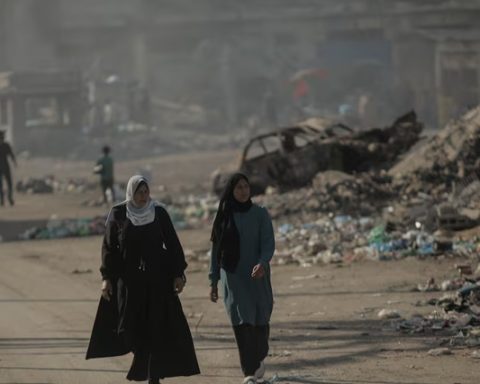
In a letter sent to staff on Sunday and seen by Reuters, the Hamas-run government in Gaza told more than 40,000 civil servants and security personnel to work with the new administration, assuring them that efforts were under way to secure their inclusion. Four sources familiar with the matter said this would extend to Hamas’s roughly 10,000 police officers, many of whom have been patrolling areas under the group’s control as it reasserts its presence following the ceasefire.
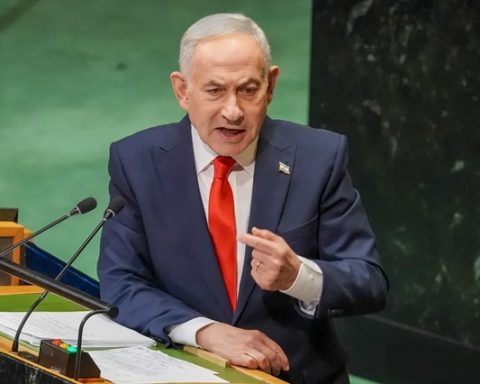
It remains unclear whether Israel would accept such an arrangement. Israeli leaders have repeatedly ruled out any Hamas involvement in Gaza’s future governance. Prime Minister Benjamin Netanyahu’s office did not respond to a request for comment from Reuters, but Netanyahu has publicly stated that the next phase of the Gaza deal is focused on demilitarization, not reconstruction.
The demand highlights deep and unresolved gaps between Hamas and Israel, even as Washington pushes forward with its post-war blueprint. Last week, Trump hosted a ceremony to establish a “Board of Peace,” intended to act as a transitional authority coordinating funding and redevelopment in Gaza. The framework reinforced provisions excluding militant groups from governance, raising questions about whether Hamas’s proposal is compatible with U.S. objectives.
Hamas spokesperson Hazem Qassem told Reuters that the group was prepared to hand over governance immediately to the 15-member committee and its chair, Ali Shaath. He said Hamas trusted that the new administration would make use of experienced personnel and protect the rights of those who served under the previous government. Sources said Hamas is open to restructuring ministries and sending some employees into retirement, but fears that mass dismissals could trigger chaos in an already fragile environment.
Security arrangements remain another major sticking point. Sami Nasman, a former Palestinian Authority general assigned to oversee security under the new administration, faces skepticism over whether he can operate effectively in Gaza. Nasman fled to the West Bank after Hamas seized control of the enclave in 2007 and was later sentenced in absentia by a Hamas court. He has denied the accusations against him.
Disarmament is the most contentious issue. A White House document shared last week outlined plans to immediately decommission heavy weapons and gradually register and remove personal arms as the new administration’s police force becomes capable of maintaining security. A U.S. official told Reuters that Hamas fighters could be offered some form of amnesty, but diplomats estimate the group still holds hundreds of rockets and thousands of light weapons.
Hamas has recently agreed to discuss disarmament with other Palestinian factions and mediators, though senior officials told Reuters that no concrete proposal has yet been presented by Washington or regional intermediaries. A Palestinian official close to the talks said the U.S. has explored possible mechanisms involving Israel, Qatar, Egypt and Turkey.
According to that official, Hamas has floated the idea of “neutralising” its weapons under a long-term truce lasting five years or more, but insists that any disarmament must be tied to a serious political process leading to Palestinian statehood, with arms eventually placed under the authority of a Palestinian state. Other armed factions in Gaza are also weighing disarmament, though some fear being left defenseless if Hamas alone gives up its weapons.
For now, the question of whether Hamas’s police force and civil servants can be folded into a new governing structure underscores the fragile nature of the ceasefire. As Netanyahu reiterated in parliament, Israel’s priority remains the complete demilitarization of Gaza and the disarming of Hamas, setting the stage for further confrontation over who will ultimately control security and governance in the territory.