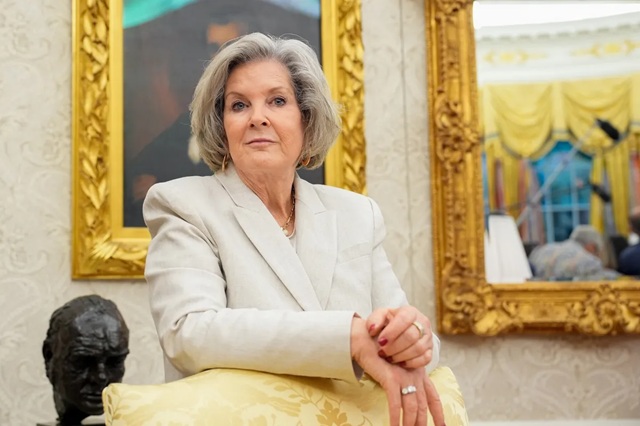
An extraordinary insider portrait of Donald Trump’s second presidency has emerged through a series of on-the-record interviews with White House chief of staff Susie Wiles, offering a rare and unsettling look at how power is wielded inside the West Wing. The account, published by Vanity Fair and reported by writer Chris Whipple, chronicles a presidency defined by impulsive decision-making, ideological hard-liners, and a chief of staff who has become the central force capable of steering, but not restraining, the president.
Wiles, the first woman to hold the role and widely regarded as the most powerful figure in the White House after Trump himself, describes an administration operating at the outer limits of presidential authority. Vanity Fair reports that throughout the first year of Trump’s second term, Wiles spoke candidly about everything from mass deportations and controversial military actions to the president’s mental and physical health, his fixation on revenge against political enemies, and the possibility of defying constitutional term limits.
The article opens with a revealing Oval Office moment on Election Day in November 2025, when Wiles abruptly walked out of a high-level meeting involving Vice President JD Vance, Secretary of State Marco Rubio, and senior adviser Stephen Miller. When Trump challenged her departure, Wiles coolly responded that it was an emergency that did not involve him, underscoring her unique authority and willingness to leave even the president uncertain of her next move.
According to Vanity Fair, Wiles rejects the traditional notion that a chief of staff exists to control the president. Instead, she sees her role as facilitating Trump’s vision, a philosophy echoed by Vance and Rubio, who both credit her with translating Trump’s impulses into action. Critics quoted in the piece argue that this approach has allowed the president’s whims to shape policy with unprecedented speed and minimal restraint.
Under Wiles’s watch, Trump’s administration has expanded executive power dramatically. Vanity Fair details sweeping actions including mass pardons for January 6 rioters, the unilateral declaration of war on drug cartels, aggressive tariff policies that destabilized global markets, the deployment of National Guard troops to Democratic-led cities, and the gutting of foreign aid programs. Wiles acknowledges internal disagreements but repeatedly describes situations where Trump overruled dissent, stating bluntly that when there is a tie, “he wins.”
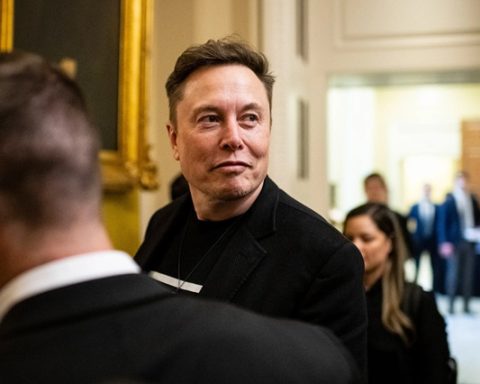
One of the most destabilizing episodes involved billionaire Elon Musk, whom Trump empowered to lead a scorched-earth overhaul of federal agencies through the so-called Department of Government Efficiency. Wiles told Vanity Fair she was initially “aghast” when Musk dismantled USAID, shuttering life-saving humanitarian programs and crippling the President’s Emergency Plan for AIDS Relief. Despite her attempts to intervene, Musk pushed ahead, a move that sparked alarm from global health leaders and even drew private intervention from former president George W. Bush.
The profile also delves deeply into Wiles’s personal history, tracing her resilience to a childhood shaped by her father, famed NFL broadcaster Pat Summerall, and his long struggle with alcoholism. She draws a direct line between those experiences and her assessment of Trump, whom she describes as having “an alcoholic’s personality,” defined by exaggerated confidence and a belief that nothing is beyond his reach.
Vanity Fair reports that Wiles’s rise was forged through decades in Republican politics, from the Reagan White House to Florida powerbroker, and through turbulent relationships with Trump himself. One explosive confrontation during the 2016 campaign nearly ended their alliance, but ultimately cemented Trump’s trust in her judgment. That trust has since allowed Wiles to assemble what she calls a “world-class Cabinet” of MAGA loyalists, including figures critics describe as ideologically extreme or dangerously unqualified.
Despite the chaos surrounding the administration, Wiles has largely contained internal rivalries, empowering a tight circle of aggressive deputies she privately refers to as her “junkyard dogs.” While she avoids the spotlight and rarely raises her voice, Vanity Fair portrays her as the quiet axis around which Trump’s White House turns.
As legal challenges mount and critics warn of democratic backsliding, the central question raised by the Vanity Fair investigation is not whether Susie Wiles can restrain Donald Trump, but whether she wants to. Wiles insists the president will ultimately obey court rulings, yet predicts his agenda will prevail despite judicial resistance, a forecast that underscores the profound uncertainty surrounding the future of American governance under Trump’s second term.