India is betting on low-cost ingenuity and a deep well of tech talent to gain ground in the global race for artificial intelligence dominance, as Prime Minister Narendra Modi’s government launches a push to build homegrown large language models (LLMs) and boost AI research.
The strategy hinges on what officials call “frugal innovation”—developing AI solutions tailored to Indian needs at a fraction of the global cost. By focusing on applications rooted in local languages and solving practical challenges, the government hopes to compete with giants like the U.S. and China in a field currently dominated by billion-dollar investments.
The effort was highlighted in a recent Financial Times report, which noted India’s attempts to replicate the success of China’s DeepSeek, a startup that built a competitive LLM on a tight budget. Abhishek Singh, who leads India’s national AI mission, said the government had received 67 proposals from startups and research labs eager to develop local models. “If DeepSeek has been built at a reasonably low cost, we should be able to as well,” Singh said.
The government’s $1.2 billion, five-year AI plan includes the provision of 10,000 GPUs—essential for training advanced models—and seed funding for selected projects. However, experts argue that public support alone is not enough; private sector investment must increase dramatically for India to become a true AI contender.
Commerce Minister Piyush Goyal recently voiced his frustration with the current state of tech investment, asking pointedly whether India’s startup ecosystem would only focus on delivery apps instead of deep technology.
Despite being home to top AI talent, India drew only $179.3 million in AI investments in 2024, compared to China’s $3.3 billion and the U.S.’s $34.2 billion, according to Tracxn data. Venture capitalists warn that while interest in AI is growing, there is still a shortage of truly original, fundable ideas.
Sarvam AI, a Bengaluru-based startup, stands out as one of the few ambitious players. Co-founder Pratyush Kumar said Sarvam is building a larger LLM to compete with models like OpenAI’s ChatGPT and DeepSeek, although the focus remains on solving everyday problems rather than highly complex tasks. The company has raised $40 million from Peak XV Partners, Lightspeed, and Khosla Ventures.
According to the 2024 Stanford AI Index, India ranks first globally in AI skill penetration but lags in innovation output—accounting for just 0.22% of global AI patents between 2014 and 2022. By contrast, China and the U.S. collectively produced 80% of AI patents during the same period.
Analysts suggest that Indian IT giants remain too focused on short-term profitability to invest in foundational research. “These companies don’t believe their moat lies in innovation,” said Anirudh Suri, a venture capitalist and Carnegie Endowment scholar.
Still, some entrepreneurs are stepping in. Paras Chopra, who sold his firm Wingify for $200 million in January, is now using his personal wealth to fund AI research in India.
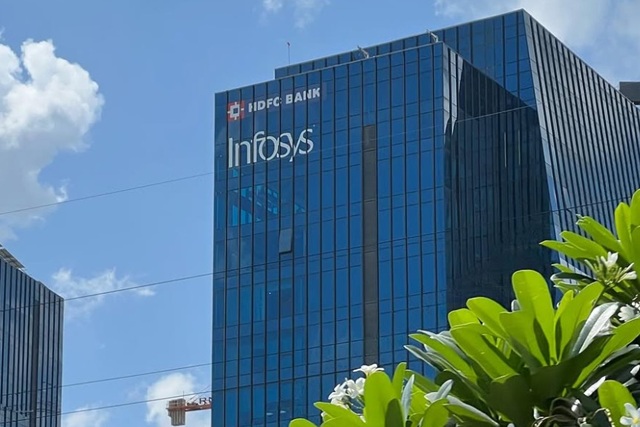
Major IT firms like Infosys and Mphasis are also trying to adapt. Infosys CTO Rafee Tarafdar said the company is transforming into an “AI-first” firm, while co-founder Nandan Nilekani believes India’s strength lies in building real-world applications on top of existing models. “We will lead the way in showing people how to actually use AI for useful things,” he said.
Despite its current challenges, India’s demographic edge and technical expertise could help it secure a critical role in the evolving global AI ecosystem. As Prime Minister Modi told podcaster Lex Fridman last month: “AI is incomplete without India.”